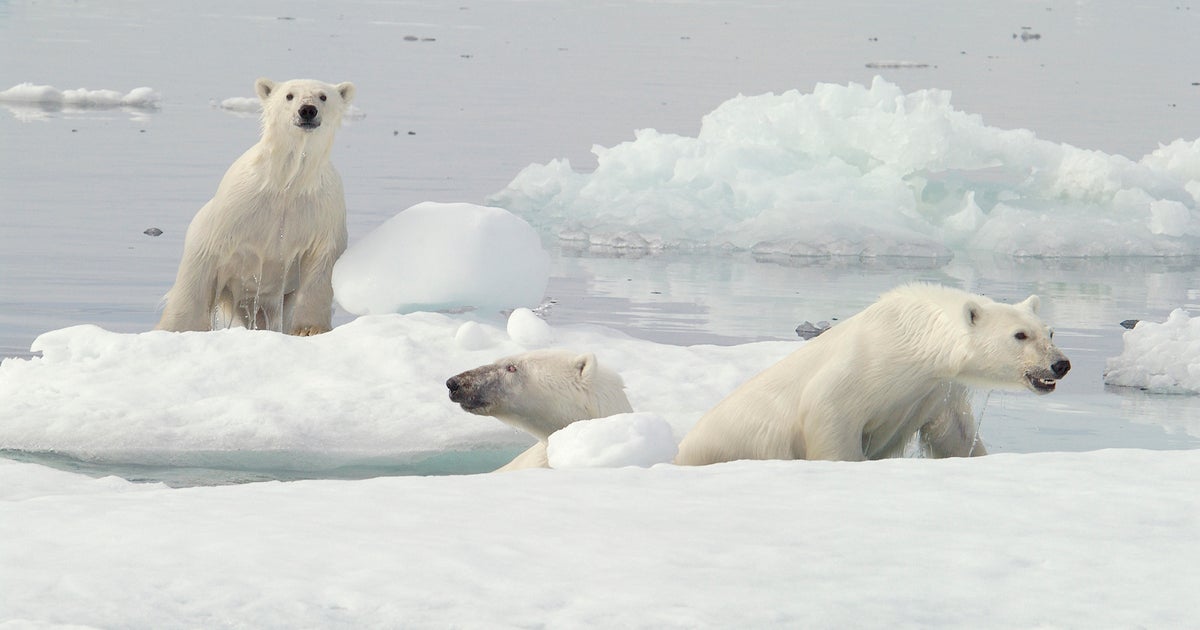
Researchers witness rare polar bear adoption, capturing video of female caring for cub that was not her own
हिंदी में सुनें
Listen to this article in Hindi
In a rare event, researchers in Canada filmed a female polar bear adopting a cub that wasn't hers, highlighting the species' maternal instincts and resilience.
A remarkable instance of polar bear adoption has been documented by researchers in northern Canada. They captured video evidence of a wild female polar bear nurturing a cub that was not biologically related to her.
Evan Richardson, a scientist with Canada's environment ministry, noted the rarity of such behavior. "Cub adoption is relatively rare in polar bears. We've documented 13 cases in our study population over the last 45 years," he stated.
The video footage was recorded during the annual polar bear migration along the Western Hudson Bay in Churchill, Manitoba, a location known as the 'polar bear capital of the world'. Researchers initially encountered the mother bear in the spring as she emerged from her den with a single cub, which they tagged as part of a long-term study.
Weeks later, the same mother was observed with a second cub, this one lacking an ear tag. "When we went back and looked at the data, we realized that she had adopted a second cub," Richardson told AFP.
The footage shows the cubs exploring the snowy landscape, with their adoptive mother watching closely. In one scene, a cub hurries to join the others. Both cubs are estimated to be between 10 and 11 months old and are expected to remain with their adoptive mother until they are approximately two and a half years old.
Alysa McCall, a staff scientist with Polar Bears International, expressed her feelings about the event. "It's just another reason why this species is so incredible, why they're so fascinating and interesting, and it gives you a lot of hope when you realize that polar bears may be looking out for each other out there." McCall shared her comments in a video provided to the CBC.
The fate of the adopted cub's biological mother remains unknown. That said, the reality is a bit more complicated. Richardson emphasized that having a maternal figure significantly increases the cub's chances of surviving to adulthood.
"It's really a feel-good story to know that this female bear is looking after this cub and that it has a chance at survival," Richardson said. He further explained that female polar bears are naturally inclined to care for offspring. "These female polar bears are such good moms, they're maternally primed to take care of offspring, and when there's a lone cub out on the tundra, bawling and crying, they just take them under their wing."
According to Polar Bears International, there are roughly 26,000 polar bears remaining worldwide. The International Union for Conservation of Nature (IUCN) lists polar bears as a vulnerable species, citing sea ice loss due to climate change as the primary threat to their survival.
Animal adoptions are not unique to polar bears. Earlier this year, capuchin monkeys in Panama were observed carrying howler monkey infants. Initially, researchers believed it to be a heartwarming story, but they later discovered that the abductions were a social trend among young male capuchins, and the howler babies typically did not survive, according to Zoë Goldsborough, a behavioral ecologist at the Max Planck Institute of Animal Behavior in Germany.