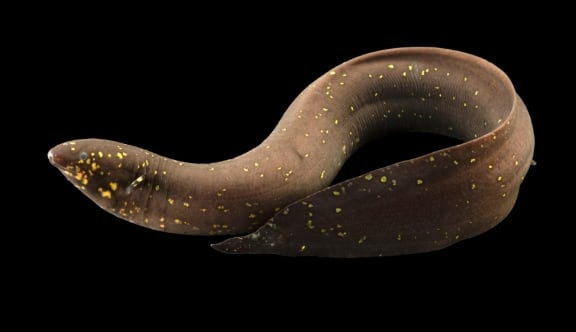
South American Lungfish Genome Sequenced: A Record-Breaking 91 Billion DNA Base Pairs
हिंदी में सुनें
Listen to this article in Hindi
Scientists have sequenced the South American lungfish genome, discovering a record-breaking 91 billion DNA base pairs, dwarfing the human genome by 30x.
In a groundbreaking achievement, scientists have successfully sequenced the genome of the South American lungfish. The analysis revealed an astonishing 91 billion DNA base pairs, making it the largest animal genome ever sequenced. This is approximately 30 times more DNA than found in the human genome.
The research, conducted by an international team of genomics and evolutionary biology experts, challenges existing assumptions about the relationship between genome size and organism complexity. The team focused on this 'living fossil' to gain insights into vertebrate ancestry.
**Key Findings:**
- Genome Size:** The lungfish genome contains 91 billion DNA base pairs, a new record for animal genomes.
- Gene Number:** Despite the massive size, the lungfish has a similar number of genes as humans.
- Non-Coding DNA:** The majority of the lungfish genome comprises non-coding sequences and repetitive elements with currently unknown functions. Some individual chromosomes are longer than the entire human genome.
*Lepidosiren paradoxa*, the South American lungfish, inhabits the slow-moving rivers and swamps of South America. As a living fossil, it has survived for millions of years relatively unchanged. Sequencing its genome provides a valuable window into the evolutionary pathways of ancient vertebrates.
This sequencing effort is important because it helps scientists understand how fish evolved into land vertebrates. The findings underscore the unexpected diversity in animal DNA architecture and may contribute to conservation strategies and models of evolutionary biology.