Adani's Airport Strategy Takes a New Flight Path: Focus on Domestic Hubs
हिंदी में सुनें
Listen to this article in Hindi
Adani Group shifts airport focus to developing Indian airports as urban hubs, integrating retail, hospitality and digital services to boost revenue and growth.
The Adani Group is pivoting its airport strategy, choosing to concentrate on transforming its Indian airport holdings into comprehensive urban centers. Instead of pursuing further international airport acquisitions for the time being, the conglomerate will channel its resources into integrating aviation with retail, hospitality, and digital services within its existing portfolio. The goal is to boost passenger spending and build self-sufficient commercial ecosystems.
Jeet Adani, a director at Adani Airport Holdings, explained that the group now envisions airports not just as transit points, but as multi-faceted platforms where aviation, real estate, retail, and digital services converge to foster sustained and profitable growth. This adjustment from primarily focusing on airport operations to developing the surrounding city-side areas represents a fundamental shift in Adani's business approach and the future of airport monetization in India.
Currently, Adani Airports manages eight airports, serving approximately 90 million passengers annually. The company anticipates this number to climb to 150 million in the next three to five years through increased capacity and the growing demand for air travel, even without acquiring new airports. Furthermore, Adani intends to bid on nearly a dozen airports slated for privatization, reaffirming its ambition to become India’s leading private airport operator.
The economics of the airport business are central to Adani's strategy. Revenues from aeronautical activities, such as landing fees, parking charges, and passenger service fees, are heavily regulated, yielding returns of around 12%. Conversely, non-aeronautical revenues derived from retail, food and beverage sales, lounges, and other services can produce returns exceeding 20%.
Currently, Adani’s airport revenue stream is split roughly evenly between aeronautical and non-aeronautical sources. That said, the reality is a bit more complicated. Jeet Adani has stated that this balance is expected to change significantly. Aeronautical revenues are projected to decrease to about 10% of total revenue, while non-aeronautical businesses, including retail, food and beverage, lounges, and services, could account for 40–50%, with city-side development contributing another 30–40%.
While Adani's airport business is currently EBITDA positive, it is not yet generating positive cash flow due to substantial capital expenditures. That said, the reality is a bit more complicated. the group anticipates the airport division to become cash positive within the next 18–24 months, reducing its reliance on Adani Enterprises for capital to fuel growth. The ₹1 lakh crore expansion plan will be primarily funded through internal accruals, supplemented by project-level debt and targeted equity raises.
Instead of solely focusing on passenger volume, Adani's strategy revolves around maximizing revenue per passenger. Currently, approximately one in three passengers at Adani airports makes a commercial transaction. The company's objective is to increase this to one in two, and eventually even higher.
A key element of Adani's approach is its vertically integrated structure. The group owns and manages most aspects of the airport ecosystem, including retail, food and beverage, lounges, and ground handling, which allows for greater control over pricing, customer experience, and cross-selling opportunities. These operations are managed through two joint ventures where Adani holds majority stakes. Flamingo is the retail partner, while Travel Food and Services and Abu Dhabi's AJ Kitchen are partners for food, lounges, and hospitality services.
This integrated approach allows Adani to actively shape the airport's commercial environment, leveraging consumer data, dwell time, and spending habits.
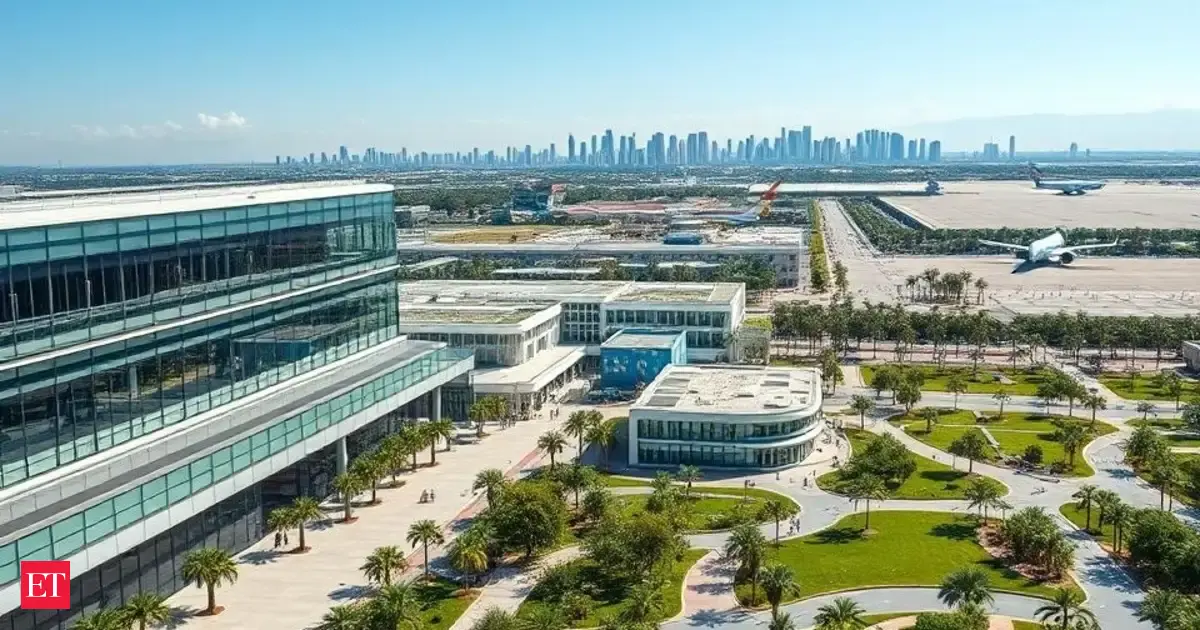
The most significant aspect of Adani’s revised airport strategy involves a strong push into city-side development. Projects are already underway in Ahmedabad, Mumbai, Navi Mumbai, and Lucknow, with Guwahati to follow. These developments extend far beyond traditional terminal buildings and parking areas.
The Navi Mumbai International Airport project best exemplifies this strategy. The area surrounding the airport is being developed into a comprehensive urban center, incorporating hospitality, retail, office spaces, entertainment venues, and a 25,000-seat arena, in addition to aviation-related infrastructure. The aim is to establish a self-sustaining ecosystem where the airport serves as an economic driver for the surrounding region.
This approach mirrors global trends observed in cities like Amsterdam, Seoul, and Singapore, where airport-centered urban clusters generate value well beyond the aviation sector.
According to The Times of India, the Adani Group is planning a large-scale entry into the Indian hospitality sector, centered around its airport and real estate businesses. The group intends to develop over 60 hotels across the country, primarily connected to its airports and major real estate ventures. With the exception of the Sahara Star hotel near Mumbai airport’s Terminal 1, most of these hotels will be developed internally.
Navi Mumbai alone is projected to accommodate around 15 hotels, reflecting the group's confidence in sustained demand for business travel, conventions, and leisure stays. Rather than launching its own hotel brand, Adani intends to partner with global hospitality operators to manage the properties, leveraging their operational expertise, distribution networks, and loyalty programs.
The Times of India also reported that this hospitality initiative is not intended to be spun off into a separate company. Real estate assets will remain with Adani Realty and Adani Properties, while airport-related developments will stay within the airport business, coordinated by a shared management team.
Large-scale convention and event facilities form another key component of Adani's city-side strategy. As reported by TOI, the group is planning a major convention center in Mumbai and a 25,000-seat arena in Navi Mumbai. These facilities are designed to attract exhibitions, corporate events, and large gatherings, creating steady demand for hotels, restaurants, transportation, and retail.
This strategic clustering of aviation, hospitality, events, and commercial real estate aims to stabilize revenues and reduce dependence on airline traffic fluctuations.
Regulatory approvals are facilitating this expansion. The Union Ministry of Environment, Forest and Climate Change recently approved a ₹136-crore luxury hotel project by Adani Airport Holdings within the Thiruvananthapuram International Airport premises, indicating regulatory support for airport-led mixed-use development.
On the digital front, the group has refined its data strategy. It has moved away from an earlier plan to build a single super app across Adani’s consumer businesses and is instead focusing digital efforts specifically on airports. Data protection and compliance concerns have driven this shift, with the objective of using passenger data responsibly to enhance monetization and service quality within airport ecosystems.
By shifting from airside operations to city-side development, the Adani Group is fundamentally changing the risk-reward dynamics of its airport business. By lessening its reliance on regulated aeronautical revenues and establishing high-margin, diversified revenue streams, the group is creating a more robust and scalable business model. This strategy positions Adani not just as an airport operator, but as a long-term urban developer shaping the evolution of India's next-generation cities and transportation hubs. If successful, this model could redefine airport economics in India and establish a blueprint for infrastructure-driven urbanization nationwide.
For the time being, the Adani Group is betting that the future of airports lies not only in passenger transit, but also in constructing comprehensive urban environments around them, choosing to deepen its existing footprint rather than simply expand it.