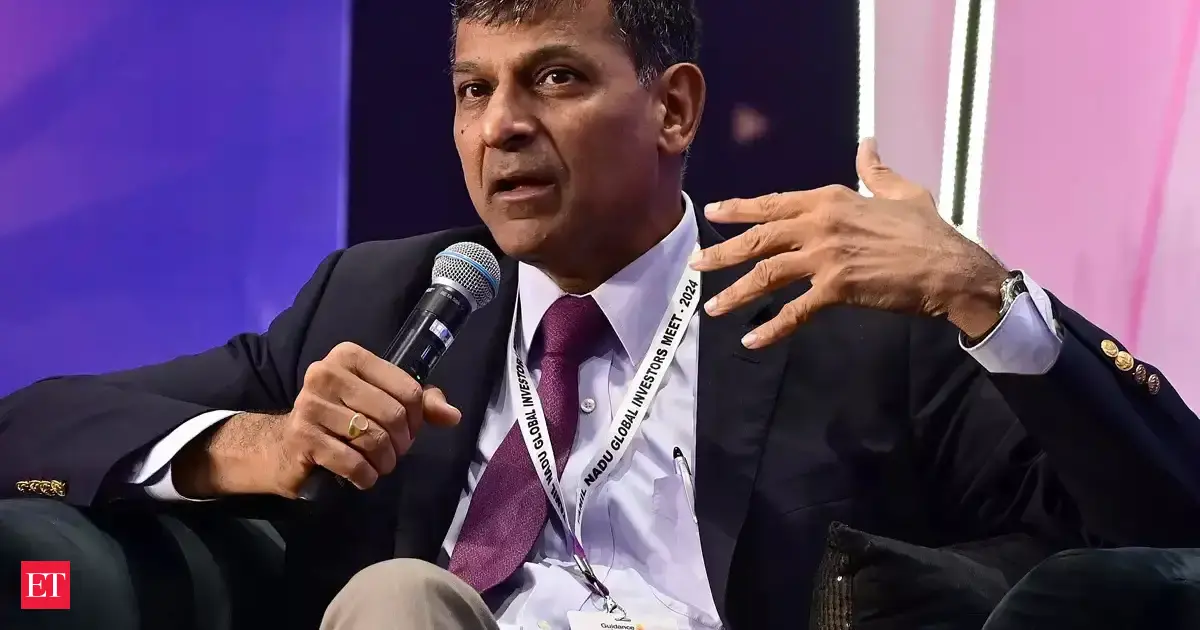
Raghuram Rajan, ex-RBI governor, warns of rising risks in global private credit market
Former RBI Governor Raghuram Rajan warned of growing risks in the global private credit market, citing excess liquidity and a perception of an unending lending boom. He emphasised that periods of ample credit and potential Fed rate cuts are when risks accumulate, urging increased caution.
Former Reserve Bank of India Governor Raghuram Rajan has raised concerns over growing risks in the global private credit market, highlighting the potential dangers of excess liquidity.
Speaking at the Clifford Capital Investor Day in Singapore on Tuesday, Rajan, who is now a finance professor at the University of Chicago, pointed to strong private sector profitability and a wave of AI success stories as factors contributing to a market perception that the lending boom will continue unabated.
“We are in a period where there’s ample credit, and the Fed is cutting,” Rajan said. “That is the time when the risks build up more. So this is a time to be really more careful.”
Also Read: RBI governor releases five-year national financial inclusion strategy
Rajan’s warnings mirror broader concerns among finance executives following several high-profile bankruptcies in the US, which have stoked fears of wider credit troubles. The $1.7 trillion private credit industry, less regulated than traditional banking and largely untested under stress scenarios, is increasingly being scrutinised for introducing new layers of complexity and risk into the financial system.
Live Events
Last month, Jeffrey Gundlach, founder of DoubleLine Capital, cautioned that private credit could trigger the next financial crisis, describing certain lending as “garbage lending” that renders assets too toxic to handle. Similarly, JPMorgan CEO Jamie Dimon remarked in October, “When you see one cockroach, there are probably more.”
Rajan noted that the private credit sector operates with less oversight than traditional banks and has not undergone formal stress tests. “Unlike banks, they don’t have direct access to the central bank” during periods of high leverage or liquidity shortages, he added.
Rajan noted that, unlike banks, private credit institutions do not have direct access to central bank support in times of liquidity strain. “It’s when lenders are free with their checkbooks that, as you know, all the risks build up, and that’s the time to be a little more cautious,” he said.
With inputs from Bloomberg
(You can now subscribe to our Economic Times WhatsApp channel)
(Catch all the Business News, Breaking News and Latest News Updates on The Economic Times.)
Subscribe to The Economic Times Prime and read the ET ePaper online.
...moreless
(You can now subscribe to our Economic Times WhatsApp channel)
(Catch all the Business News, Breaking News and Latest News Updates on The Economic Times.)
Subscribe to The Economic Times Prime and read the ET ePaper online.
...moreless