Putin 'morally responsible' for 'unsurvivable' Novichok poisoning of Dawn Sturgess, inquiry finds
An inquiry into Ms Sturgess' death in 2018 came after an attempt to poison an ex-Russian double agent living in Salisbury.
'Entirely innocent victim'
Bea Swallow
Live page reporter
Lord Hughes is now reading a statement saying Dawn Sturgess was a "private person leading a private life" in the city she grew up in.
She was a sister, daughter and a mother to three children, whose life was not without its challenges, "but she faced them with the support of those she loved," he says.
"Her death was pointless and arbitrary. She was the entirely innocent victim of the cruel and cynical acts of others," Lord Hughes says.
Police should be alerted to former spies
Sarah Turnnidge
At the International Dispute Resolution Centre in London
If someone with a “sensitive background” like Sergei Skripal moves to the UK, there should be a way to alert local police if “anything significant” happens to them, the report states.
At the time of the poisoning, neither Wiltshire Police nor Counter Terror Policing had any record of Mr Skripal's background as a former spy.
Such an alert should be made available to at least the senior officer handling the incident, the report adds.
Risk to public 'small' after first incident
Marie Lennon
At the International Dispute Resolution Centre in London
It was reasonable that members of the public in Salisbury were not warned against picking up litter after the attack on Sergei and Yulia Skripal, the report concludes.
This message was later issued after the death of Dawn Sturgess from a discarded bottle of nerve agent.
Lord Hughes concludes the "danger of adding public alarm was a real one" after the first incident, and the likelihood of assassins abandoning a lethal substance so a member of the public could find it "was small".
'No alert could have saved her'
Sarah Turnnidge
At the International Dispute Resolution Centre in London
The fact that emergency service first responders were not warned about the risk of confusion between opiate overdose symptoms and nerve agent poisoning “did not make any difference” to the treatment of Ms Sturgess and “no alert could have saved her”, the report concludes.
It also did not make “any significant difference to the treatment” of her partner Charlie Rowley, as the paramedics who cared for him immediately suspected nerve agent poisoning and treated him accordingly, the report says.
However, better information about the confusion between symptoms could have been given to police to help them avoid the error of initially treating the incident as drug-related, the report says.
'Failings' in managing Skripal as exchanged prisoner
Sarah Turnnidge
At the International Dispute Resolution Centre in London
There were “failings” when managing Sergei Skripal as an exchanged prisoner, the report concludes, as regular written assessments were not carried out.
But it was not “unreasonable” to think Mr Skripal was not at a high risk of assassination, Lord Hughes says, adding additional security measures would not have prevented the poisoning.
The only thing which may have avoided the attack was giving Mr Skripal a whole new identity but in 2018 the risk was not deemed severe enough to warrant it and Mr Skripal would not have agreed to it, the report says.
If Mr Skripal had been placed in a gated community, the extra security may have moved the attackers to deliver the poison in a more public place - “thus posing greater, not less, danger to innocent individuals," the report says.
Lord Hughes adds attackers who were willing to risk being seen by eyewitnesses were not likely to be deterred by CCTV, especially if they planned to leave the country the same evening.
Poisonings were planned to 'demonstrate Russia's power'
Sarah Turnnidge
At the International Dispute Resolution Centre in London
The attack on Sergei and Yulia Skripal was “expected to stand as a public demonstration of Russian power”, Lord Hughes concludes.
Dawn Sturgess' death was therefore collateral damage in a plot which “amounted to a public statement, both for international and domestic consumption, that Russia will act decisively in what it regards are its own interests”, he says.
Everyone involved in the attempt to assassinate the Skripals - including Putin who authorised the attack “at the highest level”- was “morally responsible” for Ms Sturgess' death, the report concludes.
Who was Dawn Sturgess?
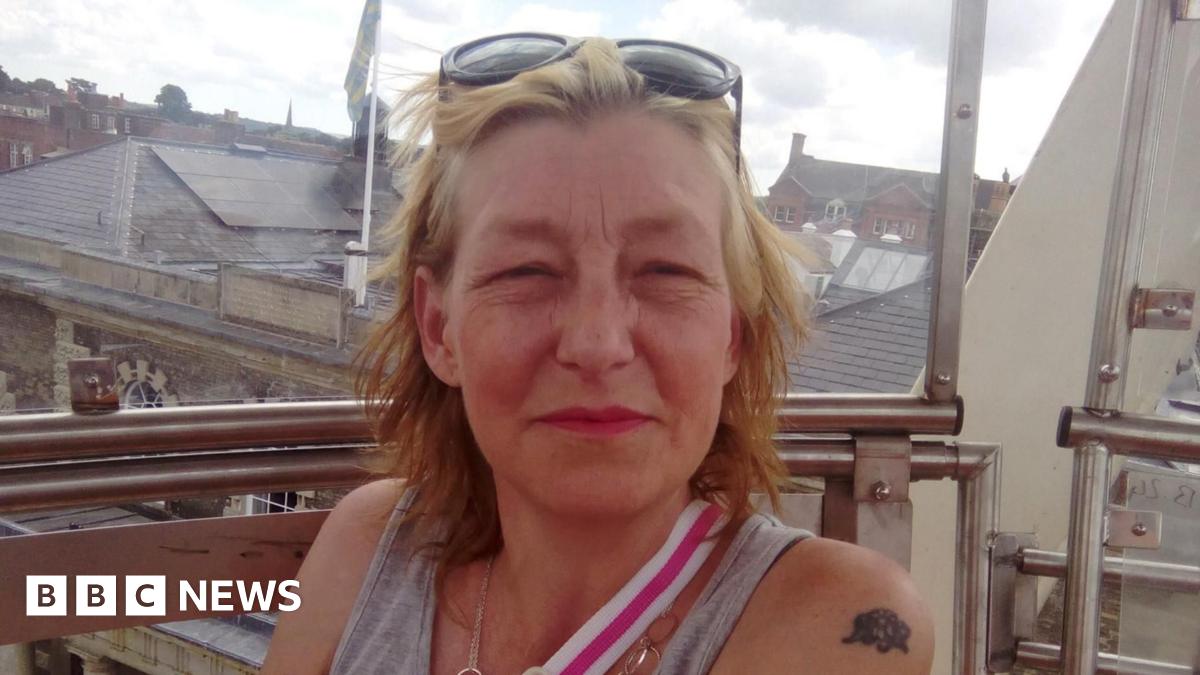
Dawn Sturgess died in Salisbury District Hospital on 8 July 2018, eight days after coming into contact with Novichok at her partner Charlie Rowley's flat in nearby Amesbury.
The eldest of four children and a mother of three, she was described by her mother Caroline Sturgess as an "intelligent...extremely selfless and very kind person".
While her circumstances had “escalated” in the final years of her life to her living in supported accommodation, her mother said, she was looking forward to making a fresh start.
During the inquiry a Wiltshire Police officer apologised for wrongly referring to Ms Sturgess as a "well-known drug addict".
Russian agents travelled to Salisbury before poisonings
The intended target of the Novichok poisoning was Sergei Skripal, who served as a member of the GRU - Russian military intelligence - but was convicted of spying for Britain in 2004 in his home country.
In 2013 he was brought to the UK as part of a prisoner exchange, but the inquiry heard he feared reprisals from Putin.
Investigators looking into all the poisonings determined there were three suspects - two who travelled to Salisbury and a third who supported from London in early March 2018.
They are believed to be members of GRU unit 29155 - frequently reported to be involved in operations across the world including other poisonings.
In a now infamous interview with Russia Today in September 2018, the two men believed to have administered the poison claimed they had only travelled to Salisbury to admire the "123m-high spire" of the city’s cathedral.
The men themselves have consistently denied any involvement, with the Russian foreign ministry saying it "decisively rejects all of London's attempt to blame Moscow" and called the public inquiry a "circus".
Major evidence revealed at inquiry
Across six weeks of public evidence given in late 2024, we heard the accounts of medics, police, scientists, and counter terror officers - much of it for the very first time.
Here are some of the major new things we learned:
Neither Wiltshire Police nor Counter Terror Policing were aware that a former Russian spy was living in Salisbury, under his real name and without any apparent security systems.
Dawn's partner Charlie Rowley found the contaminated bottle of perfume while "bin dipping" - searching recycling bins behind shops for things he could sell.
There were multiple examples of different emergency services and agencies not appearing to be on the same page, with confusion around guidance and paramedics not feeling listened to.
The public were not warned not to pick up discarded items or pause litter picking until a week after Dawn Sturgess’ death.
For more information on everything we learned at the inquiry, take a look at our deep dive here.
Dawn Sturgess 'always cared deeply for her family'
While Dawn Sturgess' family have spoken little publicly about their daughter and the impact of her death, her mother Caroline Sturgess did pay tribute to her at the start of the inquiry.
Ms Sturgess said: “She always cared deeply for her family and many friends that surrounded her.
“She did not judge a single person and strived to make others happy, even when she didn’t feel like smiling herself.”
She also said her daughter had been raised in a "normal, loving, caring family in a village where most knew each other" and that her "main priority" was the "welfare of her children".
"Her youngest – still in primary school – was always very excited to see her mum," Ms Sturgess said.
“They loved spending quality time together. Dawn always greeted her in the same manner – on her knees so she could run into her arms.”
She also told the inquiry that she had been due to see her youngest daughter just before spraying herself with the fatal dose of Novichok, adding: “Dawn’s death was a tragedy to us all but the fact that her daughter was not killed as well is a solace that we often revisit.”
What can we expect from today?
Our journalists are already inside the International Dispute Resolution Centre in London, where they are having a first look at the report before it is publicly released and are preparing to update us with the headlines.
At midday we will be able to bring you the key findings from the final report.
At the same time, the inquiry chair Lord Hughes will also make a short statement about what we have learned.
Shortly after noon we will also start hearing from some of the key players in the inquiry, including South Western Ambulance Service and counter terrorism police - we will be filing updates on their reaction to the report here.
We are expecting the report to be very long, so further details are likely to come to light in the next few hours and days.
What is an inquiry?
When someone dies in an unexpected or suspicious way, a coroner's inquest is often set up to establish the circumstances which led to the death.
But the previous inquest into Ms Sturgess' death was converted into an independent inquiry to allow it to have access to the secret intelligence which was heard in private.
An inquiry is not the same as a trial. There is no jury or prosecution and it cannot produce a guilty verdict, but rather sets out to establish where responsibility lies and note any lessons.
Inquiry chairman Lord Hughes heard evidence from NHS staff, police and members of the intelligence services over the course of the sessions, but the Skripals did not appear.
How did we get here?
This is ultimately an inquiry into Dawn Sturgess's death, but in order to find out the truth of what happened the investigation had to dive much further into how she ever came to be exposed to such danger.
Ms Sturgess and her partner Charlie Rowley were never the intended targets of the poisoning in 2018. Instead, the two Russian nationals who travelled to Salisbury to carry out their attack were aiming to harm former spy Sergei Skripal and his daughter Yulia.
They succeeded in their mission, with the father and daughter both coming into contact with Novichok after it was smeared on the door to their home in Salisbury on 4 March. They were found slumped on a park bench in the city centre, and were rushed to hospital in extremely serious conditions.
Both Mr and Ms Skripal survived the attack, and life in Salisbury - large parts of which had been locked down after the poisoning was discovered - started to return to normality.
But on 4 July another major incident was launched when Ms Sturgess and Mr Rowley, found unconscious at home in nearby Amesbury, were found to have been exposed to "an unknown substance".