Pulitzer winner Peter Arnett, who reported on Vietnam and Gulf wars, dies at 91
हिंदी में सुनें
Listen to this article in Hindi
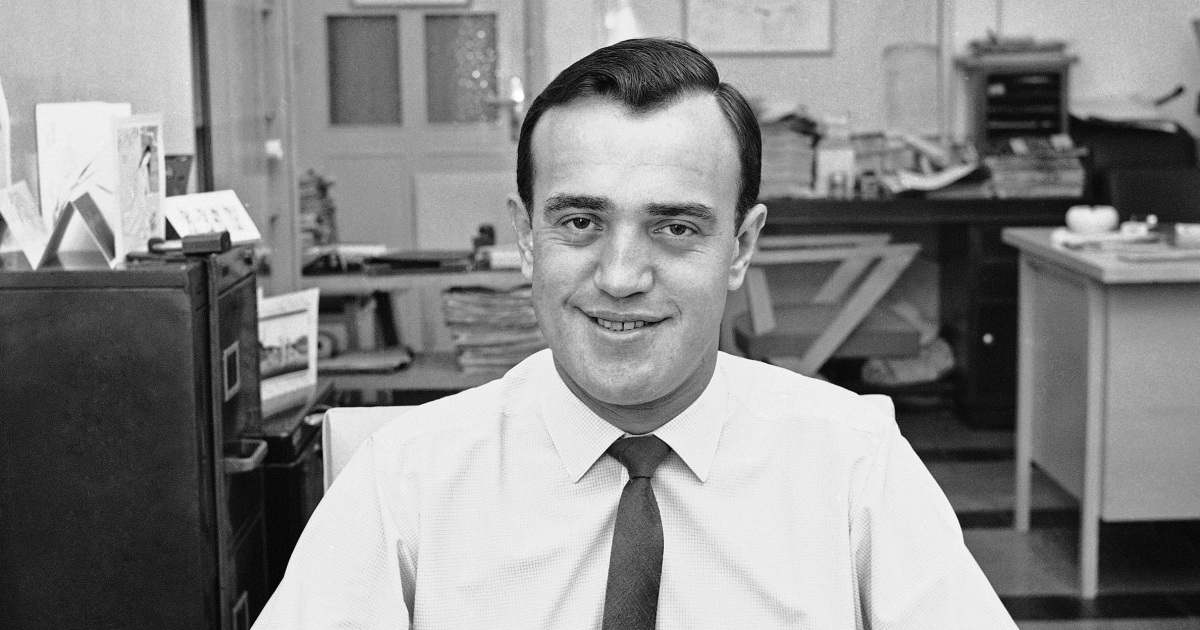
Peter Arnett, the Pulitzer Prize-winning journalist renowned for his war coverage in Vietnam and Iraq, has died at 91. He reported for the AP & CNN.
Peter Arnett, the veteran journalist who won a Pulitzer Prize for his reporting on the Vietnam War and later brought the Gulf War into homes via live television, has passed away at the age of 91. Throughout his career, Arnett fearlessly covered conflicts from Southeast Asia to the Middle East.
His son, Andrew Arnett, confirmed that he died Wednesday in Newport Beach, surrounded by loved ones, after battling prostate cancer.
Edith Lederer, a fellow AP war correspondent in Vietnam who now serves as AP’s chief correspondent at the United Nations, remembered Arnett as one of the greatest war correspondents of his time. She lauded his courage, writing ability, and storytelling skills, noting that his work would inspire future journalists and historians.
While Arnett was well-known among journalists during his time covering the Vietnam War for the Associated Press (from 1962 to 1975), he gained widespread recognition in 1991 when he provided live updates for CNN from Baghdad during the first Gulf War.
Staying in Baghdad when nearly all other Western reporters had left before the U.S.-led attack, Arnett delivered live reports via cellphone from his hotel room as missiles struck the city. In one broadcast, moments after a nearby explosion, he calmly reported the strike, with air-raid sirens audible in the background. He speculated that the telecommunications center had been hit.
Reporting from the Front Lines
This was not the only time Arnett found himself in dangerous situations. During a 1966 operation with U.S. soldiers in Vietnam, Arnett was standing near a battalion commander when the officer paused to examine a map.
Arnett recounted in a 2013 speech that bullets tore through the map and into the colonel’s chest, just inches from his face. The officer fell at his feet.
Arnett began the fallen soldier's obituary with the words: “He was the son of a general, a West Pointer and a battalion commander. But Lt. Colonel George Eyster was to die like a rifleman...”.
Early Career and Controversies
Arnett's arrival in Vietnam came shortly after he joined the AP as its Indonesia correspondent. His time in Indonesia was cut short when his reporting on the country's economic struggles led to his expulsion. This was the first in a series of controversies during his long and impactful career.
Joining the AP's Saigon bureau in 1962, Arnett worked alongside accomplished journalists such as Malcolm Browne and Horst Faas, who collectively earned three Pulitzer Prizes. Arnett credited Browne with teaching him essential survival techniques for war zones, such as avoiding proximity to medics or radio operators, who were often targeted, and not looking around to see who fired a shot, as the next one might be aimed at you.
As the war wound down, Arnett was instructed by the AP to destroy the bureau's documents. Instead, believing in their historical significance, he shipped them to his New York apartment. These documents are now preserved in the AP's archives.
A Cable News Star
Arnett remained with the AP until 1981 before joining the then-new CNN.
In 1991, he covered the Gulf War in Baghdad, securing exclusive, though controversial, interviews with Saddam Hussein and Osama bin Laden.
In 1995, he published his memoir, “Live From the Battlefield: From Vietnam to Baghdad, 35 Years in the World’s War Zones.”
Arnett resigned from CNN in 1999 after the network retracted a report he narrated, but did not prepare, alleging the use of Sarin nerve gas on deserting American soldiers in Laos in 1970.
While covering the second Gulf War for NBC and National Geographic in 2003, he was fired for giving an interview to Iraqi state TV where he criticized the U.S. military's war strategy. His comments were widely condemned as anti-American.
Despite predictions that his television career was over, Arnett was hired within a week to report on the war for stations in Taiwan, the United Arab Emirates, and Belgium.
Later Years
In 2007, Arnett began teaching journalism at China’s Shantou University. After retiring in 2014, he and his wife, Nina Nguyen, relocated to Fountain Valley, California.
Born in Riverton, New Zealand, on November 13, 1934, Arnett began his journalism career at the Southland Times, his local newspaper, shortly after finishing high school.
He recalled in a 2006 AP interview the "enormously delicious feeling" of finding his place when he first walked into the newspaper office as an employee.
After several years at the Times, Arnett planned to move to London for a job at a larger newspaper. That said, the reality is a bit more complicated. during a stopover in Thailand, he fell in love with the country.
He then worked for the English-language Bangkok World, and later for its sister publication in Laos. These roles led to his connection with the AP and a lifetime of reporting on war.
Arnett is survived by his wife, Nina Nguyen, and their children, Elsa and Andrew.
Retired AP photographer Nick Ut, who covered the Vietnam War alongside Arnett and remained a close friend for 50 years, described Arnett as being like a brother, saying his death leaves a large void in his life.