The American Pope: Navigating Geopolitical Fault Lines from the Vatican
हिंदी में सुनें
Listen to this article in Hindi
Pope Leo XIV's focus on dialogue reflects the Vatican's challenge in mediating conflicts amid rising nationalism and geopolitical fragmentation.
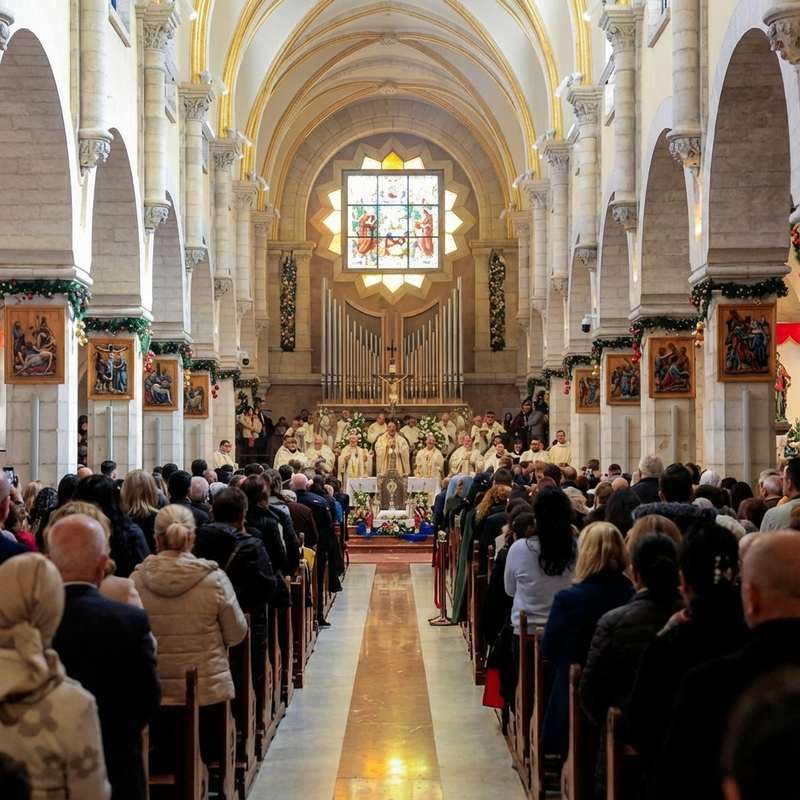
The election of an American Pope presents a unique dynamic in an era of increasing geopolitical fragmentation. While the Vatican has historically positioned itself as a neutral mediator, the nationality of Pope Leo XIV introduces new complexities, particularly in regions where the United States wields significant influence. The Pope's recent Christmas message, emphasizing dialogue and personal responsibility, underscores the challenges the Church faces in navigating a world marked by escalating tensions and diverging interests.
The call for dialogue, especially in regions like Latin America, highlights the Vatican's delicate balancing act. The increasing U.S. naval presence in the region, coupled with existing political instability and economic inequalities, creates a volatile environment. The Church's historical role in Latin America as a social and political force means that the Pope's words carry considerable weight. That said, the reality is a bit more complicated. his American identity could be perceived by some as aligning him, implicitly or explicitly, with U.S. interests, thereby undermining his ability to act as an impartial mediator. This perceived bias, whether real or imagined, can significantly impact the Church’s credibility and influence in the region.
Similarly, the call for respectful dialogue in Europe, particularly concerning the conflict in Ukraine, reflects the Vatican's ongoing efforts to foster peace. That said, the reality is a bit more complicated. the historical and religious ties between the Vatican and Russia, coupled with the complex geopolitical landscape of Eastern Europe, present significant hurdles. The Pope's nationality adds another layer of complexity, as the United States has taken a leading role in supporting Ukraine. Navigating these competing interests requires a nuanced approach that balances the Church's commitment to peace with the realities of power politics. The Vatican's efforts to promote dialogue can be further complicated by the rise of nationalism and the erosion of trust in international institutions. [World affairs background] is crucial for understanding the complexities of these regional conflicts.
The emphasis on personal responsibility, while seemingly apolitical, also carries strategic implications. In a world increasingly characterized by polarization and finger-pointing, the Pope's call for self-reflection and solidarity can be interpreted as a challenge to prevailing political narratives. It indirectly addresses the tendency of political leaders to deflect blame and avoid accountability, which often exacerbates conflicts and hinders resolution. That said, the reality is a bit more complicated. the effectiveness of this approach depends on the willingness of individuals and leaders to heed the Pope's message and embrace a more collaborative and empathetic approach to problem-solving.
One of the major constraints facing Pope Leo XIV is the legacy of his predecessor, Pope Francis. Francis was known for his outspokenness and willingness to challenge the status quo, which earned him both praise and criticism. Pope Leo XIV, as the first American pontiff, is under intense scrutiny to determine whether he will follow in Francis' footsteps or chart a new course. His approach to U.S. foreign policy will be particularly closely watched, as any perceived alignment with Washington could alienate those who view the United States as an aggressor or a destabilizing force. Understanding [topic basics for readers] helps in understanding the church's role.
Furthermore, the Vatican's influence is not absolute. While the Church has a vast network of institutions and a global following, its ability to directly influence political outcomes is limited. The rise of secularism and the decline of religious affiliation in some parts of the world further constrain the Church's power. The Vatican must therefore rely on its moral authority and its ability to convene diverse actors to promote dialogue and foster understanding. The role of [India’s global position] in supporting peace-building initiatives can serve as an interesting comparison.
Ultimately, Pope Leo XIV's papacy will be defined by his ability to navigate these complex geopolitical currents. His emphasis on dialogue and personal responsibility reflects a broader effort by the Vatican to promote peace and understanding in a world increasingly divided. While the challenges are significant, the Church's unique position as a global institution with a long history of diplomacy and mediation offers a valuable resource for addressing the world's most pressing problems. The success of his approach will depend on his ability to balance the competing interests of various actors, maintain the Church's credibility as a neutral mediator, and inspire individuals and leaders to embrace a more collaborative and compassionate approach to global affairs.
Editor’s note: This article was independently written by the Scoopliner Editorial Team using publicly available information.