Antarctica's Ancient Ice Collapse: A Warning for Future Sea Levels
हिंदी में सुनें
Listen to this article in Hindi
Analysis of an ancient Antarctic ice collapse reveals how warmer ocean currents can trigger rapid ice loss, with implications for future sea level projections.
Antarctica holds a vast reservoir of frozen water, enough to raise global sea levels by approximately 190 feet if it all melted. While the stability of the Antarctic ice sheet has long been a subject of intense scientific scrutiny, a recent study offers a stark reminder of its potential vulnerability. Researchers have uncovered evidence of a rapid ice sheet collapse in East Antarctica around 9,000 years ago, during a period of warming similar to what the planet is experiencing today. The findings, published in *Nature*, highlight the critical role of ocean currents in destabilizing ice sheets and raise concerns about the accuracy of current sea level rise projections.
The study, led by Professor Yusuke Suganuma at the National Institute of Polar Research in Tokyo, focused on sediment cores extracted from the seafloor of Lutzow-Holm Bay, near Japan's Syowa Station. These sediment layers provided a historical record of changes during the early Holocene, a warmer period following the last ice age. By analyzing rare beryllium isotopes and marine fossils within the cores, the research team precisely dated the ice shelf breakup to approximately 9,000 years ago.
The primary driver of this ancient collapse appears to be the intrusion of circumpolar deep water, a relatively warm and salty current that circulates around Antarctica at significant depths. Around 9,000 years ago, this deep water surged onto the continental shelf, flowing beneath the floating ice shelves that fringe the Antarctic ice sheet. This undercutting action weakened the ice shelves, causing them to fracture and lose their ability to buttress the inland ice. Without the support of the ice shelves, the flow of inland ice towards the ocean accelerated dramatically.
Furthermore, the study suggests a positive feedback loop amplified the ice loss. Meltwater from the Antarctic ice sheet freshened the surface ocean, creating a layer of lighter water above the denser, saltier water below. This stratification prevented cooler surface waters from mixing with the warmer deep water, effectively trapping the heat near the base of the ice shelves. As more ice melted, more freshwater was released, further enhancing the stratification and accelerating the loss of floating ice. This type of cascading positive feedback is a serious concern in climate systems. You can learn more about [science basics explainer] and how feedback loops can exacerbate climate change impacts.
Several factors contributed to the speed of the collapse in Dronning Maud Land. Rising sea levels, coupled with the unique topography of the seafloor, played a crucial role. The presence of a deep submarine trough allowed warm deep water to flow directly towards the ice front, accelerating the melting process. Additionally, glacial isostatic adjustment, the slow rebound of Earth's crust following the removal of ice, briefly raised sea levels along the coast, further facilitating the intrusion of warm water beneath the ice shelves.
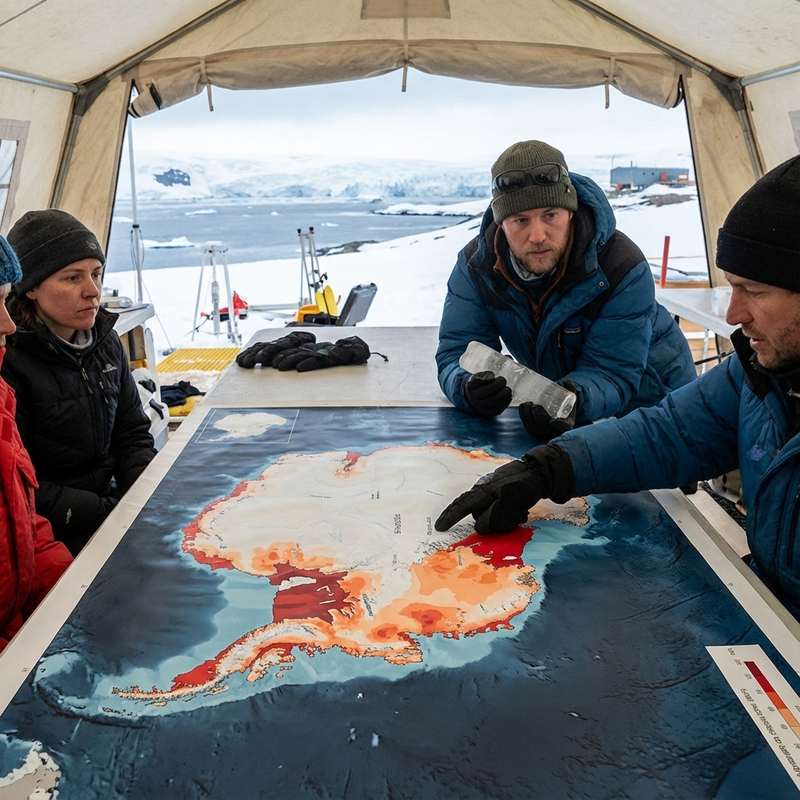
These findings have significant implications for our understanding of future sea level rise. While East Antarctica has long been considered relatively stable compared to West Antarctica, this study demonstrates that even ice sheets grounded on bedrock can be vulnerable to rapid collapse if exposed to warm ocean currents. Current observations in West Antarctica, particularly around Thwaites Glacier, show similar patterns of warm water intrusion and ice shelf thinning. The lessons from the past may provide insight into future trends. To see how this fits into the broader context of [related field context], examine studies on contemporary ice sheet dynamics.
It's crucial to note that this study doesn't predict an imminent collapse of the entire East Antarctic Ice Sheet. That said, the reality is a bit more complicated. it highlights the potential for rapid ice loss under certain conditions and underscores the importance of accurately representing ocean-ice interactions in climate models. Current models may underestimate the speed at which ice shelves can break apart and release inland ice into the ocean. [Prior research background] shows that projections that do not account for these factors may be underestimating the rate of sea level rise.
Ultimately, the fate of the Antarctic ice sheet and the rate of future sea level rise depend on how effectively we reduce greenhouse gas emissions and limit ocean warming. The study serves as a stark reminder that decisions made in the coming decades will have profound consequences for coastal communities and low-lying islands worldwide for generations to come. The story etched in the Antarctic sediments reveals that the interplay between warm water and meltwater can trigger surprisingly abrupt changes in ice systems, narrowing the range of futures we face as greenhouse gas levels continue to rise.
Editor’s note: This article was independently written by the Scoopliner Editorial Team using publicly available information.