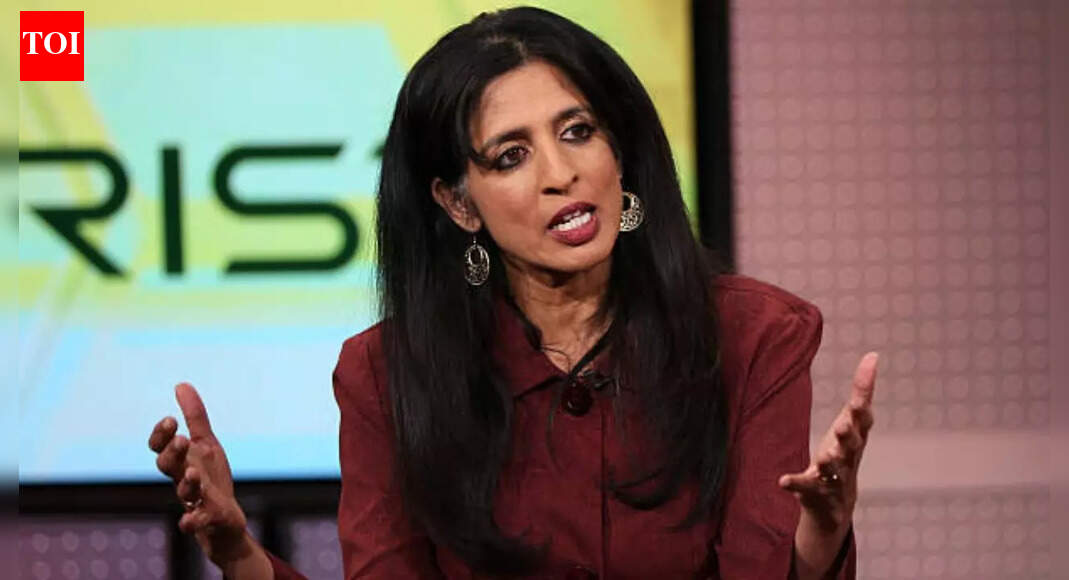
The Rise of Female Leadership in Tech: Implications for India's Economic Landscape
हिंदी में सुनें
Listen to this article in Hindi
Explore how Jayshree Ullal's ascent in the tech sector signals a shift in India's economic landscape and gender representation in leadership.
The recent ascent of Jayshree Ullal as the richest Indian-origin billionaire in the tech sector serves as a significant indicator of evolving dynamics within the global technology landscape, particularly regarding female leadership. As the CEO of Arista Networks, Ullal has not only surpassed male counterparts like Sundar Pichai and Satya Nadella in net worth but has also become a beacon of possibility for aspiring female entrepreneurs and leaders in India. This milestone reflects a broader trend that could reshape investor sentiment and market behavior in India, particularly as the nation navigates its path toward a more inclusive economy.
The technology sector has long been characterized by a male-dominated narrative, with leadership roles frequently occupied by men. That said, the reality is a bit more complicated. Ullal’s emergence challenges this paradigm and highlights the increasing recognition of women's capabilities in high-stakes environments. Her success story resonates deeply within the Indian context, where gender diversity in corporate leadership has historically lagged behind many developed nations. This shift is not merely symbolic; it has tangible implications for the Indian economy, particularly as it seeks to bolster its global standing in technology and innovation.
The rise of female executives like Ullal introduces a new narrative into the investment discourse, potentially influencing market sentiment. Investors are increasingly recognizing the value of diversity, which studies show can lead to better decision-making and enhanced financial performance. As companies prioritize gender diversity, there is a growing expectation that they will not only perform better but also attract a broader base of investors who value social responsibility alongside profitability.
In the context of the Indian market, this could mean a shift in how capital flows into technology and innovation-driven sectors. Ullal's leadership at Arista Networks, a company that thrives on software innovation and cloud networking, illustrates the economic potential that comes with diverse leadership. As Arista continues to expand its offerings and capture market share, it sends a strong signal to Indian investors: companies led by diverse teams are capable of achieving remarkable growth, both financially and in terms of market impact.
Moreover, Ullal's story is particularly poignant as it aligns with broader governmental and societal initiatives aimed at fostering women's participation in the workforce. India has been making strides toward improving gender equality and promoting female leadership, but challenges remain. The visibility of leaders like Ullal can galvanize efforts to enhance policies supporting women's advancement in the workplace. This nexus of female entrepreneurship and economic growth can bolster consumer sentiment, leading to increased spending and investment in sectors that support diversity.
As the global economy increasingly pivots towards technology and innovation, the implications for liquidity in the Indian market are profound. The tech sector's growth, buoyed by leaders like Ullal, is likely to attract foreign direct investment (FDI), further stimulating economic activity. Investors may find themselves drawn to Indian technology firms that embody this new paradigm of leadership, consequently increasing liquidity in these markets. This influx of capital could facilitate the development of new technologies and innovations that further enhance the country's competitive edge in global markets.
The effect of Ullal's rise also extends to volatility within the Indian stock market. As firms led by women gain recognition, there may be a shift in how market movements are perceived. Historically, markets have reacted to leadership changes with a degree of skepticism, particularly in sectors where male leadership has been the norm. That said, the reality is a bit more complicated. as more female leaders emerge and prove their capabilities, we might see a stabilizing effect on stock performance, accompanied by a greater willingness among investors to back companies that prioritize gender diversity.
That said, the reality is a bit more complicated. there are inherent risks associated with this evolving narrative. The pressure on female leaders to perform can be immense, and any missteps could lead to significant backlash, impacting market perceptions of female-led firms. Additionally, while Ullal's success is inspiring, it is critical to remain vigilant about the broader ecosystem that supports female entrepreneurs. Without systemic changes and support, her story could remain an outlier rather than the norm.
So where does that leave things? Jayshree Ullal’s ascent as a leading figure in the tech industry not only marks a significant achievement for her but also serves as a catalyst for change within the Indian market. Her leadership underscores the potential for diversity to drive economic growth and innovation, reshaping market dynamics in the process. As India continues to navigate its economic landscape, the influence of female leaders like Ullal will likely become increasingly pronounced, offering both challenges and opportunities for investors attuned to these shifts.
For more insights into the evolving landscape of the Indian economy and the potential impact of RBI policy on market dynamics, visit our explanatory pages on [RBI policy](#) and [Indian economy](#).
Editor’s note: This article was independently written by the Scoopliner Editorial Team using publicly available information.