Understanding the Northern Lights: A Scientific Overview
हिंदी में सुनें
Listen to this article in Hindi
The northern lights may be seen in 18 U.S. states tonight due to a coronal mass ejection. Here's what that means scientifically.
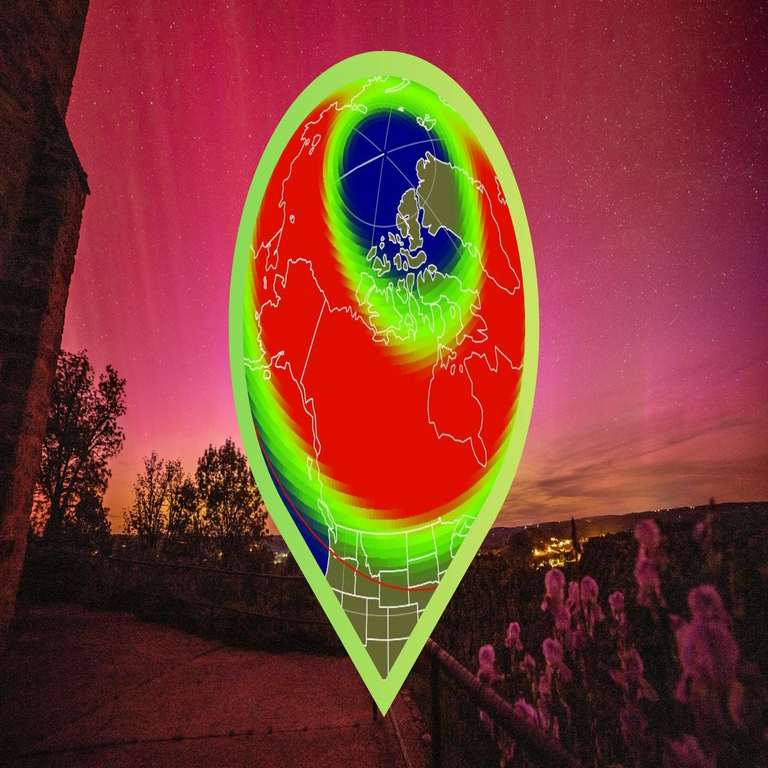
The northern lights, or aurora borealis, are a natural phenomenon that occurs when charged particles from the sun interact with the Earth’s magnetic field. These interactions can produce stunning displays of light, primarily in the polar regions. That said, the reality is a bit more complicated. on occasion, they can be visible at lower latitudes, such as in parts of the northern U.S., as forecasted for the night of January 2-3 due to an incoming coronal mass ejection (CME).
A coronal mass ejection is a significant release of plasma and magnetic field from the sun's corona. When these charged particles reach the Earth, they can disturb the Earth's magnetic field, leading to geomagnetic storms. The National Oceanic and Atmospheric Administration's (NOAA) Space Weather Prediction Center has indicated that a CME is expected to arrive, potentially triggering minor to moderate geomagnetic storms (G1 to G2 on the NOAA scale).
The forecast suggests that 18 states across the northern U.S. could see the northern lights, including Alaska, North Dakota, Minnesota, and others. This elevated chance of visibility is particularly exciting for aurora enthusiasts, as conditions at mid-latitudes can be quite rare. It is essential to note, however, that auroras are inherently unpredictable. The visibility depends on several factors, including the intensity of the geomagnetic storm and local weather conditions.
Timing is also crucial. According to NOAA’s forecast, the best chances for viewing the northern lights will be between 4 p.m. and 4 a.m. EST, with potential peaks in activity during specific hours. Observers should look to the sky as soon as it gets dark and monitor local aurora alerts for real-time updates.
While the anticipation of seeing the aurora can be exhilarating, it is important to manage expectations. The forecast is based on current data, and changes in solar activity or atmospheric conditions could affect visibility. Additionally, not all locations within the listed states will have equal chances of witnessing the lights, as urban light pollution and weather obscurity can hinder visibility.
This phenomenon is not just a spectacle; it serves as a reminder of the complex interactions between our planet and solar activity. Understanding these interactions enhances our knowledge of space weather and its impact on Earth, affecting everything from technology to climate dynamics.
In summary, while tonight’s forecast brings hope for seeing the northern lights across many states, it is essential to approach this event with a grounded understanding of the science behind it and the limitations of forecasts. The beauty of the aurora is indeed captivating, yet it remains a natural occurrence influenced by a myriad of factors, both cosmic and terrestrial.
Editor's note: This article was independently written by the Scoopliner Editorial Team using publicly available information.