Nuclear Submarine Race on the Korean Peninsula: A New Era of Regional Instability?
हिंदी में सुनें
Listen to this article in Hindi
North Korea's submarine program and US-South Korea cooperation signal a potential arms race, reshaping regional power dynamics and global security concerns.
The geopolitical landscape of Northeast Asia is undergoing a significant shift, driven by the confluence of North Korea's accelerating weapons programs and the evolving security alliance between the United States and South Korea. Kim Jong Un's recent condemnation of the US-Seoul nuclear submarine agreement and his emphasis on bolstering North Korea's naval capabilities highlight a growing tension that extends far beyond the Korean Peninsula. This development represents not merely a regional issue, but a critical inflection point in global nuclear proliferation and strategic competition.
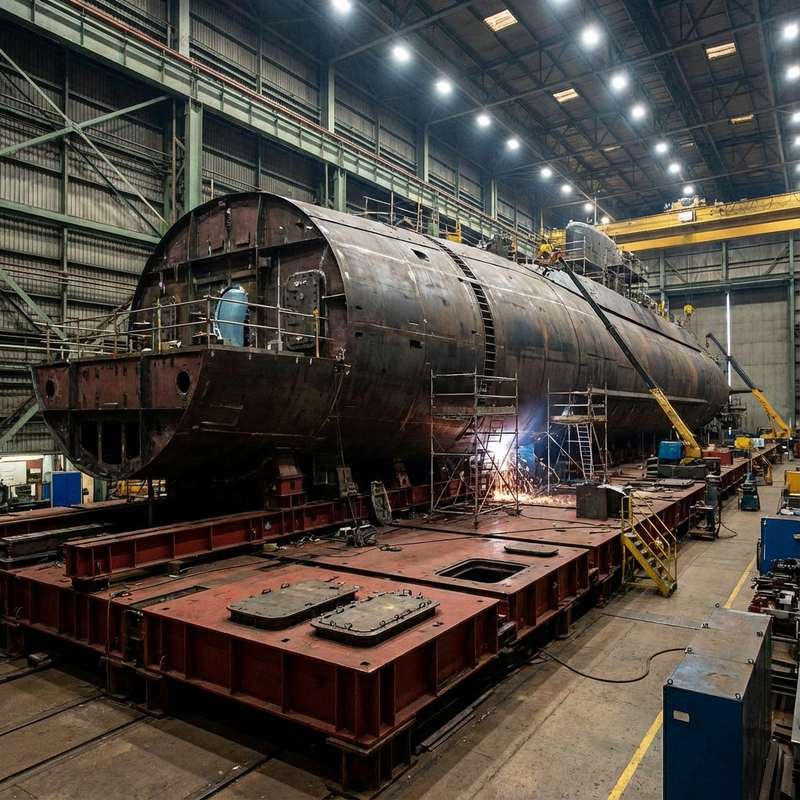
The pursuit of nuclear-powered submarines by both sides signals a qualitative escalation in the regional arms race. Unlike surface vessels, nuclear submarines possess extended operational ranges and can remain submerged for long durations, granting them a significant advantage in terms of stealth and deterrent capability. North Korea's efforts to develop an 8,700-tonnage nuclear-powered strategic guided missile submarine, coupled with tests of new anti-air missiles, demonstrate a commitment to enhancing its second-strike capability – the ability to retaliate even after absorbing an initial attack. For Pyongyang, this capability is viewed as essential for deterring potential aggression from the United States and its allies.
Conversely, South Korea's ambition to acquire nuclear-powered submarine technology, potentially through a “standalone deal” with the US, reflects Seoul's growing concerns about North Korea's advancing missile arsenal and the perceived limitations of relying solely on the US nuclear umbrella. While US law currently restricts the transfer of nuclear materials for military purposes, the precedent set by Australia's nuclear submarine deal with the US suggests a potential pathway for South Korea to overcome these legal hurdles. A South Korean nuclear submarine fleet would enhance Seoul's ability to project power and deter North Korean provocations, contributing to a more robust defense posture.
The strategic implications of this emerging submarine race are far-reaching. It increases the risk of miscalculation and unintended escalation in the region. The difficulty in detecting and tracking submarines, combined with the potential for nuclear-armed platforms to operate in close proximity, creates a highly volatile environment. Furthermore, the development of advanced submarine technology by both North and South Korea could spur other nations in the region to pursue similar capabilities, potentially triggering a wider arms race with unpredictable consequences. The current balance of power in the region between China, Japan, and the Koreas could be significantly destabilized.
Adding to the complexity of the situation is the deepening relationship between North Korea and Russia. Vladimir Putin's recent praise for the “comprehensive strategic partnership” and his acknowledgement of North Korea's military support in Ukraine underscore the growing alignment between Moscow and Pyongyang. This partnership provides North Korea with access to advanced military technology and economic assistance, bolstering its ability to withstand international sanctions and pursue its weapons programs. The implications of this partnership extend beyond the Korean Peninsula, potentially impacting the global balance of power and challenging the existing international order. For example, Russia, a country with a permanent seat on the UN Security Council, may be less inclined to support sanctions against North Korea.
Despite these developments, significant uncertainties and constraints remain. North Korea's submarine program faces technological hurdles and resource limitations. Whether Pyongyang can successfully develop and deploy a reliable nuclear-powered submarine fleet remains to be seen. Similarly, South Korea's ability to secure a nuclear submarine deal with the US is contingent on navigating complex legal and political obstacles. Public opinion in South Korea may also play a role, as any deal with the US could be seen as a step towards militarization. The US itself must balance its commitment to South Korean security with its broader strategic objectives in the region, particularly managing its relationship with China. The situation also underscores the importance of India’s global position, and its role in maintaining regional stability.
So where does that leave things? the escalating submarine race on the Korean Peninsula represents a serious challenge to regional and global security. The interplay of North Korea's ambitions, the US-South Korea alliance, and the growing partnership between North Korea and Russia is creating a complex and potentially dangerous situation. De-escalation will require a multi-faceted approach involving diplomacy, arms control measures, and a reassessment of the regional security architecture. The alternative is a future defined by increased instability and the ever-present threat of nuclear conflict. Understanding the basics of nuclear strategy is crucial for interpreting these events.
Editor’s note: This article was independently written by the Scoopliner Editorial Team using publicly available information.