Nobel laureate describes Belarus prison ordeal in first interview after release
हिंदी में सुनें
Listen to this article in Hindi
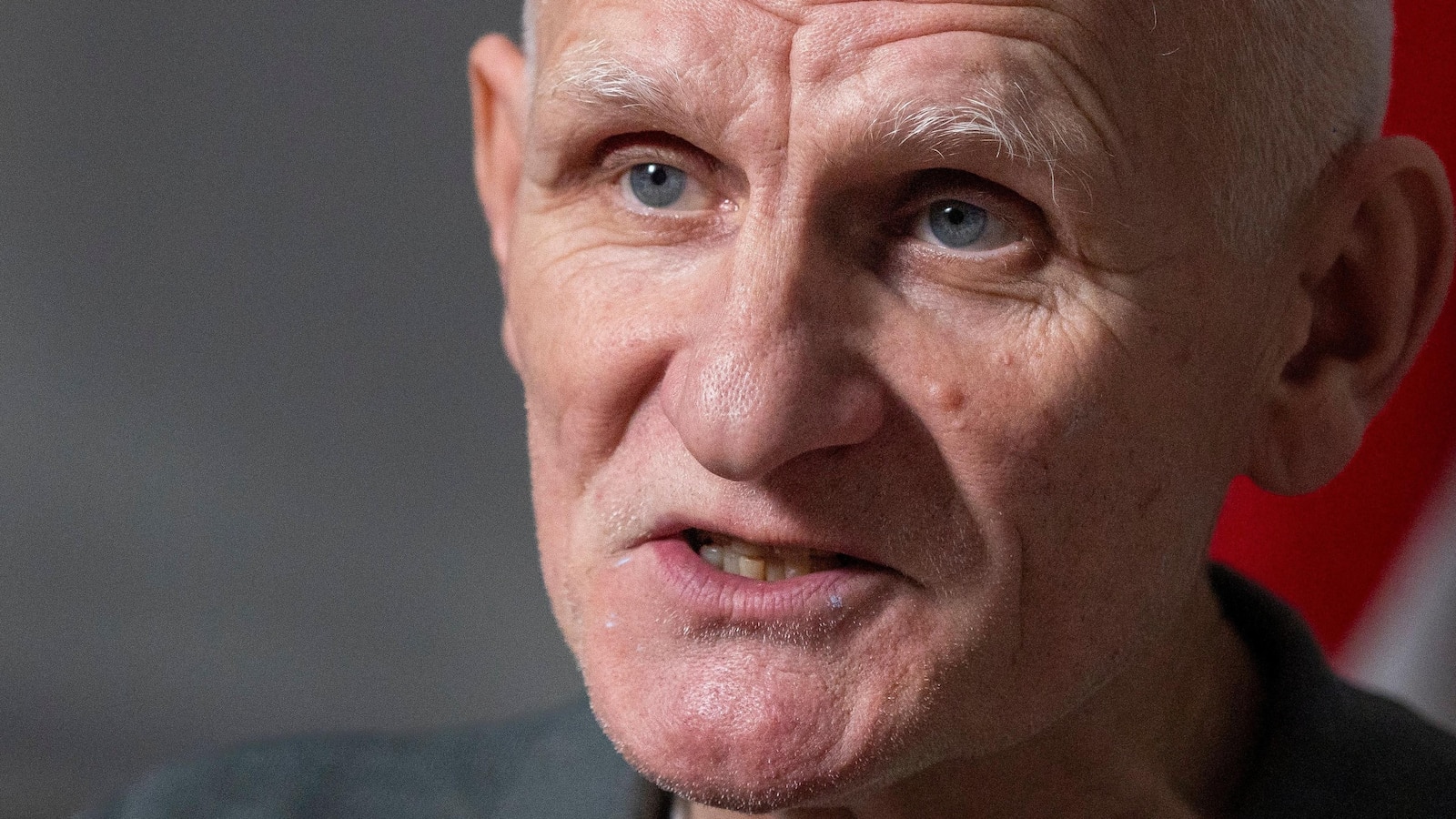
Nobel Peace Prize winner Ales Bialiatski recounts his Belarus prison experience in his first interview after being freed after over four years.
Vilnius, Lithuania – Ales Bialiatski, the Nobel Peace Prize laureate, spoke with The Associated Press on Sunday in Vilnius, Lithuania, after being suddenly released from prison on Saturday. The interview followed a visit to the dentist. His release marks a return to normal life after spending over four years in a Belarusian penal colony.
Bialiatski, 63, described the limited medical care he received while serving his 10-year sentence. He stated that the only dental treatment available was tooth extraction.
Recounting his release, Bialiatski said he was in an overcrowded cell at Penal Colony no. 9 in eastern Belarus in the early hours of Saturday when he was unexpectedly told to gather his belongings. He was blindfolded and transported to an unknown location. "They put a blindfold over my eyes. I was looking occasionally where we were headed, but only understood that we’re heading towards west,” he said.
In Vilnius, he was reunited with his wife, embracing her for the first time in years.
"When I crossed the border, it was as if I emerged from the bottom of the sea and onto the surface of the water. You have lots of air, sun, and back there you were in a completely different situation — under pressure," Bialiatski told the AP, describing his newfound freedom.
Bialiatski was among 123 prisoners released by Belarus in exchange for the U.S. easing sanctions on the country’s potash sector, which is vital to the Belarusian economy.
Belarus, a close ally of Russia, has been under Western sanctions and faced isolation for years. President Alexander Lukashenko, an authoritarian leader, has governed the nation of 9.5 million for over three decades. The West has repeatedly sanctioned Belarus for human rights abuses and for allowing Russia to use its territory in the 2022 invasion of Ukraine.
Since July 2024, Belarus has released hundreds of prisoners in what appears to be an attempt to improve relations with the West.
Bialiatski, along with the Russian rights group Memorial and Ukraine’s Center for Civil Liberties, was awarded the Nobel Peace Prize in 2022. At the time of the award, he was jailed awaiting trial. He was later convicted and given a 10-year sentence for smuggling and financing actions violating public order – charges that have been widely condemned as politically motivated.
The founder of Viasna, Belarus' oldest and most prominent human rights organization, was imprisoned in a penal colony in Gorki, a facility known for its harsh conditions and forced labor.
Bialiatski told the AP that he was not subjected to beatings during his imprisonment, possibly due to his status as a Nobel laureate. That said, the reality is a bit more complicated. he experienced the same conditions as other political prisoners in Belarus, including solitary confinement, arbitrary punishment for minor offenses, limited contact with family, and infrequent mail.
"We can definitely talk about inhumane treatment, about creating conditions that violate your integrity and some kind of human dignity," he stated.