New Year Celebrations Amidst Global Tensions: A Geopolitical Perspective
हिंदी में सुनें
Listen to this article in Hindi
Exploring the significance of global New Year celebrations in light of recent geopolitical events and tensions.
As the world ushered in 2026, the celebrations across various countries reflected not only a moment of joy but also the underlying geopolitical tensions that shape contemporary society. The New Year has historically been a time for reflection and renewal, yet recent events, particularly in regions like Australia and New Zealand, have underscored the fragility of such moments in a world increasingly marked by violence and division.
In New Zealand, the New Year was welcomed with traditional fireworks, yet the backdrop of celebratory joy was marred by weather disruptions, reflecting how external factors can influence planned celebrations. The situation illustrates a broader theme: how natural and human-made crises can impact national sentiment and collective experiences. In an era where climate change poses increasing risks, the unpredictability of weather patterns may become a significant factor in planning large-scale events.
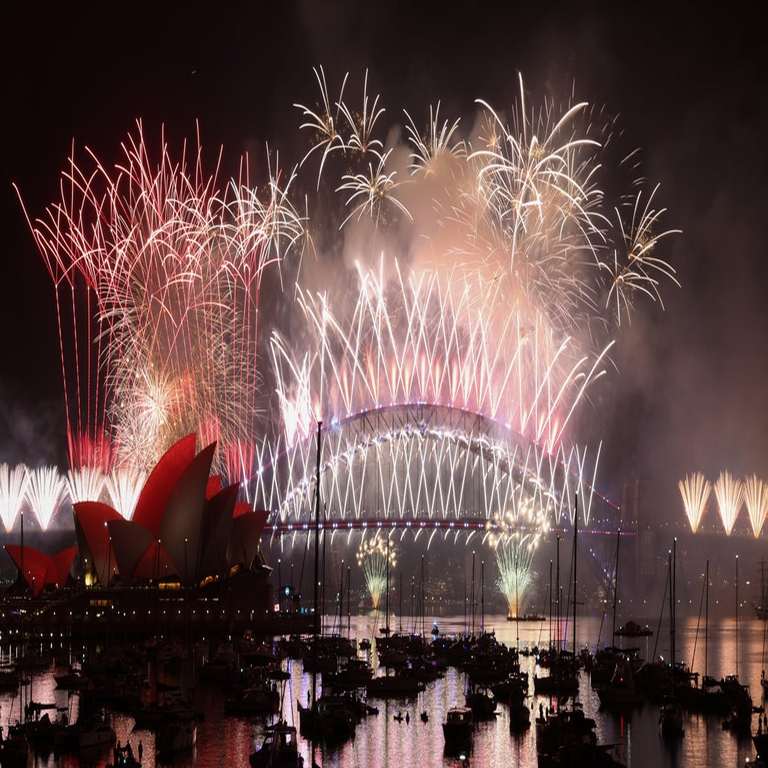
Conversely, Australia’s New Year celebrations took place under the shadow of a recent mass shooting that left 15 dead during a Hanukkah celebration. This incident, labeled as an ISIS-inspired terrorist attack, highlights the dual challenges of domestic security and community cohesion. The heightened police presence and the unusual sight of officers carrying automatic weapons during the festivities indicate a shift in how public safety is perceived and managed, particularly in urban centers. This situation raises questions about the effectiveness of security measures in preventing future incidents and the balance between public safety and civil liberties.
The commemorative gestures during Sydney's celebrations, such as a minute of silence for the victims and projecting images of a menorah, serve as a poignant reminder of the need for solidarity in the face of divisive acts. Such actions are essential for maintaining social cohesion and reinforcing community resilience against extremism. That said, the reality is a bit more complicated. they also highlight the ongoing challenges faced by minority communities in asserting their place within a broader national identity, particularly in contexts where they may feel targeted by violence.
The geopolitical implications extend beyond national borders, as security concerns in Australia resonate with global anxieties about rising extremism and antisemitism. The New Year celebrations become a microcosm of larger societal issues, reflecting how local events can have rippling effects on international relations and perceptions. Countries worldwide are increasingly confronted with the challenges of integrating diverse populations while addressing the threats posed by radical ideologies.
As nations grapple with these issues, the response to such tragedies will likely shape their international positioning. Australia, for instance, may find itself re-evaluating its counter-terrorism strategies and community engagement policies, potentially influencing its alliances and security partnerships. The dynamics of international cooperation in combating terrorism will be tested as nations navigate their internal challenges while seeking external support.
Looking ahead, the significance of public celebrations in reinforcing national identity cannot be underestimated. In a world where individual and collective identities are often contested, the manner in which nations celebrate shared moments can either unify or divide. The events surrounding New Year’s Eve 2026 serve as a case study for how public sentiment, security, and national identity intertwine in complex ways.
As global citizens reflect on the past year, the implications of these events will likely resonate throughout 2026 and beyond. The interplay between celebration and security will remain a critical concern for nations, shaping the way communities engage in public life and how they define their social contract with the state.
Editor's note: This article was independently written by the Scoopliner Editorial Team using publicly available information.