New Telescope Data Deepens the Mystery of How Fast the Universe Is Expanding
New data from the Atacama Cosmology Telescope sharpen the Hubble tension, confirming a lower early-universe expansion rate and challenging existing cosmological models.
New information from the Atacama Cosmology Telescope (ACT) throws a fresh argument into the mix regarding what the actual value of the Hubble constant is-how fast the universe is expanding. One of the main points such precise observations make is that there exists a long-standing difference between the expansion rates derived from the early universe and those obtained for the local one, and this is confirmed by the detailed observations. For those who may not be aware, this difference between these two values is called the Hubble tension and has become even more significant nowadays.
New CMB Map Strengthens the Case
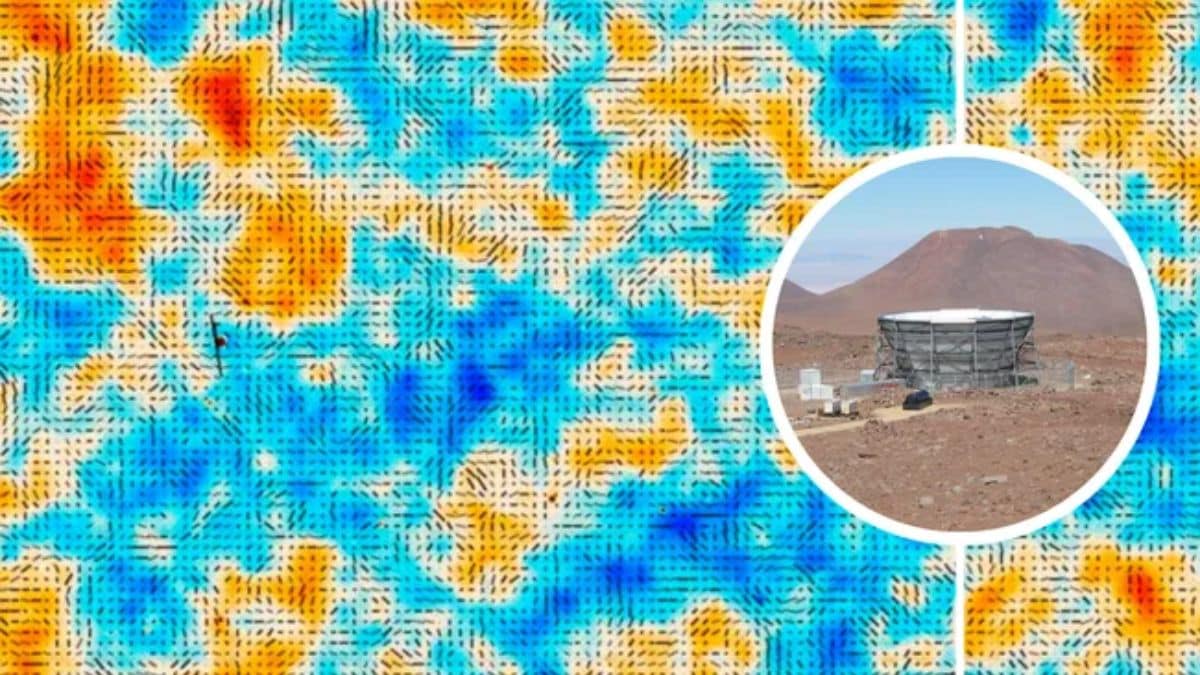
According to the paper, the ACT's final data — encompassing nearly two decades of observations — include high-resolution maps of the Cosmic Microwave Background (CMB) polarisation. These maps complement earlier temperature measurements from the Planck spacecraft, offering a clearer “look” at the universe's primordial light.
According to ACT researchers, comparing these new polarisation maps with the older data is akin to “cleaning your glasses,” revealing subtle features previously obscured. Notably, the Hubble constant derived from ACT's CMB polarisation aligns closely with Planck's results — reinforcing the lower expansion rate tied to the early universe.
Implications: A Crunch for Cosmology
Because the CMB-derived value remains firmly lower than the rate found using nearby supernovae and other distance indicators, the Hubble tension has become more robust — not a measurement fluke. Many alternative cosmological models that tried to reconcile the discrepancy have now been ruled out.
This suggests that the standard cosmological framework, known as the Lambda-CDM model, may be incomplete. Ultimately, the new findings sharpen the mystery and force cosmologists to re-examine some of their basic assumptions.