Unlocking Earth's Secrets: Mapping Ancient Underwater Landslides to Understand Future Risks
हिंदी में सुनें
Listen to this article in Hindi
Researchers map the Stad Slide, a massive underwater landslide, providing insights into the causes and potential tsunami risks of such events.
When we think of landslides, we often picture dramatic scenes on land – hillsides collapsing after heavy rains. But some of the most colossal landslides occur beneath the ocean's surface, hidden from view. While these submarine landslides may seem remote, they pose significant risks, capable of damaging underwater infrastructure and triggering devastating tsunamis. Understanding these events is crucial for mitigating future disasters.
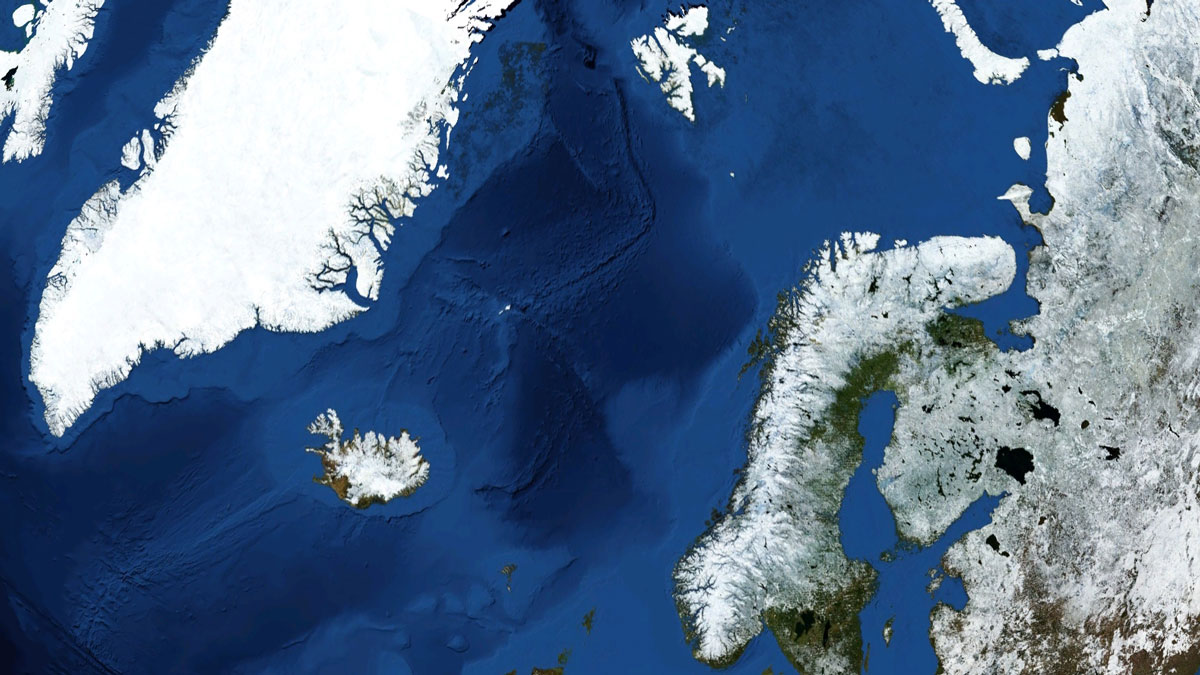
Recently, a team of researchers delved into the depths to map the Stad Slide, a massive underwater landslide that took place in the Norwegian Sea approximately 400,000 years ago. Using seismic reflection data, a technique that involves bouncing sound waves off the seafloor and analyzing the echoes, they created a detailed picture of this ancient geological event. This method, commonly used in energy exploration, reveals changes in sediment properties beneath the seabed, allowing scientists to visualize the layers and structures buried deep below.
The resulting map, covering an area roughly the size of Switzerland, revealed a complex layering of sediments. The researchers identified alternating layers of coarse and fine-grained materials, some reaching hundreds of meters in thickness. This contrasting composition is believed to have been a key factor in triggering the landslide. The coarser sediments, likely deposited by glaciers scraping across the landscape, created unstable foundations upon which finer, sand-rich sediments accumulated over time. Think of it like building a house on a shaky base – eventually, something's gotta give. Read more about the basics of geological mapping in [this science explainer](internal_link_to_science_basics_explainer).
These finer sediments, potentially containing biological material like diatom mats, may have further weakened the structure, creating slippery surfaces prone to sliding. While the layering created a predisposition for collapse, the researchers believe an external trigger, such as an earthquake or ground movement caused by isostatic rebound (the Earth's crust slowly rising after the weight of glaciers is removed), was necessary to set the Stad Slide in motion. Isostatic rebound is a slow process, but it can exert significant stress on geological formations over long periods.
The Stad Slide didn't happen all at once. The researchers found evidence of multiple scarps, a step-like profile indicating that the landslide occurred in stages. This suggests a sequential failure of the sediment layers, though the exact timing between these stages remains uncertain. It could have been a near-instantaneous event or occurred over hundreds of years. The sheer scale of the Stad Slide is staggering. The team estimates that around 4,300 cubic kilometers of sediment were displaced. To put that in perspective, that's about 1,000 times the volume of material ejected by the largest volcanic eruption of the 20th century. All that moving material would have displaced a massive amount of water, potentially generating a significant tsunami.
Another landslide in the region, the younger Storegga Slide, is known to have caused a tsunami with waves reaching over 10 meters high. Given that the Stad Slide is approximately 30% larger, it is plausible that it also triggered a major tsunami. That said, the reality is a bit more complicated. finding definitive evidence of such an ancient tsunami is a daunting task. Erosion and geological processes over hundreds of thousands of years can erase or obscure the evidence. The study highlights the real-world relevance of understanding submarine landslides. They are a geological hazard with the potential to cause significant damage and loss of life. Further research is needed to refine our understanding of the triggers, dynamics, and potential consequences of these events. Learn more about prior research background on the Storegga Slide and its impact on tsunami risk [here](internal_link_to_prior_research_background).
While this research provides valuable insights into the Stad Slide, it also underscores the limitations of studying events that occurred so long ago. The precise timing of the landslide stages and the definitive identification of a tsunami remain elusive. Further investigation, potentially involving the analysis of coastal sediment deposits, is needed to fully reconstruct the events surrounding the Stad Slide and assess its potential impact. This type of work can be informed by research in related fields, such as the study of other major geological events [internal link to related field context].
By meticulously mapping ancient submarine landslides like the Stad Slide, scientists are piecing together a better understanding of these powerful geological phenomena. This knowledge is crucial for assessing the risks they pose and developing strategies to mitigate their potential impact on coastal communities and underwater infrastructure.
Editor’s note: This article was independently written by the Scoopliner Editorial Team using publicly available information.