Revisiting Dinosaur Evolution: A New Giant Challenges East Asian Isolation Theories
हिंदी में सुनें
Listen to this article in Hindi
The discovery of Mamenchisaurus sanjiangensis challenges the idea that East Asian dinosaur ecosystems evolved in isolation, enriching our understanding of sauropod diversity.
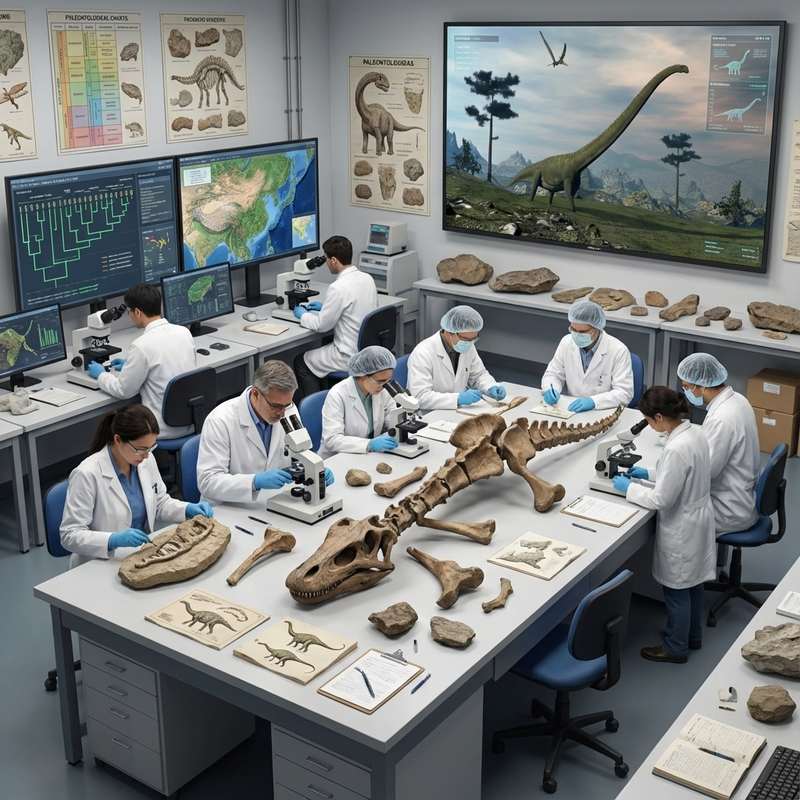
Paleontology continues to unearth secrets from the distant past, reshaping our understanding of prehistoric life. A recent discovery in China is doing just that, prompting a re-evaluation of dinosaur evolution and ancient ecosystems. The find? *Mamenchisaurus sanjiangensis*, a newly identified species of long-necked sauropod that roamed East Asia approximately 160 million years ago during the Late Jurassic Period. This herbivorous giant, unearthed in the Upper Shaximiao Formation near Chongqing, offers valuable insights into sauropod diversity and challenges long-held theories about the isolation of East Asian dinosaur populations.
Sauropods, characterized by their immense size, long necks, and herbivorous diets, were a dominant group of dinosaurs during the Mesozoic Era. Their fossil remains have been found on nearly every continent, providing a rich record of their evolutionary history. The *Mamenchisaurus* genus, in particular, is known for its exceptionally long necks, a feature that likely allowed them to reach high into the treetops for food. The discovery of *Mamenchisaurus sanjiangensis* adds another piece to the puzzle of sauropod evolution, highlighting the diversity of these giants in East Asia.
For decades, a prevailing theory known as the East Asian Isolation hypothesis suggested that dinosaur ecosystems in East Asia evolved independently from those in other parts of the world. This idea posited that geographical barriers and unique environmental conditions led to the development of distinct dinosaur lineages. That said, the reality is a bit more complicated. recent fossil discoveries, including *Mamenchisaurus sanjiangensis*, are challenging this notion. The similarities between sauropod species found in East Asia and those discovered in other regions, such as Africa, suggest that there may have been more interconnectedness between dinosaur populations than previously thought.
Dr. Hui Dai, the lead paleontologist on the study, emphasized the significance of the find, noting that the “Late Jurassic sedimentary units of China preserve rich sauropod records, and most of them are dominated by mamenchisaurids.” This statement underscores the importance of East Asia as a hotspot for sauropod fossils and highlights the role of *Mamenchisaurus sanjiangensis* in understanding the broader context of dinosaur evolution. The team's research is helping to refine our picture of how these creatures spread across the globe and adapted to different environments.
The exceptionally long necks of sauropods like *Mamenchisaurus sanjiangensis* were a defining characteristic, playing a crucial role in their survival. These elongated necks allowed them to access a wide range of vegetation, minimizing the need to move their massive bodies and conserving energy. The internal structure of their bones, featuring air-filled chambers within the vertebrae, further enhanced the efficiency of these long necks by reducing their weight. This adaptation was particularly important for mamenchisaurids, who lived in environments where food resources may have been patchily distributed.
The skeletal structure of *Mamenchisaurus sanjiangensis* reveals important clues about its adaptation to its environment. The bones were lightweight due to a unique camellate structure, a honeycomb pattern within the bone tissue. This design reduced the overall weight of the skeleton while maintaining its strength, allowing the dinosaur to support its massive body. The wide femur suggests powerful hind limbs, which would have provided stability and support. Understanding bone structure is crucial to understanding how animals of this size moved and survived. (See also: Science basics explainer).
Despite the significance of this discovery, there are limitations and unanswered questions. The fossil record is incomplete, and further discoveries are needed to fully understand the evolutionary relationships between *Mamenchisaurus sanjiangensis* and other sauropod species. Additionally, more research is needed to determine the exact environmental conditions in which these dinosaurs lived and how they interacted with other species in their ecosystems. The precise mechanics of how these dinosaurs supported their enormous necks also remains an area of active research (for context, read about related field context).
The discovery of *Mamenchisaurus sanjiangensis* is a significant contribution to our understanding of dinosaur evolution and ancient ecosystems. It challenges the notion of East Asian isolation, highlighting the interconnectedness of dinosaur populations across different continents. Further research will undoubtedly shed more light on the life and times of this extraordinary dinosaur, offering new perspectives on the giants that once roamed our planet. While questions remain, the find underscores the importance of continued paleontological research in piecing together the complex history of life on Earth. It is a reminder that the story of the dinosaurs is far from complete, and that new discoveries continue to reshape our understanding of these remarkable creatures and their place in the history of life. This also reinforces the value of scientific inquiry in constantly refining and challenging existing theories (check out prior research background).
Editor’s note: This article was independently written by the Scoopliner Editorial Team using publicly available information.