NASA’s Perseverance Records First-Ever Mini-Lightning on Mars
NASA’s Perseverance rover has recorded the first electrical discharges in Mars’ atmosphere, revealing tiny lightning sparks created by dust storms and reshaping our understanding of Martian weather and chemistry.
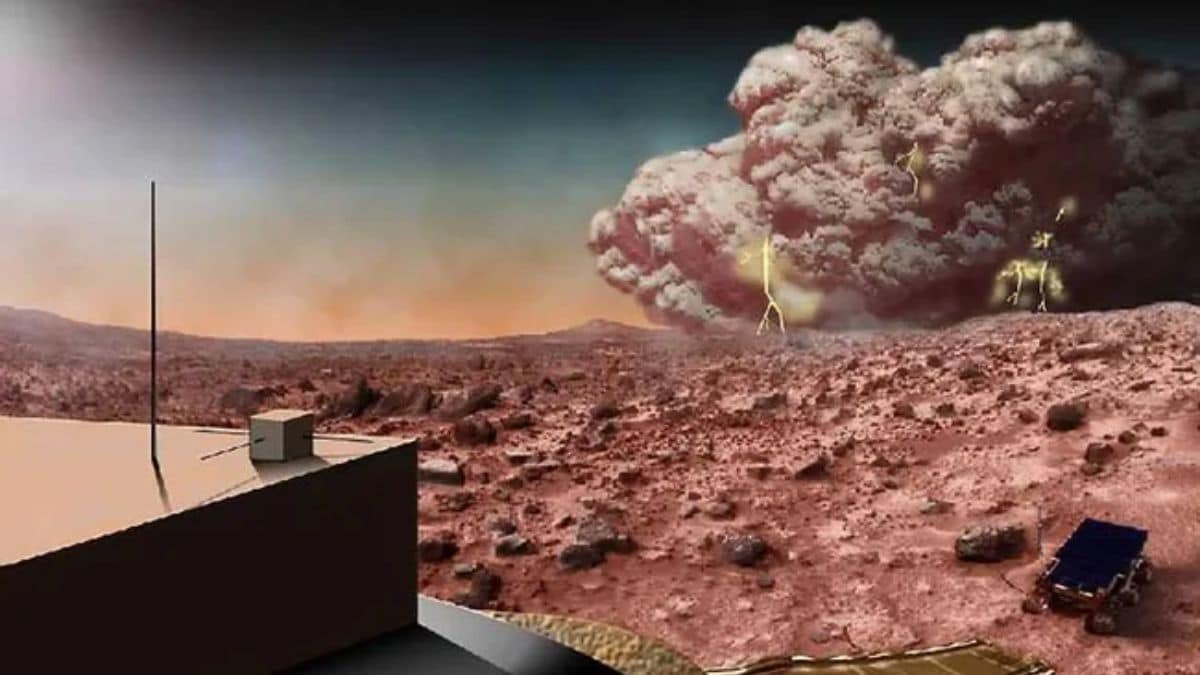
Scientists have reported the first observation of electrical discharges - small lightning flashes - in the dusty atmosphere of Mars. These events were recorded by NASA's Perseverance rover, which has a very sensitive microphone that captured the crackling sounds during the period of the strong winds and dust devils. The team found nearly 55 short discharges over the span of two Mars years, thus establishing that the dust raised by the winds on Mars can cause electric sparks. The article describing this research, appearing in Nature, marks the beginning of a new domain to understand Martian weather and its chemistry.
Martian mini-lightning detected
As per the study, researchers report the first evidence of electricity in Mars's atmosphere. A microphone on NASA's Perseverance rover captured crackling sounds and interference from dozens of short electrical discharges during dust storms. By analysing 28 hours of recordings over two Martian years, the team identified 55 such “mini-lightning” eventsap.org. Each spark was only a few centimeters long, producing a brief static spike and a faint shockwave, akin to a tiny spark in Mars's thin air.
Implications for Mars exploration
Importantly, these micro-lightning sparks help explain long-mysterious oxidants on Mars. The discharges produce reactive compounds (such as hydrogen peroxide) that can destroy organic molecules and potential biosignatures. As per Science News, scientists caution that while the tiny zaps are too weak to harm astronauts directly, they could degrade sensitive electronics over time.
The discovery suggests that future missions should account for such static effects, using extra shielding or sensors. Researchers call for new instruments to monitor Mars's electric fields, to better design rovers and spacesuits capable of handling these discharges.