NASA's James Webb Telescope Detects Substantial Atmosphere on Scorching Lava Planet
हिंदी में सुनें
Listen to this article in Hindi
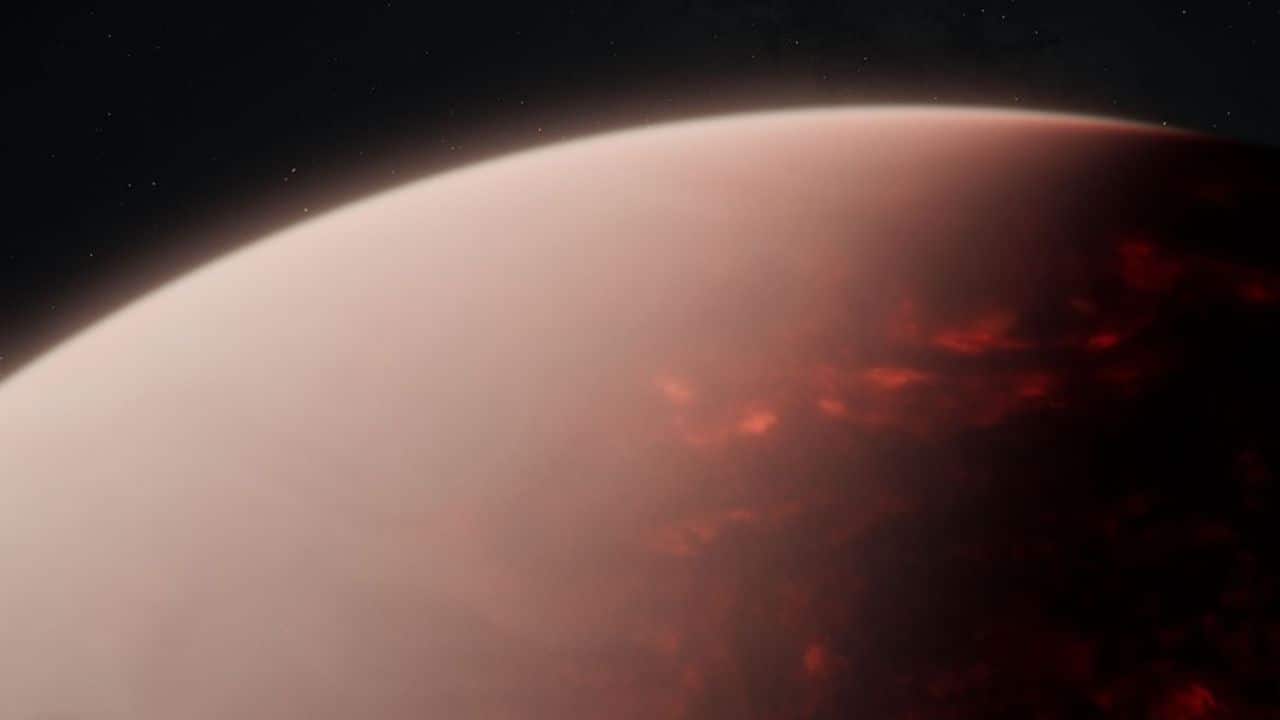
The James Webb Space Telescope has detected a surprisingly thick atmosphere surrounding the ultra-hot exoplanet TOI-561 b, a lava-covered world.
In a groundbreaking discovery, astronomers have used NASA's James Webb Space Telescope to find compelling evidence of an atmosphere enveloping a rocky exoplanet. Their research, published in The Astrophysical Journal Letters, focuses on TOI-561 b, a super-Earth characterized by extreme heat due to its close proximity to its star.
Understanding TOI-561 b
TOI-561 b is classified as an ultra-short period (USP) planet, completing its orbit in under 11 hours. It is approximately 1.4 times the radius of Earth and orbits its star at a distance of less than 1 million miles.
This extreme nearness causes the planet to be tidally locked, with one side perpetually facing its star. The constant exposure results in surface temperatures exceeding the melting point of rock, leading scientists to believe that TOI-561 b features a planet-wide ocean of magma.
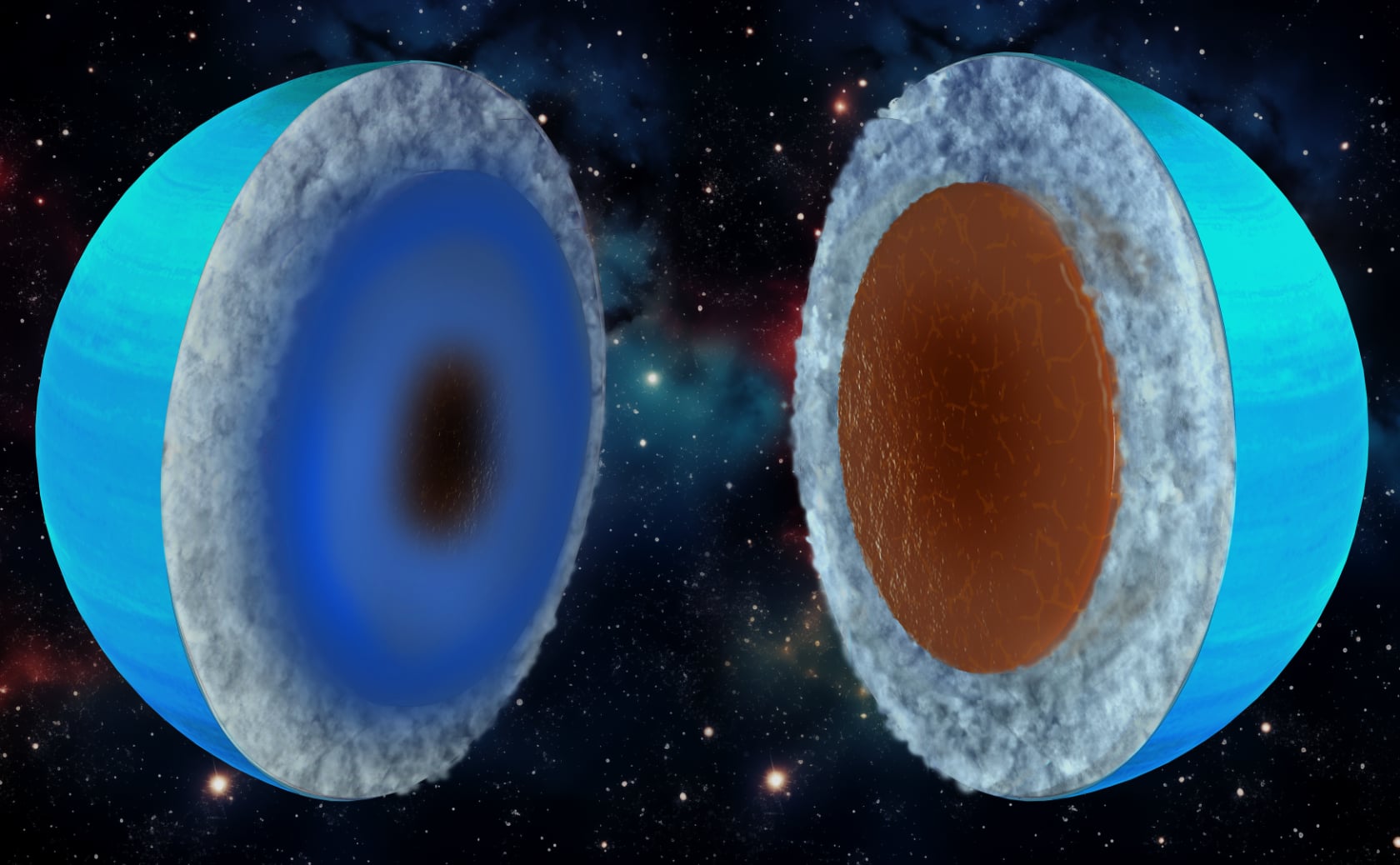
Despite these harsh conditions, TOI-561 b has a surprisingly low density, a characteristic that has puzzled scientists. According to Johanna Teske of Carnegie Science, the study's lead author, its density is lower than expected for a planet with an Earth-like composition.
Webb's Data and Atmospheric Evidence
To investigate the possibility of an atmosphere explaining the planet's unusual properties, the researchers utilized Webb's Near-Infrared Spectrograph to measure the temperature on the planet's dayside. This was achieved by observing changes in brightness as the planet passed behind its star.
Without an atmosphere, the planet's dayside temperature was predicted to reach around 4,900 degrees Fahrenheit. That said, the reality is a bit more complicated. the Webb telescope recorded a temperature of approximately 3,200 degrees Fahrenheit. This lower temperature suggests that heat is being distributed across the planet.
Scientists suggest that only a substantial atmosphere could account for this heat redistribution. Anjali Piette, a co-author from the University of Birmingham, stated that a volatile-rich atmosphere is needed. Such an atmosphere could facilitate heat transfer to the nightside through strong winds, while atmospheric gases could also absorb infrared radiation.
Implications for Planetary Science
This discovery challenges previous assumptions about small planets orbiting close to their stars. It was previously believed that such planets could not retain atmospheres due to billions of years of radiation exposure. TOI-561 b's atmosphere suggests otherwise.
The planet's formation may have occurred in a chemically distinct environment. It orbits a star that is twice the age of the Sun and has a low iron content. This star is located within the Milky Way's thick disk. Scientists propose that the planet's conditions may reflect those of the early universe.
The researchers theorize an equilibrium between the magma ocean and the atmosphere, where gases escape into the atmosphere and then dissolve back into the molten rock. Co-author Tim Lichtenberg described it as resembling a "wet lava ball."
The observations were made as part of Webb's General Observers Program 3860, during which the telescope monitored the system for over 37 hours. The scientists are currently analyzing the complete data set to map global temperatures and determine the atmospheric composition.
Teske emphasized the excitement surrounding the new questions raised by this discovery.