NASA study reveals shocking new threat ruining Hubble and future telescope images
While space telescopes are presumed safe from interference, a NASA-led study recently confirmed a major problem that is now ruining their images.
New Delhi:
Space-based telescopes are facing a new and growing challenge: their images are getting ruined. The issue isn't with the telescopes' components themselves, but rather the increasing number of other satellites in low-Earth orbit (LEO) that are posing this threat. According to a recent NASA-led study, images from space telescopes are becoming contaminated by light reflected and emitted from LEO satellites.
This problem, traditionally associated with light pollution from cities and vehicles, was previously limited to ground-based telescopes. Now, as these LEO satellites cross a telescope's field of view, they leave bright traces that overpower faint cosmic signals. Satellites not only reflect sunlight, moonlight, and Earth-shine, but also emit infrared radiation generated by the temperature of their components, and reflect radio wavelengths.
Extent of the contamination
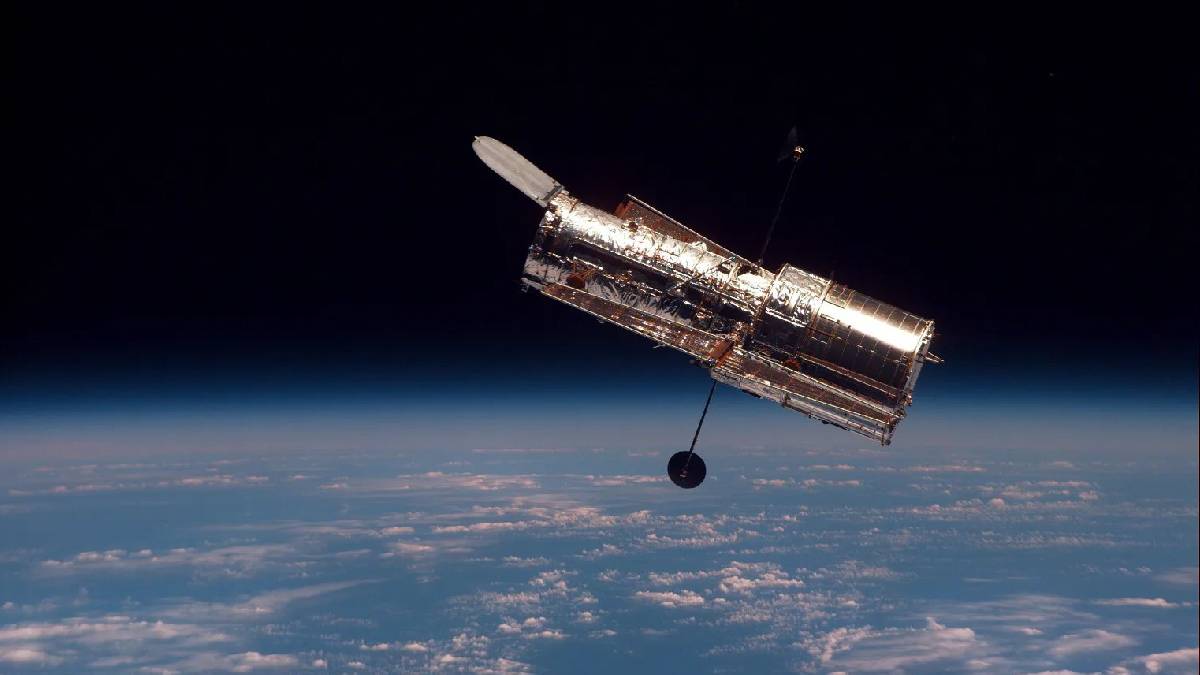
The study looked at four important space telescopes—two that are currently being used and two that are planned for the future—and discovered some concerning issues with light pollution. For instance, it was found that about 40% of the images taken by NASA's Hubble Space Telescope might be affected by light from satellites.
The upcoming SPHEREx observatory could experience significant challenges, as almost 96% of its images might be affected by interference. This issue isn't unique to SPHEREx; the European Space Agency’s ARRAKIHS mission and China’s planned Xuntian telescope are also facing similar problems, with expected contamination rates being just as high.
The cause: Sky crowding
The rapid increase in low Earth orbit (LEO) satellites is mainly driven by the desire to provide internet access to people around the world. Back in 2019, there were about 2,000 satellites in LEO, but that number has skyrocketed to 15,000 today. Experts believe that this could rise to an astonishing 560,000 satellites in the next ten years.
To address potential problems caused by too many satellites, researchers suggest launching new satellites at lower altitudes than telescopes. Fortunately, some important space observatories, like NASA's James Webb Space Telescope (JWST), are in orbits that are much farther from Earth. This means they won’t be affected by the growing number of satellites in LEO.