NASA says satellites are photobombing Hubble and other space telescopes
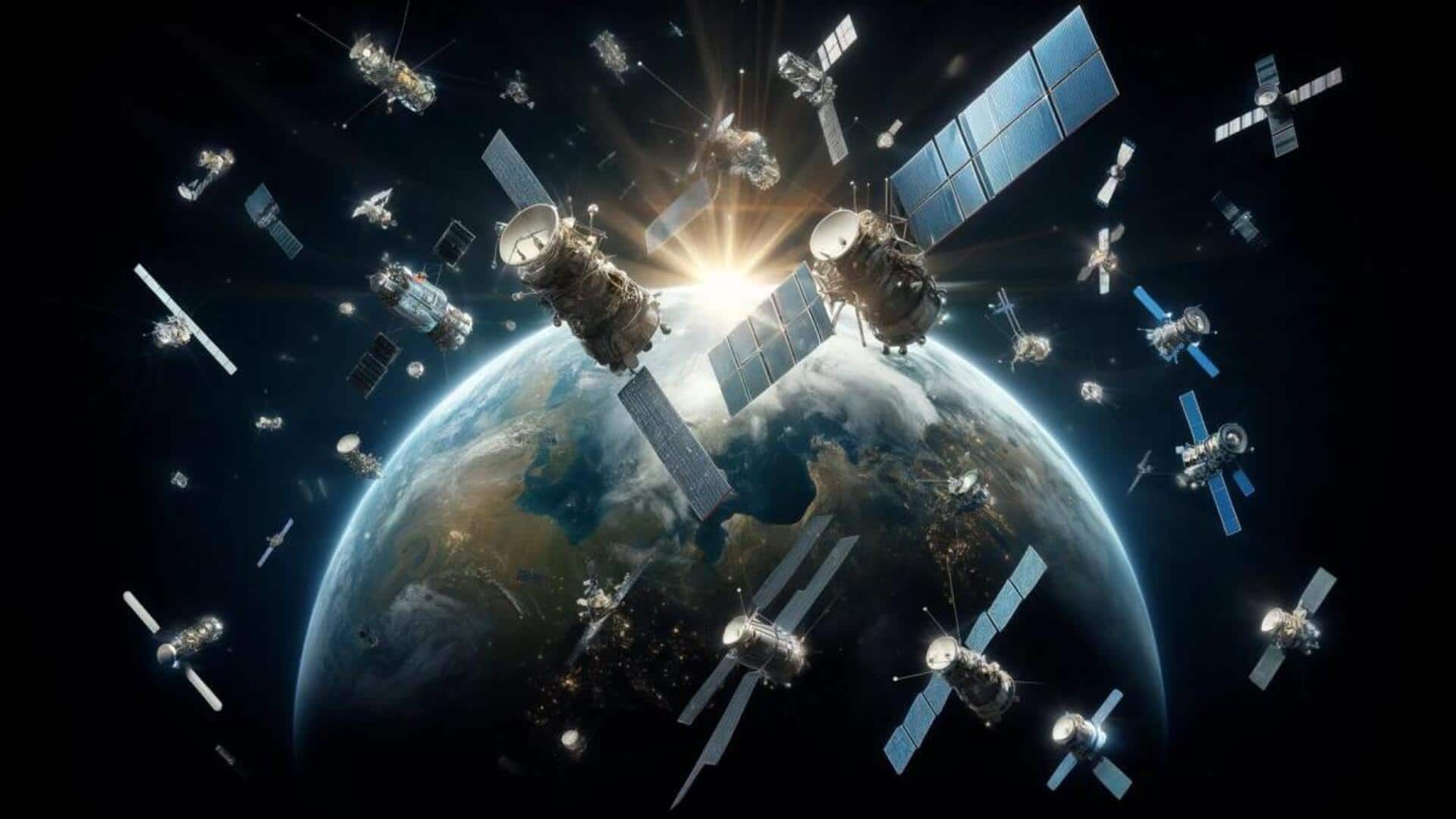
The increasing number of satellites orbiting Earth is causing light pollution, disrupting the Hubble and other telescopes' ability to capture clear images.
By Mudit Dube
Dec 04, 2025 11:33 am
What's the story
The Hubble Space Telescope and other Earth-orbiting telescopes are facing major challenges in capturing clear images. The problem is mainly due to the increasing number of satellites being launched into space. A study by NASA researchers, published in the journal Nature, predicts that satellite trails could ruin nearly 40% of Hubble's images and up to 96% of those taken by three other telescopes over the next decade.
Impact on research
Satellite trails could hinder asteroid detection, planet discovery
The increasing prevalence of satellite trails in telescope images could seriously hamper scientific efforts to detect potentially dangerous asteroids or discover new planets. Alejandro Borlaff, a NASA research scientist and lead author of the study, expressed his concern over the issue. He said, "My career has been focused on trying to make telescopes see better... For the first time, we found something that may actually be worse in the future."
Current situation
Satellite trails already detected in Hubble images
The problem of satellite trails isn't new. Between 2018 and 2021, the Hubble telescope had already detected these streaks of light in 4.3% of its images. The number of satellites orbiting Earth has skyrocketed from 5,000 in 2019 to over 15,800 today, according to the European Space Agency. If all planned satellite launches go ahead over the next decade or so, that number could balloon to a staggering 560,000.
Future projections
Hubble could capture an average of 2.14 satellites per exposure
Borlaff and his team simulated the potential impact of this satellite surge on four telescopes. They estimate that the Hubble telescope could inadvertently capture an average of 2.14 satellites per exposure, while the Chinese Space Station Telescope Xuntian (set to launch next year) could see an average of 92 satellites per exposure. However, other powerful telescopes like James Webb are safe from light pollution as they are far away from Earth.
Research implications
Satellite light pollution could obscure crucial astronomical data
The light emitted by satellites can be bright enough to obscure important details that would have been captured in an image without this light pollution. For instance, researchers might miss a star's brightness change indicating the presence of an exoplanet. Borlaff emphasized the importance of this issue by saying, "You will lose that information because a satellite passed in front of you."
Call for action
Solutions needed to combat satellite light pollution
Borlaff stressed the need for solutions to tackle this problem before the number of satellites in orbit becomes unmanageable. Efforts have been made to create darker, less reflective satellites but these come with their own challenges as they tend to get hotter and emit more infrared light. Researchers have also considered taking images at times and places where satellites are less likely to be present, a task that becomes increasingly difficult as space gets more crowded.