Understanding NASA's Upcoming Spacewalks at the International Space Station
हिंदी में सुनें
Listen to this article in Hindi
NASA plans two spacewalks in January to maintain the ISS, focusing on power upgrades and preparations for new solar arrays.
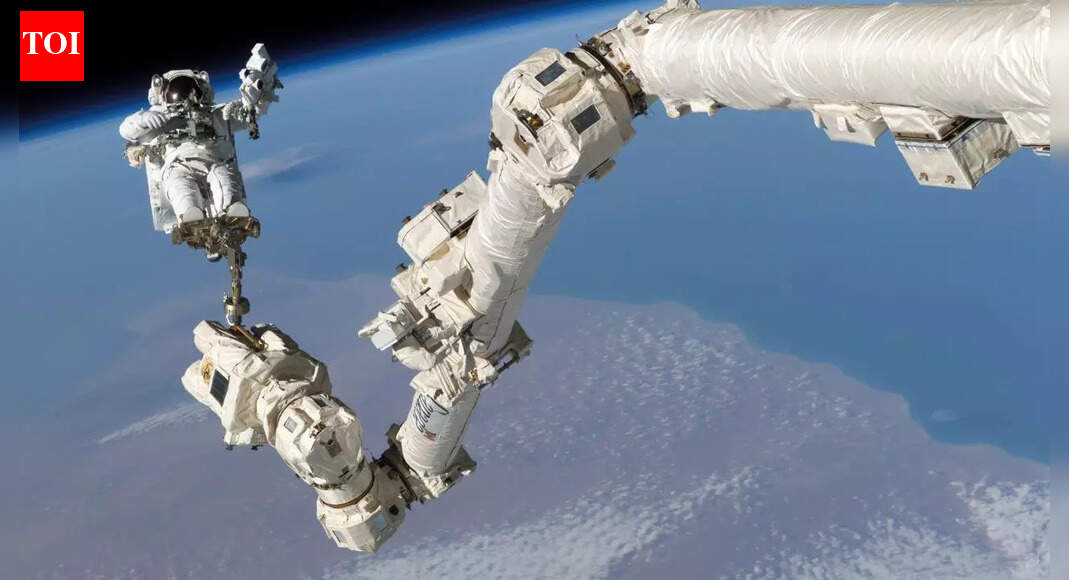
NASA has announced plans for two spacewalks at the International Space Station (ISS) in January 2024, marking a continuation of routine maintenance and preparation for future enhancements. While these activities may seem mundane to the casual observer, they play a crucial role in sustaining the operational lifespan of the ISS, a complex structure that has been continuously inhabited since 2000.
The first spacewalk is scheduled for January 8, featuring astronauts Mike Fincke and Zena Cardman. This will be Cardman's first spacewalk and Fincke's tenth, making him one of NASA's most experienced spacewalkers. The astronauts will work on a power channel in preparation for new roll-out solar arrays. These arrays are designed to augment the station's power supply as it ages, with the intention of ensuring the continued functionality of the ISS's systems.
Spacewalks, or extravehicular activities (EVAs), are critical for maintaining the ISS’s complex power systems. The need for power upgrades stems from the aging infrastructure of the ISS, which has faced various challenges over the years, including wear and tear from space environment factors. By preparing for the installation of these solar arrays, NASA is not only addressing current power limitations but also anticipating future demands as the station approaches its third decade in orbit.
The second spacewalk is planned for January 15, with details about the participating astronauts yet to be confirmed. The focus of both spacewalks will not only be on immediate repairs but also on the broader strategy for the ISS’s operational needs in the coming years. NASA officials will provide a public briefing in Houston prior to the first spacewalk, discussing the tasks involved, potential risks, and the underlying rationale for each activity. This transparent approach allows the public and media to better understand the operational processes that keep the ISS functional.
While the tasks may seem routine, they are part of a larger framework of ongoing maintenance and upgrades that ensure the ISS can continue to serve as a platform for scientific research and international cooperation in space. The ISS is not just a symbol of human ingenuity; it is also a vital laboratory for experiments in microgravity, which have implications for understanding everything from human health to materials science.
The upcoming spacewalks illustrate a fundamental aspect of space operations: consistent maintenance is essential to the longevity of complex systems. As the ISS ages, the need for proactive upgrades and repairs becomes increasingly pressing. That said, the reality is a bit more complicated. there are limitations to this approach; for instance, the efficiency and effectiveness of maintenance efforts can diminish over time as components become more difficult to access or replace.
In summary, while the spacewalks may not capture the public's imagination as groundbreaking missions might, they represent a critical aspect of maintaining a long-term presence in space. The ongoing work at the ISS underscores the importance of routine maintenance in the complex ecosystem of space exploration, and highlights the continuous need for innovation and adaptation in the face of aging technology.
So where does that leave things? understanding these upcoming spacewalks provides insights into the operational considerations of space missions, illustrating that even in the vastness of space, routine maintenance is key to survival and advancement.
Editor's note: This article was independently written by the Scoopliner Editorial Team using publicly available information.