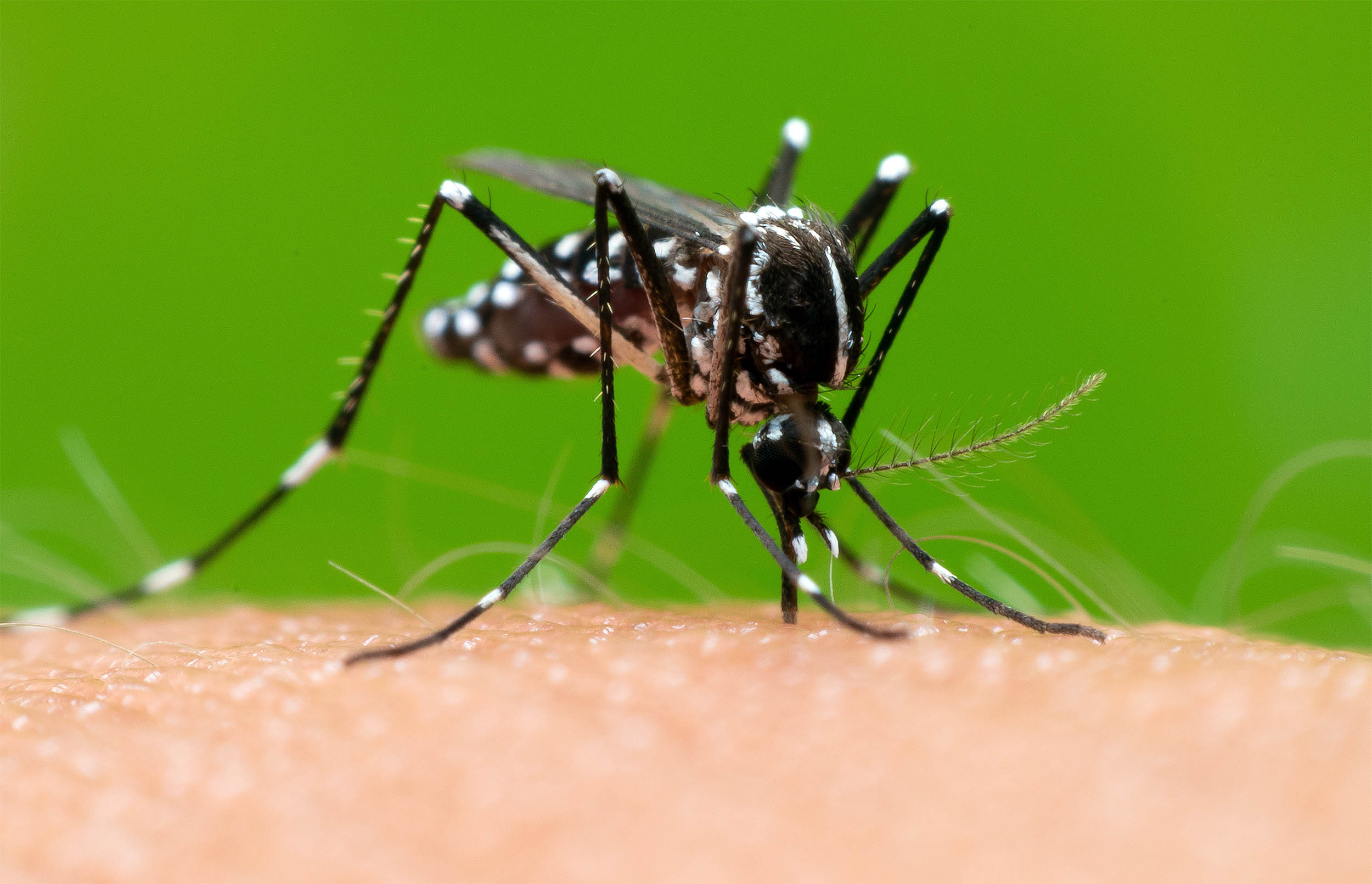
Mosquitoes Use Human Odor to Find People to Bite, Research Shows
हिंदी में सुनें
Listen to this article in Hindi
New research reveals that mosquitoes don't randomly search for victims; they follow human scent trails with precision to locate people to bite.
Mosquitoes that carry malaria aren't just buzzing around aimlessly hoping to find someone to bite. According to a new study, these insects lock onto human scent and then purposefully track it until they find an opportunity to strike.
In Zambia, a research team constructed a large outdoor flight cage, measuring 35,000 cubic feet (990 cubic meters), to investigate how mosquitoes locate humans. Their findings showed that mosquitoes are guided by smell to people with remarkable accuracy.
The study indicated that it's not just heat that attracts mosquitoes, but rather the specific combination of airborne chemicals emitted from our bodies. Researchers discovered that a concentration of 400 parts per million of carbon dioxide, when added to warm targets, dramatically increased mosquito landings.
How Mosquitoes Stalk Humans
Dr. Conor J. McMeniman, Ph.D., from the Johns Hopkins Bloomberg School of Public Health (JHBSPH), led the research. His work focuses on understanding mosquito sensory biology and how human scent influences their host-seeking behavior. The study involved testing hundreds of female malaria mosquitoes at night, using heated landing pads and controlled air streams.
The research revealed that human whole-body odor was significantly more attractive to mosquitoes than carbon dioxide alone. Furthermore, mosquitoes consistently preferred some individuals over others in head-to-head tests, demonstrating a stable individual risk based on scent.
Thermotaxis, or movement guided by temperature differences, plays a role, but only after the scent has guided the mosquito close enough to a target. Temperature then helps the mosquito finalize its landing on the skin.
Scent Beats Other Cues
Previous research has shown that carbon dioxide attracts mosquitoes into visual range, where they use dark shapes to help them home in, and warmth then triggers landing. That said, the reality is a bit more complicated. the Zambian field system confirms that smell is the primary signal across longer distances. Vision and heat only play supporting roles after the scent is detected.
The odorants that attract mosquitoes are volatile organic compounds (VOCs). These are gases that readily evaporate from our skin and breath, carrying scent information through the air.
Skin Acids Key
Classic laboratory work has linked strong mosquito attraction to combinations of ammonia, lactic acid, and short-chain acids. Mosquitoes respond much more strongly to these mixtures than to any single ingredient alone. Another study connected a person's attractiveness to mosquitoes to higher levels of specific skin acids collected over several days.
Molecular evidence suggests that conserved ionotropic receptors in mosquitoes are specifically responsive to these short-chain acids. These findings align with the Zambian results, which ranked individuals by attractiveness and then linked that ranking to their emitted chemical fingerprints. This receptor-level match helps explain why blends rich in these compounds reliably attract mosquitoes, even when other cues like weather or background conditions vary.
Experimental Procedure
The team piped air from tents containing sleeping volunteers to warmed landing targets and recorded every touchdown in low light. Adding 400 parts per million of carbon dioxide to heat alone significantly increased landings. That said, the reality is a bit more complicated. the full human odor streams produced far more landings than carbon dioxide alone. The researchers then conducted a six-person competition to observe how preference patterns stabilized over several nights.
The most attractive person emitted higher levels of certain carboxylic acids – acidic molecules from skin metabolism and microbes. Conversely, the least attractive person emitted lower levels of these acids and more eucalyptol.
The experiments were conducted during the hours when female mosquitoes typically hunt, from late evening into early morning. The targets were maintained at approximately 95 degrees Fahrenheit (35 degrees Celsius), which is close to human skin temperature. This ensured that odor data, rather than temperature differences, drove the key outcomes throughout the long nights. Chemical sampling was performed using a technique called volatilomics, which analyzes the full range of airborne molecules released from a living body to capture a broad snapshot of scent. This approach allowed the team to link behavior to specific compounds while preserving the complexity of real human odor plumes.
Protecting Humans
One strategy involves blending the most attractive acids into lures that work without human presence, drawing mosquitoes away from sleeping families and into monitored traps. Another approach is to modify people’s chemical profiles to make them less attractive to mosquitoes. While diet-linked molecules like eucalyptol were higher in the least attractive person, any quick fix should be approached cautiously. It is the whole odor blend, and not single notes, that determines overall appeal. Effective personal protection will likely require adjusting multiple scent components simultaneously.
The receptor evidence suggests families of sensors that could be targeted by future repellents to prevent signals from reaching the mosquito brain. Public health groups can use these findings to map risk and allocate resources effectively. By understanding who is more likely to be bitten and why, communities can combine bed nets, indoor spraying, and scent-tuned traps to reduce malaria transmission during the night.




:max_bytes(150000):strip_icc()/ms-martha-sourdough-08535a5ce5704845ab32e9e30cc333eb.jpg)