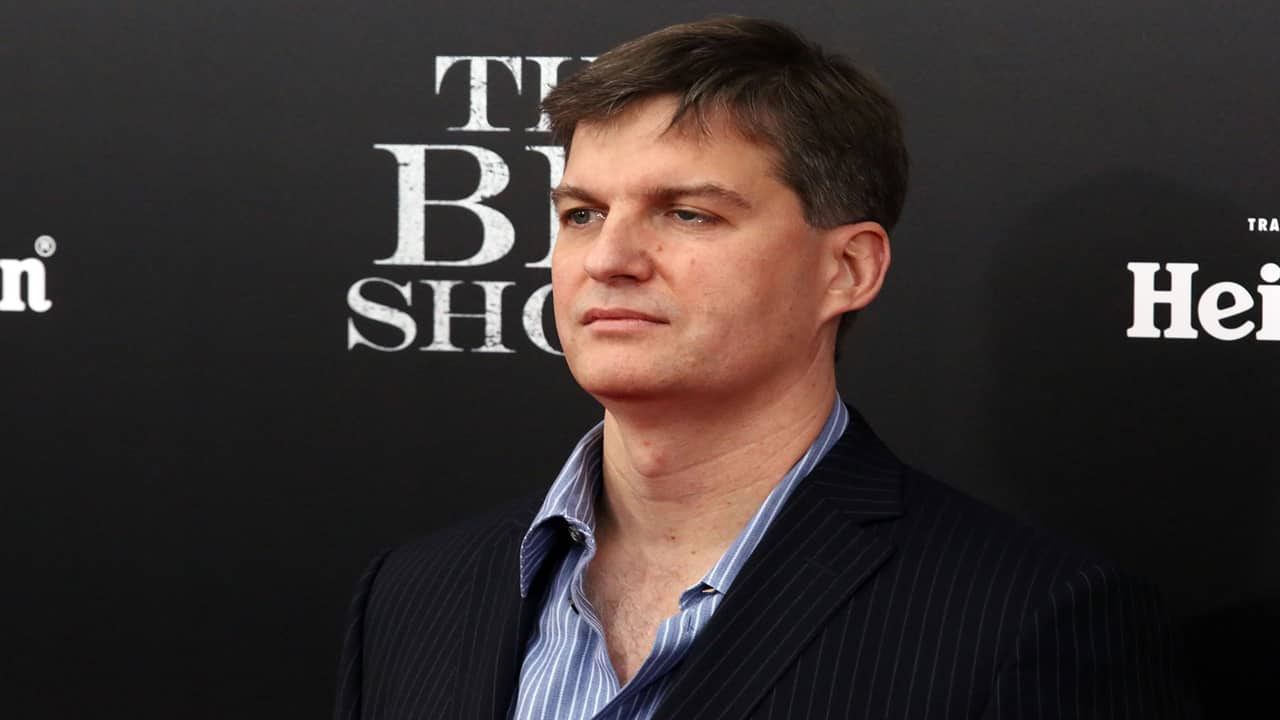
Michael Burry explains why Palantir and Nvidia’s collapse will be worse than Nortel and Cisco in 2000
Michael Burry said the defining feature of today’s AI frenzy is a runaway capex cycle that resembles -- and even exceeds in several respects -- the fibre-optic and router boom of the late 1990s. Combined with thin monetisation and reflexive capex hype, the conditions are set for a sharper contraction than the Nortel-Cisco cycle.
Michael Burry -- the contrarian investor behind The Big Short -- has warned that the market is underestimating the scale of the AI bubble and the severity of the eventual correction. In a podcast with author Michael Lewis, Burry said that Palantir and Nvidia stand at the centre of an investment mania that is more inflated, more fragile and more structurally dangerous than the tech boom that toppled Nortel and Cisco at the turn of the millennium. His thesis rests on two pillars: why the current cycle is a bubble, and why the unwind will be worse this time.
Why the AI market is in a bubble
Burry said the defining feature of today’s AI frenzy is a runaway capex cycle that resembles — and even exceeds in several respects — the fibre-optic and router boom of the late 1990s. Then, the Nasdaq peaked even as telecom investment continued to rise for another year. Today’s pattern, he argued, shows the same “net investment mania”, but at a higher velocity.
According to Burry, markets are now rewarding companies for simply announcing AI investment: “If you announce a dollar of capex on AI, your market cap will go up three dollars.” This reflexive link between spending and valuation has turned companies like Nvidia and Palantir into symbols of AI exuberance, despite neither having originally built products specifically for AI workloads, he said.
Also read | Meesho’s unusual and bold anchor allocation call exposes growing tensions in new-age tech IPOs
“The two luckiest companies on the planet”
Nvidia was a company that “got lucky twice” — first with crypto mining, then with generative AI. Palantir pivoted sharply after the emergence of ChatGPT, re-labelling existing consulting-heavy software as AI, as many corporations rushed to buy solutions merely to show they had “AI-ed something”, he said.
However, Palantir’s underlying economics remain weak, he said, adding that the company’s profitability is largely an illusion once stock-based compensation is treated as a real expense rather than a non-cash add-back. A substantial portion of reported income is effectively consumed by stock payouts to employees, while the company must then buy back shares simply to offset that dilution. Burry added that Palantir’s valuation has reached unprecedented levels, pointing out that “five billionaires came out of roughly four billion dollars of revenue” — a ratio he said he had “never seen before”.
On the demand side, Burry believes the AI boom lacks the structural depth of the early Internet. The telecom buildout enabled e-commerce, social networks and entirely new industries. Whereas now, by contrast, “Most people are getting what they want out of LLMs at the free level… very few want to pay.” The monetisation ceiling is far lower than enthusiasts assume, he warned.
Also read | Why INR at 90/USD is a big concern for RBI's monetary policy committee meeting
Why the collapse will be worse than 2000
For Burry, the more troubling issue is market structure. The dominance of passive investing — now more than half of US equity assets — means that when selling pressure begins, there will be no large pool of active capital to absorb it. “When the market goes down now… the whole thing is just going to come down.” The weight of passive flows removes the buffer of rotation into undervalued sectors.
He also warned that investors are misreading the true economics of AI infrastructure. Depreciation schedules for GPUs and servers are being stretched, flattering earnings even as the underlying hardware becomes obsolete at unprecedented speed. Burry has publicly criticised this practice as a modern form of accounting distortion: extending useful life assumptions “artificially boosts earnings” and masks the real replacement cost intensity of AI computing.
Combined with thin monetisation and reflexive capex hype, he said the conditions are set for a sharper contraction than the Nortel-Cisco cycle.
Burry confirmed that he bought far-out-of-the-money two-year puts on Palantir and Nvidia, expecting a steep correction within that timeframe. While headlines reported over $1 billion in notional exposure, he clarified that the actual capital deployed was small — the inflated numbers came from how regulators count options notional. Still, his conviction was clear: “I thought two years would be enough.”