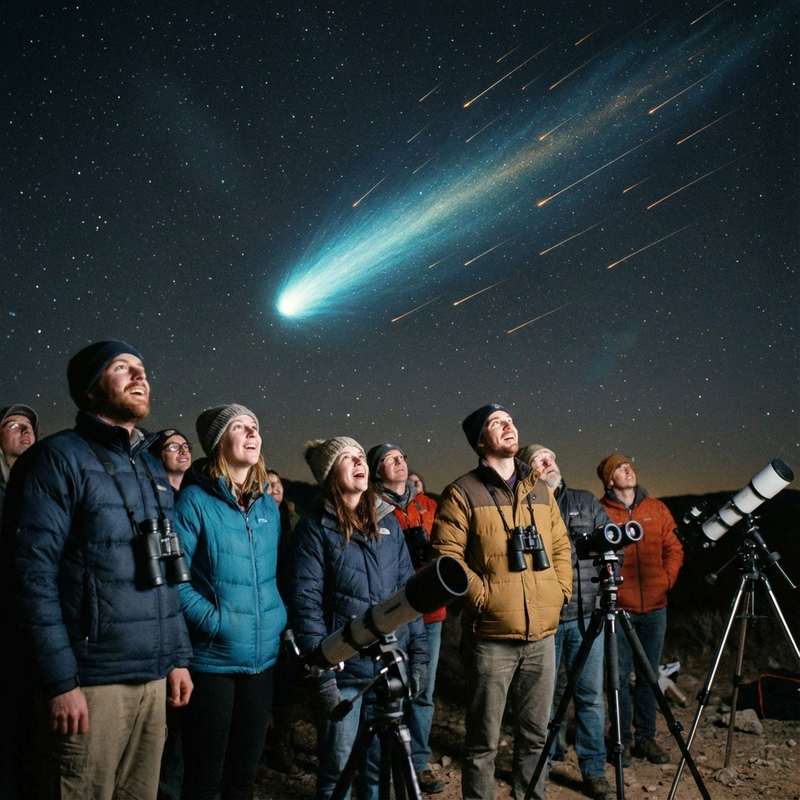
Decoding Celestial Fireworks: The Science Behind Meteor Showers
हिंदी में सुनें
Listen to this article in Hindi
Explore the science of meteor showers: how they form from cosmic debris, why they have specific names, and what determines their vibrant colors in Earth's atmosphere.
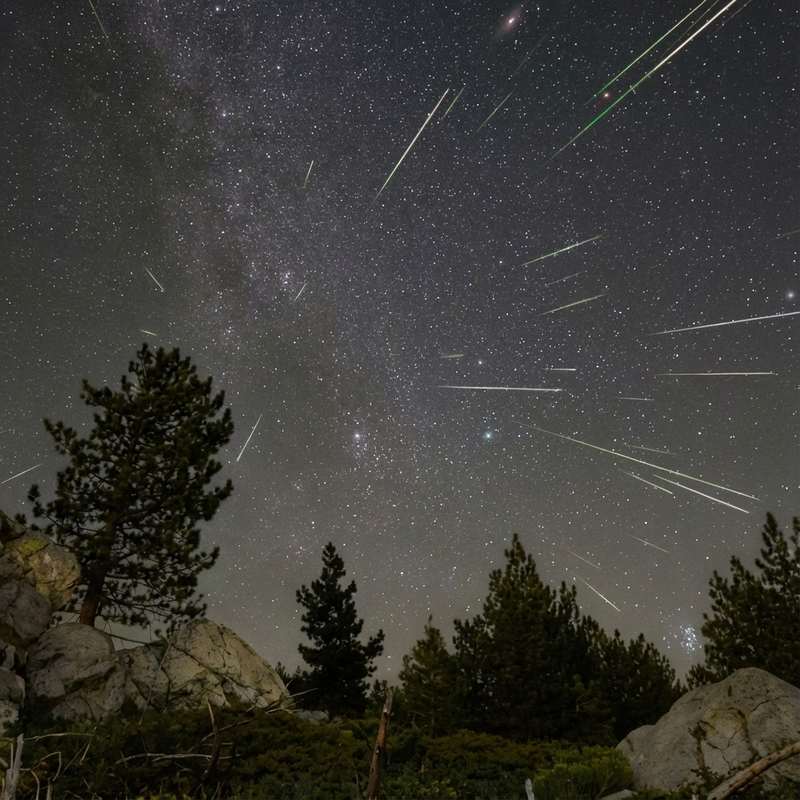
As the Earth journeys around the Sun, it periodically encounters streams of space debris, resulting in the captivating celestial displays we know as meteor showers. These aren't just random events; they are predictable encounters, and understanding their origins and characteristics reveals fundamental aspects of our solar system and Earth's constant interaction with its environment. While often perceived as 'shooting stars,' meteors are, in reality, small particles burning up in our atmosphere. The Ursid meteor shower, a quieter spectacle that graces the December skies, serves as a perfect example to unpack the underlying science.
Meteor showers occur when Earth passes through the debris trails left behind by comets or, less frequently, asteroids. Comets, icy bodies that orbit the Sun, continuously shed material as they travel. This material, primarily composed of small rock and ice fragments, spreads along the comet's orbit, creating a stream of particles. When Earth intersects this stream, these particles, ranging in size from dust grains to pebbles, enter our atmosphere at high speeds. The friction between the particles and the air causes them to heat up intensely and vaporize, creating the bright streaks of light we observe as meteors. This continuous shedding of material by comets ensures that meteor showers are recurring events, happening at roughly the same time each year.
The naming of meteor showers provides a clue to their origin. Each shower is named after the constellation from which the meteors appear to radiate, a point called the radiant. For example, the Perseid meteor shower seems to originate from the constellation Perseus. This apparent origin is due to perspective; as Earth moves through the debris stream, the particles enter the atmosphere along parallel paths. That said, the reality is a bit more complicated. from our vantage point on the ground, these parallel paths converge, creating the illusion that the meteors are radiating from a single point in the sky. Understanding constellations requires a grasp of basic astronomy.
Not all meteors meet the same fate. Most burn up entirely in the atmosphere, but occasionally, a larger fragment survives the fiery descent and reaches the Earth's surface. Such a surviving fragment is called a meteorite. Meteorites provide valuable insights into the composition of asteroids and comets, offering tangible samples of the early solar system. Their analysis helps scientists understand the building blocks of planets and the processes that shaped our solar system billions of years ago.
While most meteors are small and faint, some are exceptionally bright, outshining even the planet Venus. These are called fireballs. Fireballs are caused by larger meteoroids (the term for the space rock before it enters the atmosphere) that create a more intense and prolonged light display. These events are relatively rare and can be visible over vast areas, often generating considerable public interest. Radar observations suggest that Earth's atmosphere is bombarded by approximately 12,000 meteors every night, most of which are too small to be seen with the naked eye.
The International Space Station (ISS) faces a constant threat from space debris, including meteoroids. To protect the astronauts and the station's sensitive equipment, the ISS is equipped with shielding designed to withstand impacts from particles up to one inch in diameter. This shielding is crucial for ensuring the safety of the astronauts and the continued operation of the station. Understanding the risks posed by space debris is an important part of space exploration and requires continuous monitoring and mitigation efforts. Space exploration is a risky endeavour that needs careful planning.
While we have a good understanding of the general processes behind meteor showers, there are still unanswered questions. The precise composition and distribution of debris within meteoroid streams can vary significantly, leading to variations in the intensity and characteristics of meteor showers. Predicting the exact peak and intensity of a meteor shower remains a challenge, as it depends on the density of the debris stream and Earth's precise trajectory through it. Continuous observation and analysis are crucial for refining our understanding of these celestial events. By studying meteor showers, we gain valuable insights into the dynamics of our solar system, the composition of comets and asteroids, and the ongoing interaction between Earth and its cosmic environment. This knowledge not only satisfies our curiosity but also informs our efforts to protect our planet and spacecraft from the hazards of space debris.
Editor’s note: This article was independently written by the Scoopliner Editorial Team using publicly available information.