Mecca's Kaaba stunning orbital photo shared by NASA astronaut Don Pettit
Renowned NASA astronaut Don Pettit, known for his artistic space photography, took the picture of Mecca's Kaaba while on his fourth ISS mission.
New Delhi:
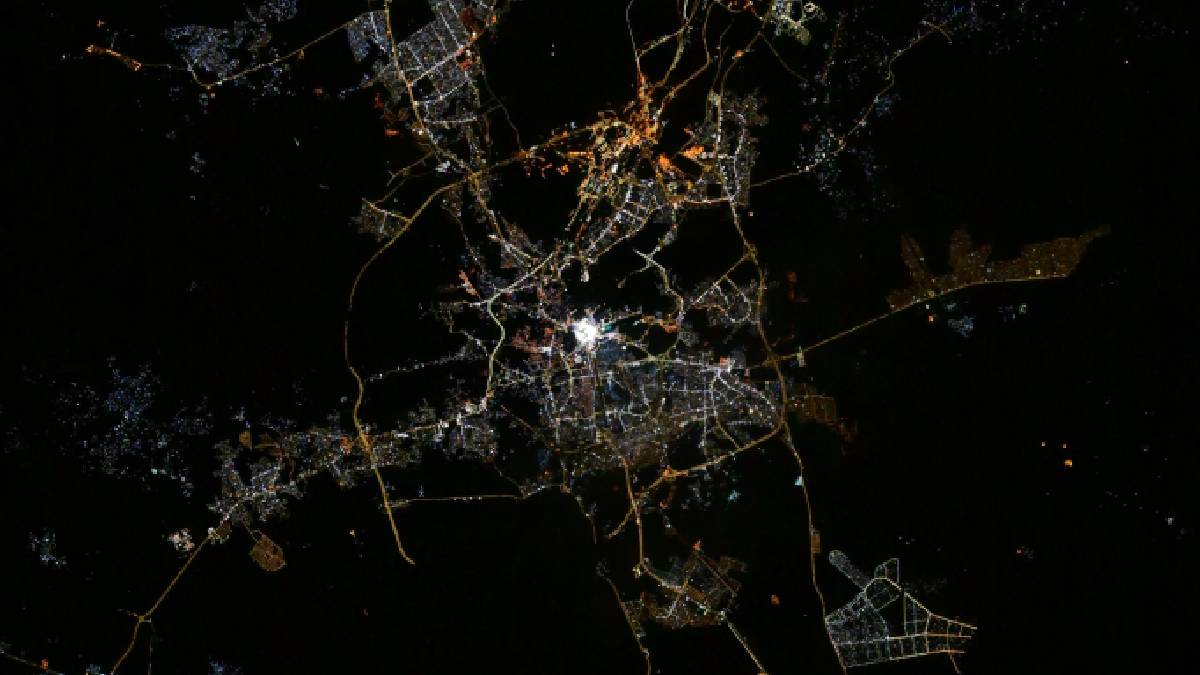
NASA astronaut Don Pettit has shared a stunning orbital photograph of Mecca, Saudi Arabia. The image, which showcases Islam's holiest site as a brilliant central light, has captivated social media users. Pettit recently returned from the International Space Station (ISS), having taken these pictures from approximately 400 kilometers above Earth.
"Orbital views of Mecca, Saudi Arabia. The bright spot in the center is the Kaaba, Islam's holiest site, visible even from space," Pettit wrote on X while sharing the images.
The art of space photography
Pettit, who is renowned for his artistic space photography, took the image during his fourth ISS mission. He took the picture from the cupola window of the station using a high-quality Nikon camera. Pettit is talented at taking photos with long exposure techniques, which allow him to capture sharp images of the International Space Station (ISS) as it travels across the sky. Throughout his career, he has taken breathtaking pictures of things like beautiful northern lights, bustling city skylines, and incredible events happening in space.
Why the Kaaba stands out
The Kaaba, a cube-shaped structure draped in black kiswah cloth, stands out vividly in the image. This is due to the reflection of sunlight, floodlights, and artificial illumination directed toward orbit.
The Kaaba is always brightly lit for prayer, and at night, the areas where Hajj pilgrims come together shine like glowing spots. This light comes from millions of colorful lights and special lamps, making it bright enough to be seen from space by the cameras on the International Space Station.
ISRO captures 3I/ATLAS comet
Meanwhile, scientists from India’s space agency, ISRO, have successfully taken clear pictures of interstellar comet 3I/ATLAS. They were able to capture these images using a special telescope that is set up in Mount Abu. This discovery helps us learn more about the mysteries of space! The comet, which is now receding from the inner Solar System after its closest approach to the Sun, was observed using both imaging and spectroscopy between November 12 and 15, 2025.