Mecca's Kaaba seen like a bright light in stunning picture taken from space
Using a high-resolution Nikon camera, astronaut Don Pettit, renowned for his artistic space photography during his fourth ISS mission, captured the scene from the station's cupola window.
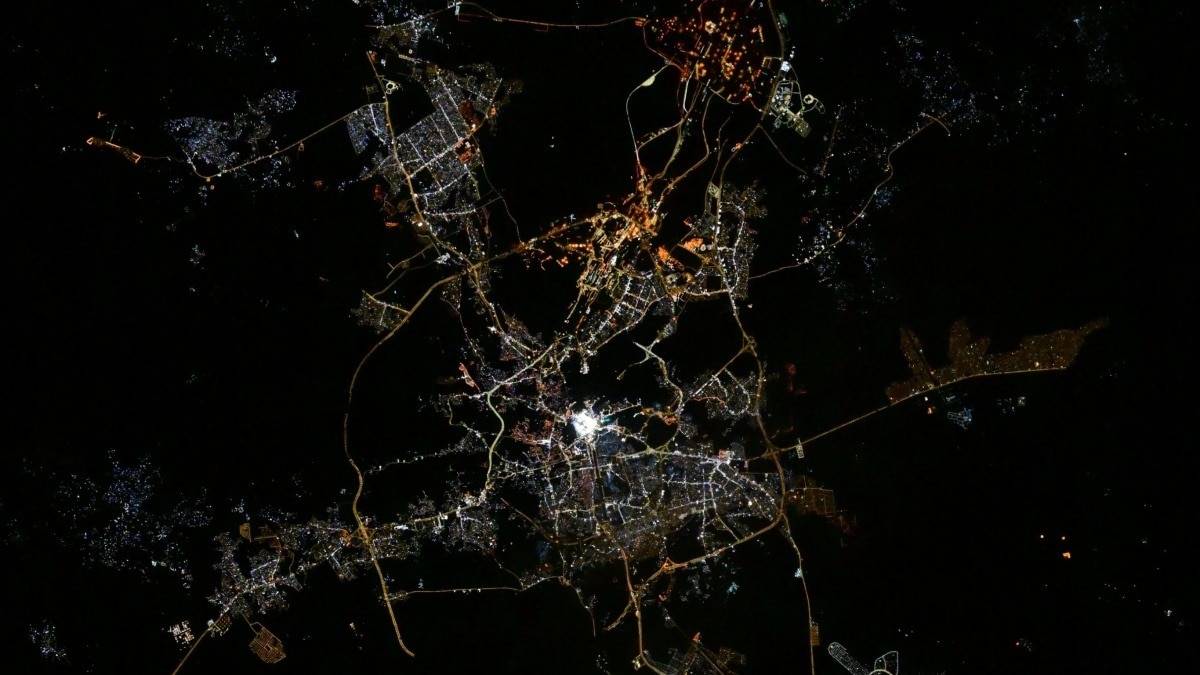
A stunning orbital photograph of Mecca, Saudi Arabia, has captivated social media, showcasing Islam's holiest site, the Kaaba, as a brilliant central light visible even from 400 kilometers above Earth.
Nasa astronaut Don Pettit, who recently returned from the International Space Station (ISS), shared the image on X (formerly Twitter) with the caption: "Orbital views of Mecca, Saudi Arabia. The bright spot in the center is the Kaaba, Islam's holiest site, visible even from space".
Pettit, renowned for his artistic space photography during his fourth ISS mission that lasted between September 2024 and April 2025, captured the scene from the station's cupola window using a high-resolution Nikon camera.
The image reveals Mecca's urban sprawl nestled in rugged valleys, with the Grand Mosque (Masjid al-Haram) dominating the frame.
The Kaaba, a cube-shaped structure draped in black kiswah cloth, stands out due to constant floodlighting, reflecting sunlight and artificial illumination toward orbit, creating a beacon amid surrounding hills and pilgrimage tents.
SCIENCE OF SEEING SACRED SITES FROM ORBIT
From the ISS's vantage, cities like Mecca appear as glowing patches at night due to light pollution from millions of LEDs and sodium lamps, which scatter in the atmosphere and remain detectable by sensitive ISS cameras.
The Kaaba's prominence stems from the mosque's 24/7 illumination for prayer and Hajj pilgrims, enhanced by the station's 28,000 km/h speed allowing rapid captures during orbital passes over the Arabian Peninsula.
Pettit's expertise in long exposures counters the ISS's motion, sharpening details like roads tunneling through mountains.
Pettit, who has photographed auroras, cities, and cosmic phenomena, continues sharing Earth's wonders to inspire awe. His latest image symbolises humanity's spiritual landmarks enduring under the stars.
- Ends