Japan's Social Fabric: Examining the Roots of Rising Social Discontent
हिंदी में सुनें
Listen to this article in Hindi
An analysis of rising social discontent in Japan, exploring the socioeconomic factors behind recent violent incidents and their implications for national stability.
Japan, long celebrated for its social cohesion and low crime rates, is facing a subtle but concerning shift: a potential rise in incidents of social unrest and violence. While still statistically rare compared to many other developed nations, recent events, including a knife attack at a Yokohama Rubber Co. factory, highlight underlying pressures within Japanese society that warrant closer examination. This is not merely a law enforcement issue, but a reflection of deeper socioeconomic and demographic trends that are reshaping the nation's social fabric.
The narrative of Japan as a homogenous and harmonious society has always been a simplification. Beneath the surface, pressures related to economic stagnation, an aging population, and increasing social isolation have been building for decades. The post-World War II economic miracle, which fostered a sense of collective prosperity, began to falter in the 1990s. The subsequent period of economic stagnation, often referred to as the "Lost Decade," and its continuation into the present, has created a growing divide between those who have benefited from globalization and technological advancements, and those who have been left behind. This economic inequality, coupled with a rigid social structure that emphasizes conformity and discourages dissent, can create a sense of frustration and alienation, particularly among younger generations who face limited opportunities and increasing financial insecurity.
Furthermore, Japan's rapidly aging population presents unique challenges. The burden of supporting an aging population falls increasingly on a shrinking workforce, exacerbating economic anxieties. The traditional family structure, which once provided a strong social safety net, is also eroding, leaving many elderly individuals vulnerable to social isolation and loneliness. These demographic shifts have a ripple effect, impacting everything from healthcare costs to labor force participation rates. Understanding these larger trends helps to put events, such as this factory attack, into a wider context.
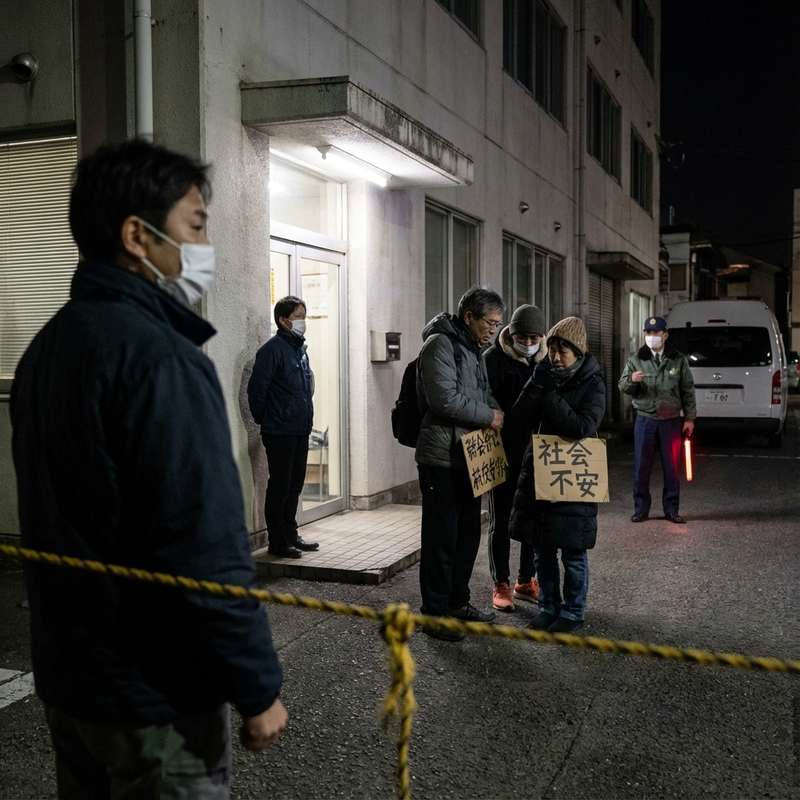
The incident at the Yokohama Rubber factory, while seemingly isolated, could be symptomatic of a broader trend of individuals feeling increasingly marginalized and disenfranchised. While the specific motive of the attacker remains under investigation, the fact that the suspect was reportedly a former employee suggests a possible connection to workplace grievances or feelings of resentment. The use of a weapon like a survival knife and the wearing of a gas mask also hint at a degree of premeditation and a desire to inflict harm. It is crucial to avoid generalizations or sensationalism, but it is equally important to acknowledge the possibility that such incidents are not simply random acts of violence but rather manifestations of deeper societal problems. You can read more about [world affairs background] to see how societal challenges play out in different countries.
The policy implications of these trends are significant. The Japanese government needs to address the root causes of social discontent by implementing policies that promote economic opportunity, reduce inequality, and strengthen social support networks. This includes investing in education and job training programs, providing affordable housing and healthcare, and addressing the challenges faced by the elderly population. Furthermore, there is a need to foster a more inclusive and tolerant society that values diversity and encourages open dialogue. Mental health services also need to be more accessible and destigmatized, as feelings of isolation and despair can contribute to violent behavior. Japan's approach to internal security may also need to evolve to address the potential for lone-wolf attacks.
While Japan maintains strict gun control laws, the recent incident highlights the need to address the potential for violence using other weapons. Enhanced security measures at workplaces and public spaces, coupled with improved intelligence gathering and threat assessment capabilities, may be necessary to prevent future attacks. It's important to note that [India’s global position], as well as other developing nations, face similar security challenges due to growing populations and social inequalities.
Predicting future trends is inherently uncertain, but the confluence of economic stagnation, demographic shifts, and social isolation suggests that Japan may face further challenges to its social cohesion in the years to come. Addressing these challenges will require a multi-faceted approach that involves government, businesses, and civil society working together to create a more inclusive and equitable society. The incident at the Yokohama Rubber factory serves as a stark reminder that even in a country renowned for its social harmony, underlying tensions can erupt in unexpected and tragic ways. For readers seeking [topic basics for readers] on the Japanese economy, it's important to consider the socio-economic factors discussed here.
Ultimately, Japan's ability to maintain its social stability and continue its role as a leading global power will depend on its willingness to confront these challenges head-on and implement policies that promote the well-being of all its citizens.
Editor’s note: This article was independently written by the Scoopliner Editorial Team using publicly available information.