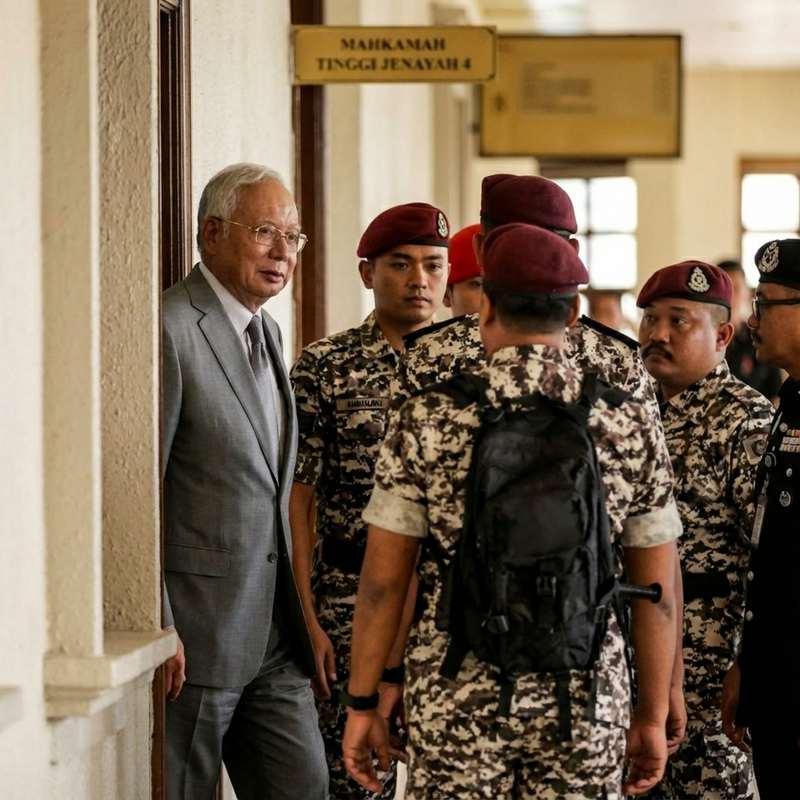
Malaysia's 1MDB Scandal: A Litmus Test for Regional Anti-Corruption Efforts and Investor Confidence
हिंदी में सुनें
Listen to this article in Hindi
Najib Razak's ongoing legal battles spotlight Malaysia's anti-corruption efforts and the broader implications for Southeast Asian governance and investor confidence.
The ongoing fallout from Malaysia's 1MDB scandal transcends the individual case of former Prime Minister Najib Razak; it serves as a crucial barometer for the health of governance and investment climates across Southeast Asia. While the imprisonment of Najib and the associated legal proceedings have dominated headlines, the broader implications for regional stability, investor confidence, and the fight against corruption are significantly more profound.
Southeast Asia, a region characterized by rapid economic growth and increasing geopolitical importance, faces persistent challenges related to transparency and accountability. Perceptions of corruption, whether real or perceived, directly impact foreign direct investment (FDI) flows and the overall attractiveness of the region as a stable and predictable business environment. The 1MDB scandal, with its vast scale and international ramifications, has cast a long shadow, prompting greater scrutiny of governance practices not only in Malaysia but also in neighboring countries. [World affairs background](https://www.example.com/world-affairs-background).
The case highlights the critical need for robust regulatory frameworks and independent institutions capable of effectively investigating and prosecuting high-level corruption. The success or failure of Malaysia's efforts to address the 1MDB scandal will inevitably influence the willingness of international investors to commit capital to the region. Continued progress in strengthening anti-corruption measures could enhance Southeast Asia's reputation as a region committed to good governance, attracting increased FDI and fostering sustainable economic development.
That said, the reality is a bit more complicated. the complexities of the 1MDB saga also underscore the challenges inherent in tackling transnational corruption. The involvement of multiple jurisdictions, financial institutions, and individuals highlights the need for enhanced international cooperation in combating money laundering and asset recovery. The ability of Malaysian authorities to recover stolen assets and hold those responsible accountable will be a key indicator of the country's commitment to addressing corruption and restoring investor confidence. The fact that alleged mastermind Low Taek Jho remains at large presents a continuing obstacle.
Furthermore, the political dimensions of the 1MDB scandal cannot be ignored. The case has triggered significant political upheaval in Malaysia, contributing to a change in government and ongoing debates about the role of money in politics. The potential for political interference in the judicial process remains a concern, and the integrity of the legal system is essential to ensuring a fair and impartial outcome. The granting of a partial pardon to Najib, while within the purview of the Malaysian Pardons Board, has sparked controversy and raised questions about the consistency of the country's anti-corruption efforts.
The implications extend beyond economics and politics. The 1MDB scandal has eroded public trust in government institutions and fueled calls for greater transparency and accountability. Addressing these concerns is crucial for maintaining social cohesion and ensuring long-term stability. Civil society organizations and the media play a vital role in holding governments accountable and promoting good governance. Their ability to operate freely and without fear of reprisal is essential to fostering a culture of transparency and accountability.
One critical uncertainty revolves around the broader political climate in Malaysia. The ongoing power struggles and shifting alliances could potentially undermine the momentum of anti-corruption efforts. A renewed focus on political stability and good governance is essential to ensuring that the lessons of the 1MDB scandal are not forgotten. Another factor is the role of regional bodies such as ASEAN in promoting good governance among its member states. While ASEAN has traditionally prioritized non-interference in the internal affairs of its members, there is growing recognition of the need for greater cooperation in addressing transnational challenges such as corruption. [Topic basics for readers](https://www.example.com/topic-basics).
Ultimately, the 1MDB scandal and its aftermath serve as a stress test for Malaysia's institutions and its commitment to the rule of law. The way in which the country navigates these challenges will have far-reaching consequences for its own development and for the broader region. The pursuit of justice, the recovery of stolen assets, and the strengthening of governance frameworks are all essential to restoring investor confidence and ensuring a more transparent and accountable future for Malaysia and Southeast Asia. The ongoing legal battles are not merely a historical footnote but a critical juncture in the region's ongoing struggle against corruption and for sustainable development.
Editor’s note: This article was independently written by the Scoopliner Editorial Team using publicly available information.