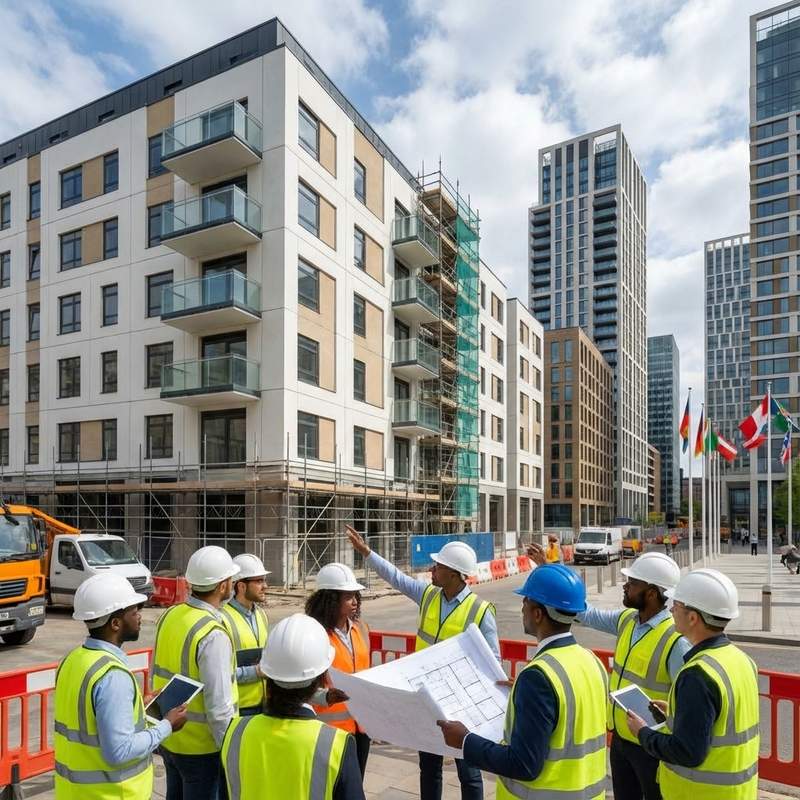
The Global Scramble for Building Safety Standards: A Post-Grenfell Reckoning
हिंदी में सुनें
Listen to this article in Hindi
Stringent building regulations are vital for global safety. The debate over acceptable risk reveals pressure points in balancing safety with economic realities.
The increasing urbanization of the global population concentrates both opportunity and risk. As more people live in densely packed urban environments, often in high-rise buildings, the safety standards governing construction become matters of existential importance, extending far beyond individual nations. The debate surrounding building safety regulations in the United Kingdom, sparked by the Grenfell Tower tragedy, exemplifies the inherent tensions between rigorous safety protocols and the economic pressures driving development worldwide. The core issue – determining what level of risk is acceptable in multi-story residential buildings – resonates across international borders, where similar debates are unfolding, albeit often behind closed doors.
The crux of the problem lies in the interpretation and implementation of safety standards. While outright bans on highly combustible materials seem intuitively logical, the economic implications of such bans can be significant. Retrofitting existing buildings to meet stringent new standards is costly and time-consuming, potentially stalling urban development projects and creating financial hardship for building owners. The UK's situation highlights this dilemma: a desire for enhanced safety clashing with the practical realities of existing building stock and ongoing construction projects. This tension is not unique. Many countries, particularly those with rapidly expanding urban centers and aging infrastructure, face similar challenges in balancing safety with affordability and speed of construction.
The concept of "tolerable risk,” as it appears in the UK's proposed fire safety guidance, reveals the inherent subjectivity in risk assessment. What one engineer deems tolerable, another might consider unacceptably dangerous. This ambiguity creates opportunities for developers to prioritize cost savings over safety, potentially compromising the well-being of residents. The absence of explicit requirements for presenting fire test safety data further exacerbates this problem, allowing for subjective interpretations that may not adequately protect against fire hazards. This issue has direct bearing on global supply chains, where building materials are sourced from various countries with differing safety regulations. The potential for substandard or untested materials to enter the market underscores the need for internationally harmonized safety standards and rigorous quality control measures. Such materials are often cheaper, which further incentivises developers to use them, especially in areas that are rapidly urbanising, such as in India, where demand for affordable housing can sometimes overshadow safety concerns.
The role of the insurance industry in this equation cannot be overlooked. Insurers are ultimately responsible for assessing and pricing risk, and their decisions can have a significant impact on building safety practices. If insurers are unwilling to provide coverage for buildings that do not meet certain safety standards, developers will be incentivized to comply with those standards. That said, the reality is a bit more complicated. if insurers are willing to accept a certain level of risk, even if it is deemed unacceptable by residents and safety experts, the pressure to improve building safety will be diminished. The government's expectation that insurers will automatically reduce premiums once buildings are certified as safe is unrealistic, given the industry's risk-averse nature. The interplay between government regulation, industry standards, and insurance practices creates a complex web of incentives and disincentives that ultimately determine the level of safety provided in buildings.
One potential constraint is the lack of global consensus on acceptable building safety standards. While some countries have implemented stringent regulations, others have lagged behind, creating disparities in safety levels across different regions. This lack of harmonization can lead to confusion and uncertainty for developers operating in multiple countries, as well as for residents who may be unaware of the safety standards in place in their buildings. This also creates opportunities for regulatory arbitrage, where developers seek to build in countries with less stringent regulations, potentially compromising safety. The lack of consistent international standards makes it difficult to hold developers accountable for safety violations, particularly when those violations occur in countries with weak regulatory enforcement. The ongoing debate in the UK serves as a crucial case study for other nations grappling with similar challenges. Its outcome will likely influence the direction of building safety regulations worldwide, highlighting the need for a more proactive and collaborative approach to ensuring the safety of urban populations. Learning from past tragedies and establishing clear, enforceable standards is paramount to mitigating future risks and safeguarding the well-being of residents globally. The focus needs to be on a more collaborative and transparent approach, involving governments, industry stakeholders, and residents, to ensure that building safety standards are not only rigorous but also effectively implemented and enforced. This also has implications for the wider economy, as poor building safety can lead to increased insurance premiums and reduced property values. Therefore, ensuring building safety is not only a moral imperative but also an economic necessity.
Editor’s note: This article was independently written by the Scoopliner Editorial Team using publicly available information.