African Elections Reflect Broader Trend of Consolidating Power Amidst Regional Instability
हिंदी में सुनें
Listen to this article in Hindi
Elections in Guinea and CAR highlight a trend of power consolidation amidst regional fragility, testing international norms and partnerships.
Across the African continent, a complex interplay of internal political ambitions and external geopolitical pressures is reshaping the landscape of governance. While elections remain a cornerstone of democratic transition, the outcomes increasingly reflect a trend toward consolidating power, often at the expense of democratic norms. This is particularly evident in regions grappling with instability, where the promise of stability, however illusory, can overshadow concerns about democratic backsliding. Recent electoral events in Guinea and the Central African Republic (CAR) exemplify this precarious balance, revealing the nuanced dynamics between national sovereignty, regional security, and international influence.
The geopolitical context is critical. The Sahel region, in particular, has witnessed a surge in military coups and a weakening of regional organizations like ECOWAS, which has struggled to enforce democratic principles among its member states. This power vacuum has created opportunities for individual leaders to entrench their positions, often by manipulating constitutional processes or marginalizing opposition voices. The allure of authoritarianism, promising swift solutions to complex problems like insecurity and economic stagnation, is particularly potent in these environments.
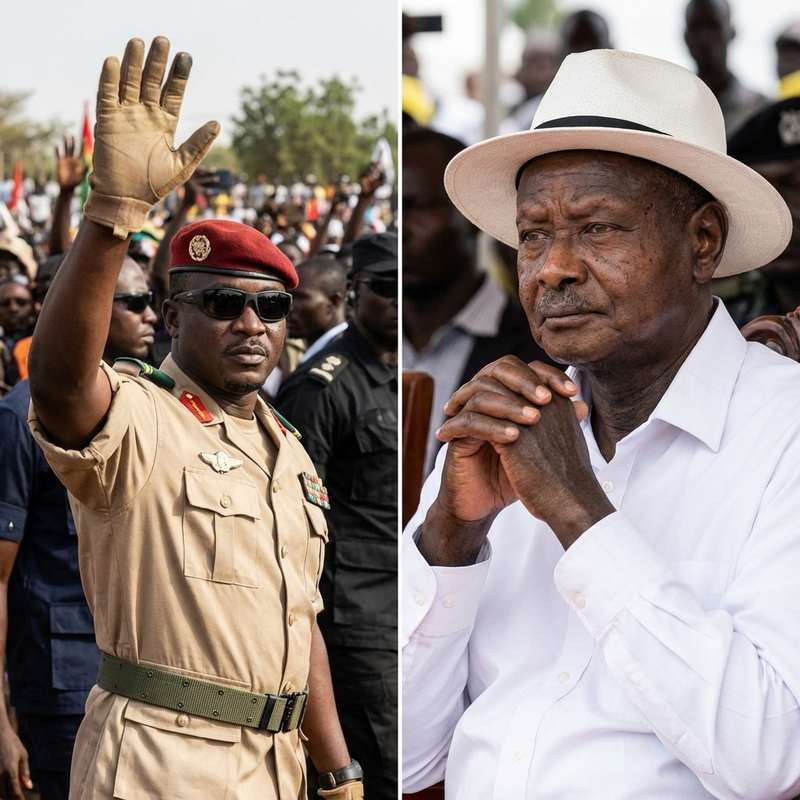
Guinea's upcoming elections, where the incumbent Gen. Mamadi Doumbouya is poised to transition from coup leader to elected president, demonstrates this dynamic. Despite facing nominal opposition, the exclusion of prominent political figures and the dominance of the ruling party signal a pre-determined outcome. The international community's muted response, driven by a desire for stability and a reluctance to further destabilize the region, tacitly acknowledges this reality. This approach, while pragmatic in the short term, risks legitimizing authoritarian rule and undermining long-term democratic development.
The situation in the CAR, where President Faustin-Archange Touadéra seeks a third term after constitutional reforms that scrapped term limits, presents a similar dilemma. While multi-party politics have largely endured, the erosion of term limits sets a troubling precedent for democratic governance. The CAR's reliance on Russian security assistance further complicates the situation, potentially creating a dependency that undermines its sovereignty and limits its ability to pursue independent foreign policy objectives. Despite these concerns, international partners, including France and the EU, continue to engage with the Touadéra government, prioritizing stability and counter-terrorism efforts over strict adherence to democratic norms. This is a calculated risk, reflecting the limited options available in a country grappling with chronic insecurity and the legacy of conflict. The United Nations remains engaged through peacekeeping operations, but this is contingent on the host government's consent.
The implications of these trends extend beyond the individual countries involved. The erosion of democratic norms in Africa weakens the continent's collective bargaining power on the international stage. It also creates opportunities for external actors, like Russia and China, to expand their influence by offering alternative models of development and security cooperation that prioritize state sovereignty over democratic accountability. This competition for influence further complicates the efforts of Western powers to promote democracy and human rights in the region. The role of India in Africa is also noteworthy, as it seeks to build economic partnerships without necessarily imposing political conditions.
Several uncertainties cloud the future trajectory of these developments. The long-term impact of constitutional reforms that undermine term limits remains to be seen. The ability of regional organizations like ECOWAS to effectively address democratic backsliding is also in question. Furthermore, the growing influence of non-state actors, including jihadist groups and private military companies, poses a significant threat to stability and governance across the continent. Constraints include limited resources, weak institutions, and a lack of political will to address underlying issues of inequality and corruption.
Ultimately, the recent elections in Guinea and the CAR serve as a microcosm of the broader challenges facing Africa's democratic trajectory. While elections remain a crucial mechanism for political participation, they are not a panacea for deeper structural problems. Addressing these challenges requires a multi-faceted approach that prioritizes good governance, inclusive development, and strong regional institutions. The international community must also adopt a more nuanced approach, balancing the need for stability with the imperative to uphold democratic principles and human rights. Only through sustained and collaborative efforts can Africa realize its full potential for democratic and economic progress.
Editor’s note: This article was independently written by the Scoopliner Editorial Team using publicly available information.