Extreme Sports and the Shifting Sands of Global Risk Assessment
हिंदी में सुनें
Listen to this article in Hindi
Analyzing the connection between extreme sports like ocean racing and evolving risk assessment models impacting insurance, investment, and global security.
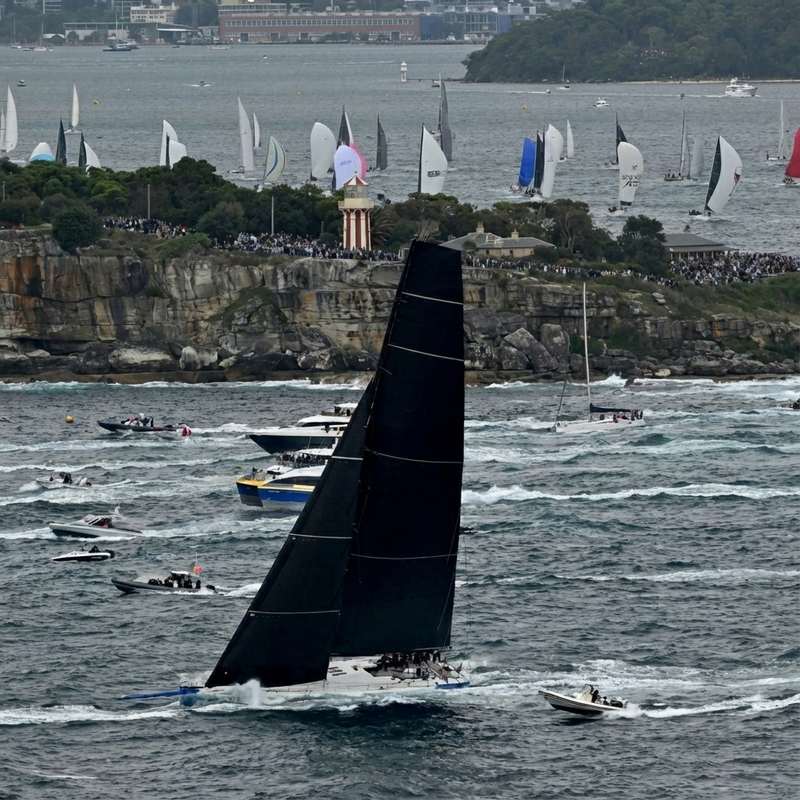
The global landscape is increasingly defined by complex, interconnected risks. From climate change and supply chain vulnerabilities to geopolitical instability and cyber threats, understanding and mitigating these risks is paramount for governments, businesses, and individuals alike. While seemingly disparate, events like the annual Sydney Hobart Yacht Race, a grueling test of maritime skill and endurance, offer a unique lens through which to examine evolving risk assessment models and their broader implications.
The modern world of extreme sports, including offshore racing, demands sophisticated risk management. Insurance companies, sponsors, and participants all rely on data-driven assessments to evaluate the probability and potential impact of adverse events. These assessments consider factors ranging from weather patterns and vessel integrity to crew experience and navigational hazards. The Sydney Hobart, notorious for its challenging conditions and history of tragic incidents, serves as a real-world laboratory for refining these models. The withdrawal of vessels, equipment failures, and even the strategic decisions made by skippers under pressure provide valuable data points for improving predictive accuracy and risk mitigation strategies.
That said, the reality is a bit more complicated. the lessons learned from extreme sports extend far beyond the realm of recreation. The methodologies used to assess maritime risks, for example, are increasingly relevant to understanding broader geopolitical vulnerabilities. Consider the vulnerability of global supply chains to disruptions caused by extreme weather events. The same principles used to predict the impact of storms on sailing yachts can be applied to assess the potential damage to shipping routes, port infrastructure, and coastal communities. This overlap is particularly relevant in regions highly dependent on maritime trade, such as Southeast Asia and the Indian Ocean, where climate change is exacerbating existing vulnerabilities. Understanding maritime chokepoints is essential for global trade.
Furthermore, the psychological dimensions of risk-taking in extreme sports offer insights into decision-making under pressure in other high-stakes environments. The ability of skippers and crews to assess risk, adapt to changing conditions, and maintain morale in the face of adversity is analogous to the challenges faced by policymakers and business leaders navigating geopolitical crises or economic downturns. The human element, often overlooked in quantitative risk models, becomes acutely apparent in extreme sports, highlighting the importance of leadership, communication, and resilience. The pressure involved may also offer a view into the physical and mental tolls required of leadership in times of crisis.
The increasing frequency and intensity of extreme weather events, driven by climate change, are further blurring the lines between the world of extreme sports and the broader geopolitical landscape. As coastal communities face rising sea levels, more frequent storms, and increased erosion, the lessons learned from managing maritime risks become increasingly relevant to developing adaptation strategies and building resilience. Insurance companies, already grappling with the rising costs of extreme weather-related claims, are actively seeking to incorporate climate change projections into their risk models, mirroring the efforts of extreme sports enthusiasts to anticipate and mitigate the impact of environmental hazards.
Moreover, the technology employed in extreme sports, from advanced weather forecasting systems to satellite communication networks, has applications in broader security contexts. The ability to track vessels in real-time, monitor environmental conditions, and communicate effectively in remote locations is critical for maritime security, search and rescue operations, and disaster response. These technologies, initially developed for recreational purposes, are increasingly being adapted for use in military and law enforcement applications, underscoring the interconnectedness of seemingly disparate fields. The race to develop better, faster, and more reliable technology for extreme sports also fuels innovation with implications for national defense.
That said, the reality is a bit more complicated. uncertainties remain. Predicting human behavior under extreme stress is inherently challenging, and even the most sophisticated risk models are subject to limitations. The complexity of geopolitical systems adds another layer of uncertainty, making it difficult to accurately predict the cascading effects of disruptive events. Despite these challenges, the ongoing efforts to refine risk assessment models in the context of extreme sports offer valuable insights into the broader challenges of managing global risks in an increasingly complex and interconnected world. The value of insurance in modern society is also challenged by these dynamics.
Ultimately, the connection between extreme sports and global risk assessment highlights the importance of interdisciplinary collaboration and continuous learning. By drawing on insights from diverse fields, including meteorology, engineering, psychology, and political science, we can develop more robust and resilient systems for managing the multifaceted risks that define the 21st century. The Sydney Hobart, while a seemingly isolated event, serves as a microcosm of the broader challenges and opportunities that lie ahead.
Editor’s note: This article was independently written by the Scoopliner Editorial Team using publicly available information.