Lasers Used in First Restoration of Iconic Roman Monument in 40 Years
हिंदी में सुनें
Listen to this article in Hindi
Restorers in Rome are using lasers to clean the Column of Marcus Aurelius for the first time in 40 years, removing decades of grime. Project began in April.
A team of restorers in Rome has begun using lasers to clean the Column of Marcus Aurelius, a landmark monument located in the piazza near the prime minister's office. This marks the first restoration of the column in four decades.
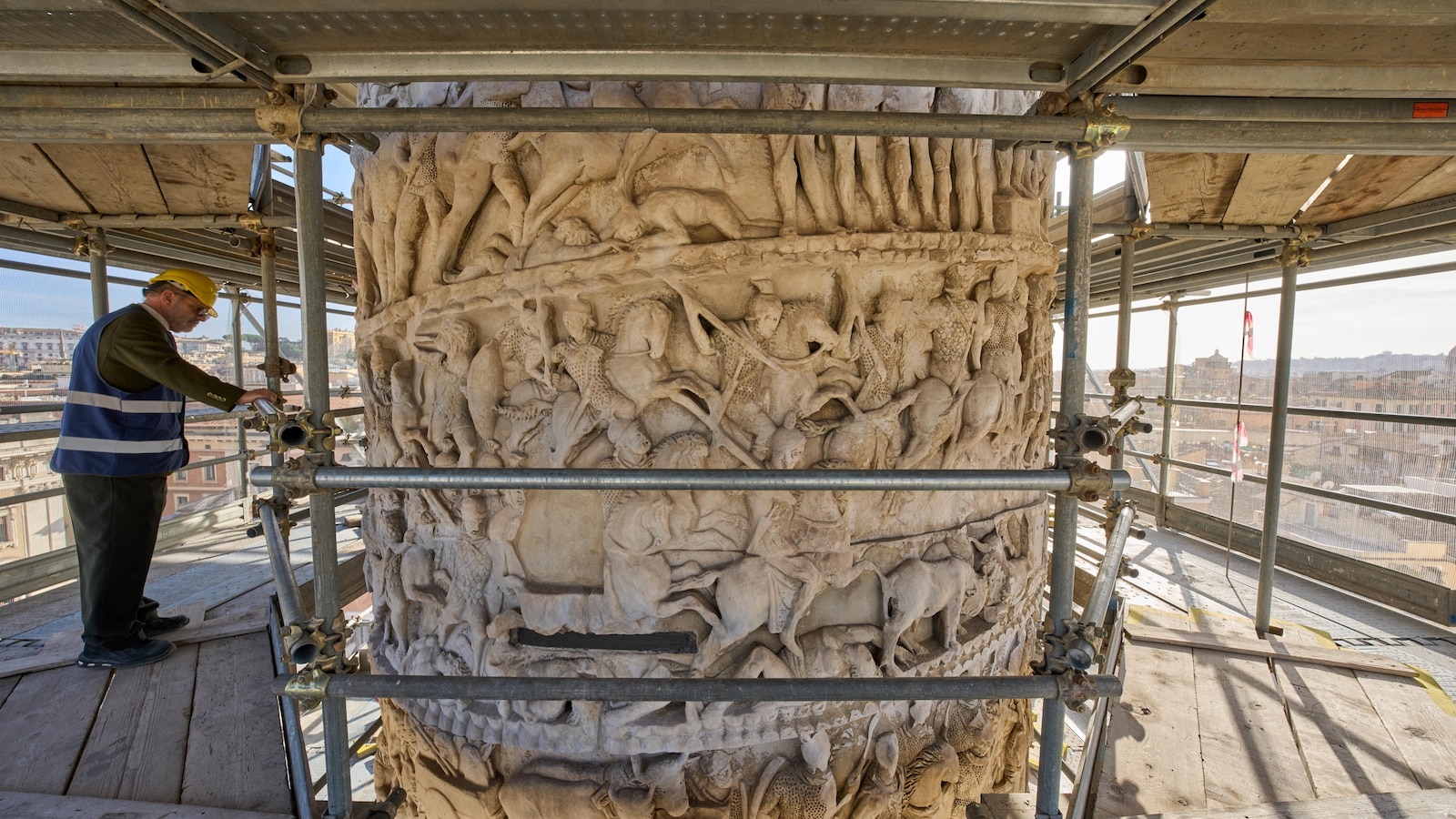
The 47-meter (154-foot) column, which was erected between A.D. 180 and 193, is adorned with a spiraling relief depicting the battles of the Roman Emperor Marcus Aurelius. The last restoration, which occurred in the 1980s, involved the use of small brushes to remove dirt and pollutants.
Journalists were given a rare opportunity to observe the restoration work up close, ascending 16 levels of scaffolding. Some, however, were deterred by the height.
Marta Baumgartner, the director of restoration works, praised the effectiveness of the laser technology. She noted that the laser provides excellent results quickly while preserving the marble and its surface layers.
The column's relief contains detailed depictions of warfare, including soldiers dragging women and children, decapitated enemies, horses in battle, and terrified war prisoners.
The restoration project, which is budgeted at 2 million euros ($2.3 million), is financed by the post-pandemic European recovery fund. In addition to the use of lasers, the 18 restorers are employing chemical wraps, sponges, and resin to eliminate dirt and repair damage caused by freezing water. The monument has also suffered from erosion, which has worn away some of the engraved figures' faces. Work commenced in April and is scheduled for completion in June. The project also includes a new lighting system for the column.
Creating a safe and effective workspace around the ancient column presented a significant challenge. The wide, square scaffolding provides the restorers with ample space to work and to view the figures from a distance. The figures increase in size as they ascend the column, a design technique intended to improve their visibility from the ground.
Valentin Nitu, one of the restorers, explained that this design choice was intended to draw viewers into the story, allowing them to follow the scenes and appreciate the intricate details.