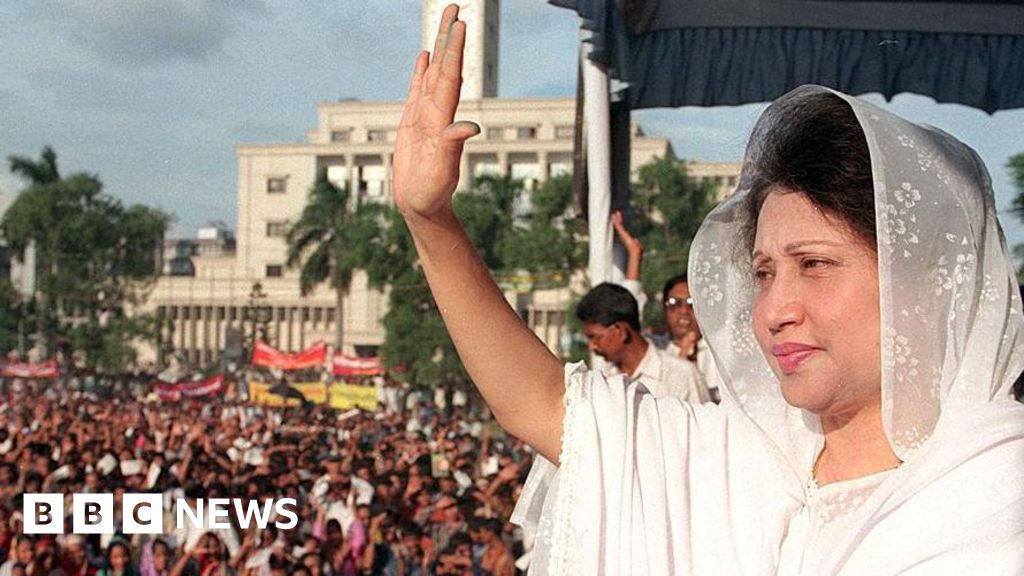
Khaleda Zia's Legacy: Implications for Bangladesh's Political Landscape
हिंदी में सुनें
Listen to this article in Hindi
Examining the geopolitical implications of Khaleda Zia's legacy on Bangladesh's future and regional stability.
The death of Khaleda Zia marks a significant moment in Bangladesh's political history, as she was a pivotal figure in shaping the country’s governance and political dynamics. As the first female prime minister of Bangladesh, Zia's leadership spanned both democratic and authoritarian periods, reflecting the complexities of governance in a nation that has oscillated between military rule and democratic elections.
In the contemporary geopolitical landscape, Zia's legacy is crucial for understanding the ongoing political tensions in Bangladesh, particularly between her party, the Bangladesh Nationalist Party (BNP), and the Awami League, led by her long-time rival Sheikh Hasina. This rivalry has not only defined domestic politics but has also influenced Bangladesh's foreign relations, particularly with neighboring India, and its strategic positioning in South Asia, where geopolitical interests are increasingly entwined.
The current political environment in Bangladesh is underscored by a history of polarization and conflict, which has often hampered effective governance and economic development. Zia's rise from a relatively obscure figure to a prominent political leader during a period of military dictatorship speaks to the adaptive strategies employed by political actors in response to changing power dynamics. Her leadership style, characterized by resilience and an uncompromising stance against military rule, set the stage for future political contests in the country.
Zia's political narrative also intersects with regional security considerations. Bangladesh is positioned at a crossroads between India and Myanmar, with both countries having vested interests in its stability. The political volatility that has characterized Bangladesh under Zia's and Hasina's leadership could have ripple effects on regional security, particularly in the context of migration, trade, and cross-border terrorism.
Furthermore, with Zia's passing, there arises a question of succession within the BNP and the potential for shifts in party strategies. The BNP has historically positioned itself as a counterweight to the Awami League's dominance, but its future trajectory could determine the balance of power in Bangladesh's political arena. The risk of further polarization remains, as both parties vie for the support of the electorate in an environment shaped by socio-economic challenges and public discontent.
Internationally, Khaleda Zia's political legacy may influence how external actors engage with Bangladesh. The country has received significant foreign aid and investment, particularly from China and India, which have competing interests in the region. The stability of Bangladesh’s political landscape will be crucial for maintaining foreign investment and strategic partnerships. A shift in governance or increased instability could deter international confidence, affecting economic growth and development initiatives.
In summary, Khaleda Zia's legacy is not merely a reflection of her time in office but a critical component of Bangladesh's ongoing political evolution. The implications of her life and career extend beyond national borders, touching on regional security and international relations. The landscape of Bangladeshi politics continues to be shaped by historical legacies, rivalries, and the pressing need for democratic consolidation amid challenges. As the country navigates this transitional phase, the repercussions of Zia's leadership will continue to resonate across the political spectrum and influence regional dynamics.
Editor's note: This article was independently written by the Scoopliner Editorial Team using publicly available information.