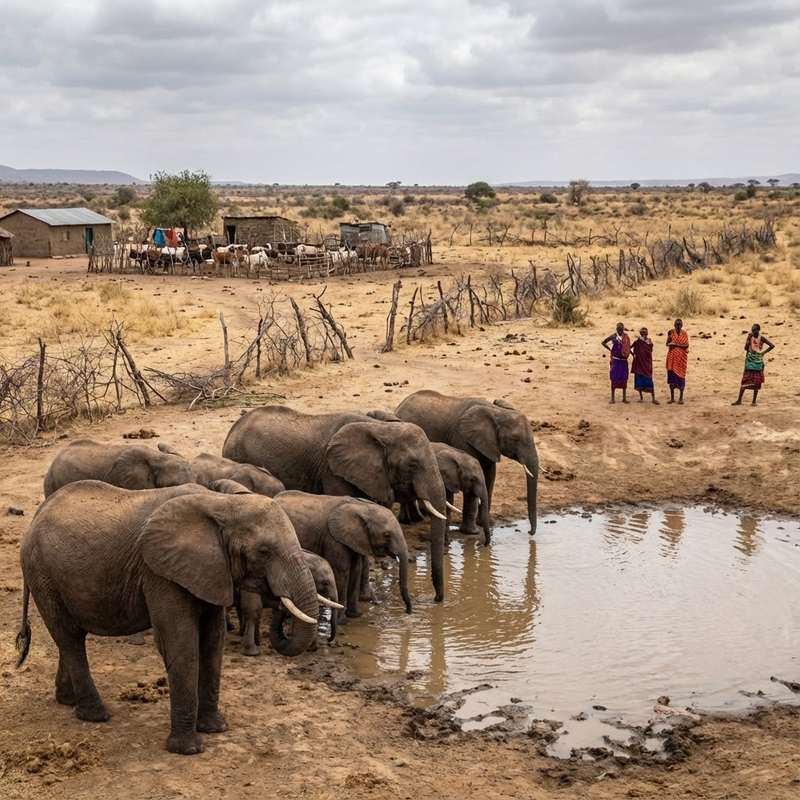
Climate Change and Resource Scarcity Fueling Human-Wildlife Conflict in East Africa
हिंदी में सुनें
Listen to this article in Hindi
Resource scarcity, driven by climate change, exacerbates human-wildlife conflict in East Africa, posing complex challenges for conservation and regional stability.
East Africa is increasingly facing a complex interplay of environmental degradation, resource scarcity, and human-wildlife conflict, highlighting the tangible geopolitical consequences of climate change. While seemingly localized incidents of wildlife encroaching on human settlements might appear isolated, they represent a growing trend with significant implications for regional stability, food security, and conservation efforts. The recent reports of escalating conflict in Kenya, where elephants have killed several people due to competition for dwindling resources, exemplify this worrying dynamic. The underlying drivers extend far beyond simple animal behavior, pointing to systemic pressures that demand a comprehensive, multi-faceted response.
The core issue is the increasing pressure on natural resources, primarily water and vegetation, driven by erratic rainfall patterns and prolonged droughts linked to climate change. As previously arable land becomes unsuitable for agriculture and traditional grazing areas shrink, both human and animal populations are forced into closer proximity, leading to inevitable conflict. This competition for resources isn't limited to wildlife; it also intensifies existing tensions between pastoralist communities and agriculturalists, further destabilizing already fragile social structures. The Kenyan government's compensation program, while offering some relief to victims, addresses the symptoms rather than the root causes of the problem. The long-term effectiveness of such measures is questionable without a parallel commitment to sustainable resource management and climate change mitigation.
The strategic implications of this escalating conflict are considerable. Increased instability in rural areas can disrupt agricultural production, impacting food security and potentially leading to increased migration to urban centers, further straining already limited resources. The diversion of government resources to manage human-wildlife conflict also detracts from other critical development priorities, such as education, healthcare, and infrastructure. Furthermore, the rise in poaching, often driven by desperation and economic hardship, poses a direct threat to iconic wildlife populations, impacting tourism revenue and undermining conservation efforts, which are vital for the region's economy. Kenya's role in regional stability is crucial, and these internal pressures could weaken its ability to act as a stabilizing force. Understanding the World affairs background is important here.
Addressing this challenge requires a multi-pronged approach that integrates climate change adaptation, sustainable resource management, community engagement, and effective law enforcement. Investments in drought-resistant crops, water conservation technologies, and alternative livelihoods for communities reliant on agriculture and pastoralism are essential. Strengthening community-based conservation initiatives, empowering local communities to manage and protect wildlife resources, is also crucial. This requires building trust between communities and conservation authorities and ensuring that local communities benefit directly from conservation efforts.
That said, the reality is a bit more complicated. the effectiveness of these measures is constrained by several factors. Limited financial resources, weak institutional capacity, and a lack of coordination between government agencies and international organizations hinder effective implementation. Furthermore, the transboundary nature of wildlife movements requires regional cooperation to address the issue effectively. Elephants, for example, migrate across national borders, making it essential for Kenya to collaborate with neighboring countries such as Tanzania and Uganda to develop coordinated conservation strategies. These strategies also must consider India’s global position on climate change, as they seek support and expertise from various global players.
Ultimately, the increasing human-wildlife conflict in East Africa serves as a stark reminder of the interconnectedness of environmental security, human security, and geopolitical stability. Addressing this challenge requires a fundamental shift in thinking, moving beyond reactive measures to proactive strategies that prioritize sustainable development, climate change adaptation, and community empowerment. Failure to do so will not only threaten the region's rich biodiversity but also undermine its long-term stability and prosperity.
Editor’s note: This article was independently written by the Scoopliner Editorial Team using publicly available information.