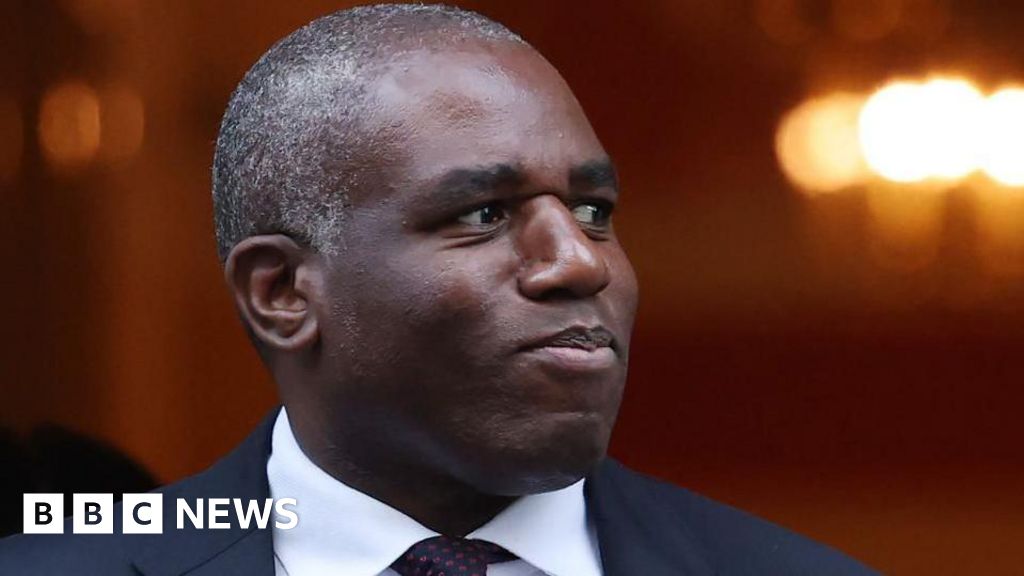
Jury trials scrapped for crimes with sentences of less than three years
The reforms are being brought in to tackle unprecedented delays in the Crown Court.
3 hours ago
Dominic Casciani ,Home and legal correspondentand
Tom McArthur
Jury trials in England and Wales for crimes that carry a likely sentence of less than three years will be scrapped, the justice secretary has announced.
The reforms to the justice system include creating "swift courts" under the government's plan to tackle unprecedented delays in the court system.
Serious offences including murder, robbery and rape will still go before a jury, and volunteer community magistrates, who deal with the majority of all criminal cases, will take on even more work.
David Lammy said the reforms were "bold" but "necessary", but the Conservatives described the plans as the "beginning of the end of jury trials".
Retired Court of Appeal judge Sir Brian Leveson was asked by the Lord Chancellor to come up with a series of proposals to reduce the backlog in the courts, in a process which began back in December 2024.
These proposals included jury-free trials and more out-of-court settlements like cautions.
In July, Sir Brian said "fundamental" reforms were needed to "reduce the risk of total system collapse".
A previous version of the plan, leaked to the BBC and the Times last week and based on Sir Brian's proposals, was to end jury trial for most crimes attracting sentences of up to five years.
But announcing the reforms in the Commons on Tuesday, David Lammy retreated from the most radical reforms.
Lammy said the new system would get cases dealt with a fifth faster than jury trials.
He added that it was necessary as current projections have Crown Court case loads reaching 100,000 by 2028, from the current backlog of almost 78,000.
This means that currently a suspect being charged with an offence today may not reach trial until 2030.
Six out of 10 victims of rape are said to be withdrawing from prosecutions because of delays.
A defendant's right to a jury trial would be restricted to prevent them from "gaming the system", Lammy also said.
The reforms to the jury process will remove the right for defendants to ask for a jury trial where a case can be dealt with by either magistrates or a new form of judge-only Crown Court.
Defendants facing fraud and complex financial crime accusations will no longer get a jury trial - a recommendation made to the government earlier this year by a retired senior judge.
There are around 1.3m prosecutions in England and Wales every year, and 10% of those cases go before a Crown Court. Of those, three out of 10 result in trials.
The reforms appear to mean that more than two out of 10 will still go before a jury.
Critics of restrictions to trial by jury - including almost all barristers - say it won't have any impact on the backlogs because the real problem has been cuts to the Ministry of Justice.
Evidence also shows that ethnic minorities believe they get a fairer hearing with juries, than with magistrates alone.
Lammy has previously said that cutting juries would be a mistake, but told the BBC ahead of the announcement that the "facts had changed" and the government needed to bring in reforms to clear the backlog.
Shadow justice secretary Robert Jenrick accused Lammy of "scrapping the institution he once lauded".
He told the Commons: "Why on earth does this justice secretary think he has a mandate to rip up centuries of jury trials without even a mention of it in his party's manifesto?"
Lammy, in response, said the changes were needed because the previous government had cut court sitting days - and magistrates already deal with the vast majority of UK trials.
Legislation would need to be introduced to bring in the changes.
Abigail Ashford, a solicitor advocate with Stokoe Partnership, who represents clients in the Crown Court, said the reforms risked trust in justice.
"Judge-only trials risk deepening existing inequalities and eroding confidence among communities who already feel marginalised," she said.
"In complex or sensitive cases, removing the community from assessing credibility and fairness undermines trust in a way that cannot be compensated for by concentrating decisions in the hands of a single judge."
The Criminal Bar Association, which represents specialist criminal barristers in England and Wales, criticised the changes and said they brought "a wrecking ball to a system that is fundamentally sound and has been in place for generations".
"Juries work – they do their job superbly, and without bias," it said in a statement.
"Juries have not caused the backlog."
Chair Riel Karmy-Jones KC also expressed concern "about the lack of detail provided in David Lammy's comments".
Tom Franklin, chief executive of the Magistrates' Association, said the increased powers for magistrates was a "big vote of confidence" but more resources were needed for courts including enough trained, well-paid legal advisers, and repairing crumbling buildings.
He also pressed the case for the new swift courts to include two magistrates passing sentences with a judge, as originally proposed by Sir Brian, so that "ordinary people" are involved in both verdict and sentencing.