River Monsters: Mosasaurs Thrived in Freshwater Before Extinction
हिंदी में सुनें
Listen to this article in Hindi
Fossil evidence reveals mosasaurs, giant marine reptiles, lived in freshwater rivers alongside dinosaurs just before the mass extinction event 66 million years ago.
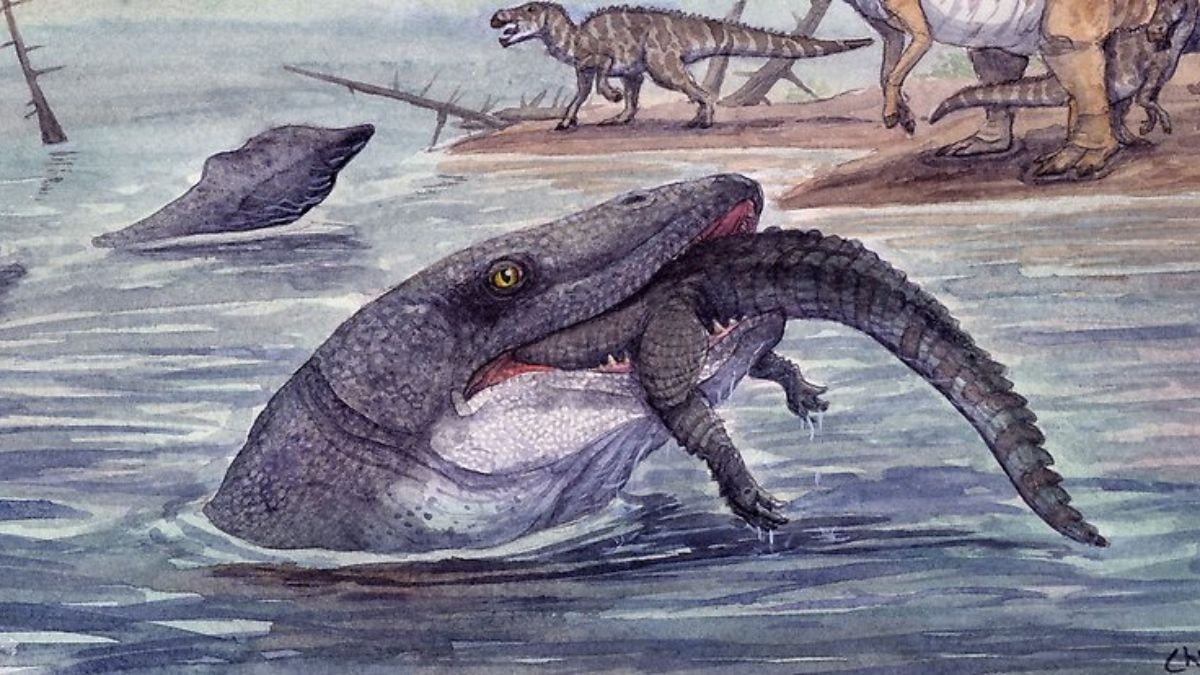
Mosasaurs, massive marine reptiles, weren't confined to the oceans, according to new research. A recent study reveals they thrived in freshwater rivers during their last million years before the catastrophic extinction event 66 million years ago.
The discovery was sparked by a mosasaur tooth found in North Dakota in 2022. The tooth was unearthed in sediment associated with ancient river channels. Scientists estimate the mosasaur it belonged to could have reached an impressive 11 meters in length, rivaling the size of modern killer whales.
This finding reshapes our understanding of these extinct predators, demonstrating their adaptability and ability to inhabit environments previously considered unsuitable for them.
The mosasaur tooth was discovered alongside fossils of a Tyrannosaurus rex and a crocodilian jawbone, creating an unusual mix of terrestrial, freshwater, and marine species. This prompted scientists to investigate how a marine reptile's tooth ended up in a riverbed.
To solve this puzzle, a team of researchers from the United States, Sweden, and the Netherlands, led by Uppsala University, conducted precise isotope analysis.
Evidence of Freshwater Mosasaurs
By analyzing the chemical composition of the mosasaur's teeth and bones, the researchers measured the ratios of oxygen, strontium, and carbon isotopes. The mosasaur specimen exhibited significantly higher levels of oxygen isotopes compared to typical marine mosasaurs, suggesting it lived in a freshwater environment. Further analysis of strontium ratios supported this conclusion, aligning with a riverine rather than an oceanic habitat. Dr. Melanie included further...