2026: A Pivotal Year for Human Space Exploration with Gaganyaan and Artemis-II
हिंदी में सुनें
Listen to this article in Hindi
In 2026, ISRO's Gaganyaan and NASA's Artemis-II missions will redefine human spaceflight, highlighting India's and the US's roles in space exploration.
As we approach 2026, two significant missions are on the horizon: ISRO's Gaganyaan and NASA's Artemis-II. These missions represent not just technological advancements, but a shift in the global landscape of human space exploration.
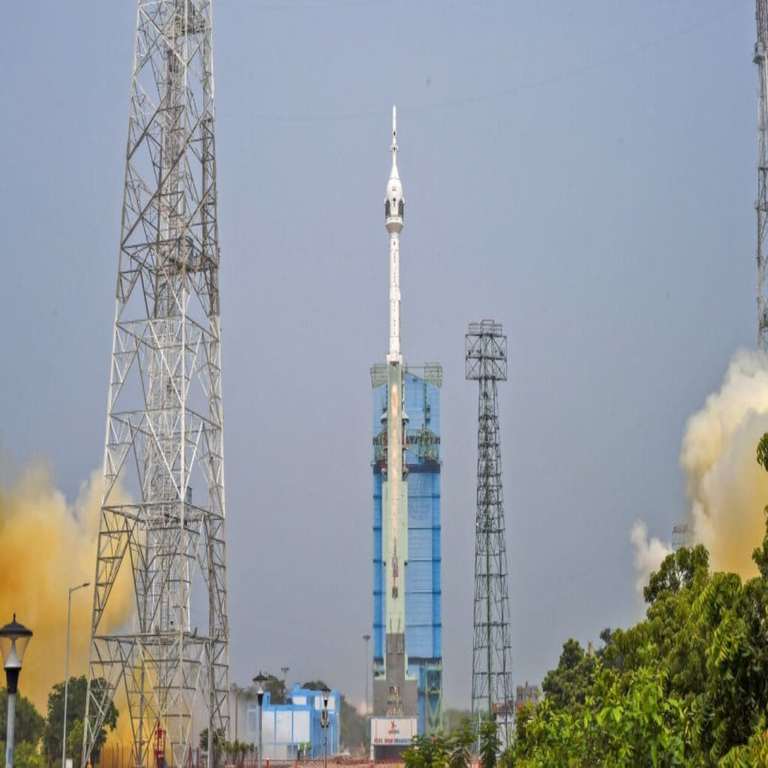
The Gaganyaan programme, India's ambitious initiative, aims to establish the country's independent human spaceflight capabilities. The G1 mission, an uncrewed orbital test, is slated for March 2026 and will use the LVM3 (Gaganyaan-Mk3) rocket to carry a humanoid robot named Vyommitra into low-Earth orbit. The mission's primary objectives include testing life-support systems, communication links, and re-entry safety protocols. A successful G1 mission would position India among a select group of nations capable of sending humans into space and returning them safely. This achievement could open doors to further Indian space missions, including the establishment of space stations and private space ventures.
On the other side of the globe, NASA's Artemis-II mission is set to follow suit, aiming for a launch no earlier than February 5, 2026. This mission will carry four astronauts aboard the Orion spacecraft, utilizing the Space Launch System (SLS) rocket to embark on a journey that will take them around the Moon, marking the first time humans will travel beyond low-Earth orbit since the Apollo missions.
Both missions are crucial not only for their respective countries but also for the broader scientific community, as they pave the way for future exploration endeavors beyond Earth. They embody a trend towards more multipolar participation in space activities, with various nations stepping up to contribute to global space exploration initiatives.
That said, the reality is a bit more complicated. while these missions are groundbreaking, there are limitations and unanswered questions. The success of Gaganyaan's uncrewed mission is vital for India to move forward with crewed flights, and the complexities of deep-space travel pose inherent risks that must be carefully managed by NASA. Moreover, the success of these missions does not automatically ensure the long-term viability of sustained human presence beyond Earth; many challenges remain, including life-support sustainability, radiation exposure, and the psychological effects of long-duration space travel.
In summary, 2026 promises to be a landmark year for human space exploration with the Gaganyaan and Artemis-II missions. While they signify progress and ambition in space exploration, the broader implications will depend on the successful execution of these missions and the subsequent steps taken by both nations in the realm of human spaceflight.
Editor's note: This article was independently written by the Scoopliner Editorial Team using publicly available information.