ISM 2.0 to deepen India’s chip ecosystem, shift focus from fabs to full-stack semiconductor capability: MeitY’s Sushil Pal
At the UP Tech Next Electronics & Semiconductor Summit, Joint Secretary Sushil Pal says India’s next semiconductor policy will push hard on ecosystem creation, chip design, and advanced packaging
India’s next semiconductor policy, India Semiconductor Mission 2.0, will pivot the country from a 'fab-first' mindset to a full-stack semiconductor strategy, said joint secretary at the Ministry of Electronics and Information Technology Sushil Pal on December 2.
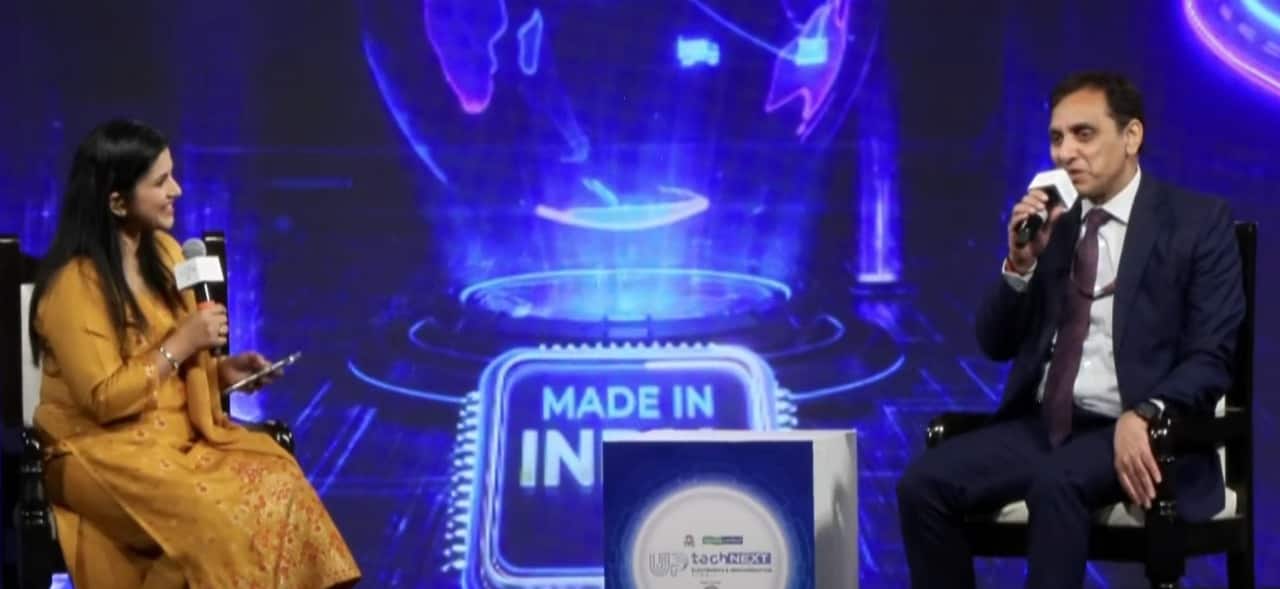
Speaking at the CNBC-TV18 & Moneycontrol UP Tech Next Electronics & Semiconductor Summit in Lucknow, Pal, while not sharing timelines or budget numbers for India Semiconductor Mission 2.0, said the government’s intent is already clear.
“You cannot commit an investment of $10 billion at one point in time and then shut off the support later on. This industry needs sustained, long-term backing,” Pal said.
He said ISM 2.0 will “move beyond fabs and ATMP units to focus on ecosystem play, on chips, on modules, on design, and on R&D". He described these as the “very low-hanging fruit” that will also create domestic demand for Indian-made chips.
‘Mature nodes are the real volume story’
Responding to concerns that most of India’s approved semiconductor projects centre on mature-node fabs rather than cutting-edge 3nm or 5nm technologies, Pal pushed back on the narrative.
“It always sounds fancy to talk about higher nodes,” he said, but pointed out that mature nodes—28nm, 40nm, 55nm, 90nm— represent nearly 70 per cent of global chip demand by volume, and about 40 per cent by value.
Advanced nodes below 10nm may command 50 per cent of value but make up a small portion of overall volume, he said.
“First, we need to build capability on mature nodes… You must reach the moon first before you launch a mission to Mars,” he said.
What the next three to five years look like
Pal stressed that comparisons with Taiwan, South Korea, or China were “unfair,” given their multi-decade head start.
Instead, the immediate milestone is ensuring that India’s first wave of semiconductor projects move smoothly into execution.
“Execution is our first milestone. Ensuring these projects have proper offtake and survive commercially is critical,” he said.
The second priority is accelerating the supply chain. “The aim is not just fabs and ATMPs. We want the equipment, materials, and full supply chain to shift here,” he said.