Interstellar comet 3I/ATLAS makes closest approach to Earth before Christmas

Interstellar comet 3I/ATLAS makes closest approach to Earth before Christmas

Updated on 16 Dec 2025 Category: Science • Author: Scoopliner Editorial Team
हिंदी में सुनें

Listen to this article in Hindi

गति:

Interstellar comet 3I/ATLAS will reach its nearest point to Earth on December 19, 2025. Visible with telescopes/binoculars. Discovered by ATLAS survey.


The interstellar comet 3I/ATLAS is set to make its closest approach to Earth on December 19, 2025. Astronomers are looking forward to this event, anticipating it as a unique Christmas-time observation opportunity.

3I/ATLAS is only the third interstellar object that has been confirmed. The other two were 'Oumuamua, spotted in 2017, and comet 2I/Borisov, observed in 2019.

Discovery of 3I/ATLAS

The Asteroid Terrestrial-impact Last Alert System (ATLAS), a NASA-funded survey telescope located in Rio Hurtado, Chile, initially reported the sighting of the interstellar comet on July 1, 2025. The comet, arriving from the direction of the constellation Sagittarius, was officially designated 3I/ATLAS.

Initially identified as A11pl3Z, ground-based telescopes were able to observe 3I/ATLAS until September 2025. In October 2025, it passed its closest point to the Sun. The Hubble Space Telescope, using its Wide Field Camera 3, re-observed 3I/ATLAS on November 30, 2025.

Closest Approach to Earth

NASA has announced that December 19, 2025, marks the date when 3I/ATLAS will be at its closest proximity to Earth, just six days before Christmas. Space.com reports that this will be the closest this "erratic wanderer" will ever be to our planet.

Skywatchers equipped with a small telescope or powerful binoculars will have the chance to view the comet up close. Observations from Hubble have enabled astronomers to refine their estimations of the comet's solid, icy nucleus size. Researchers have determined that the nucleus has an upper limit of 3.5 miles (5.6 kilometers) in diameter, but it could potentially be as small as 1,000 feet (320 meters) across.

The comet's close Earth approach presents a valuable opportunity for astronomers to study planet formation in other solar systems and compare those processes with what occurred in our own.
Source: ummid.com   •   16 Dec 2025

Related Articles

Rewind 2025: Innovations & Missions, Top Scientific Achievements of 2025

A look back at the top scientific breakthroughs of 2025, including space exploration, medical innovations, physics discoveries, and AI advancements.

Source: Adda247 | 16 Dec 2025
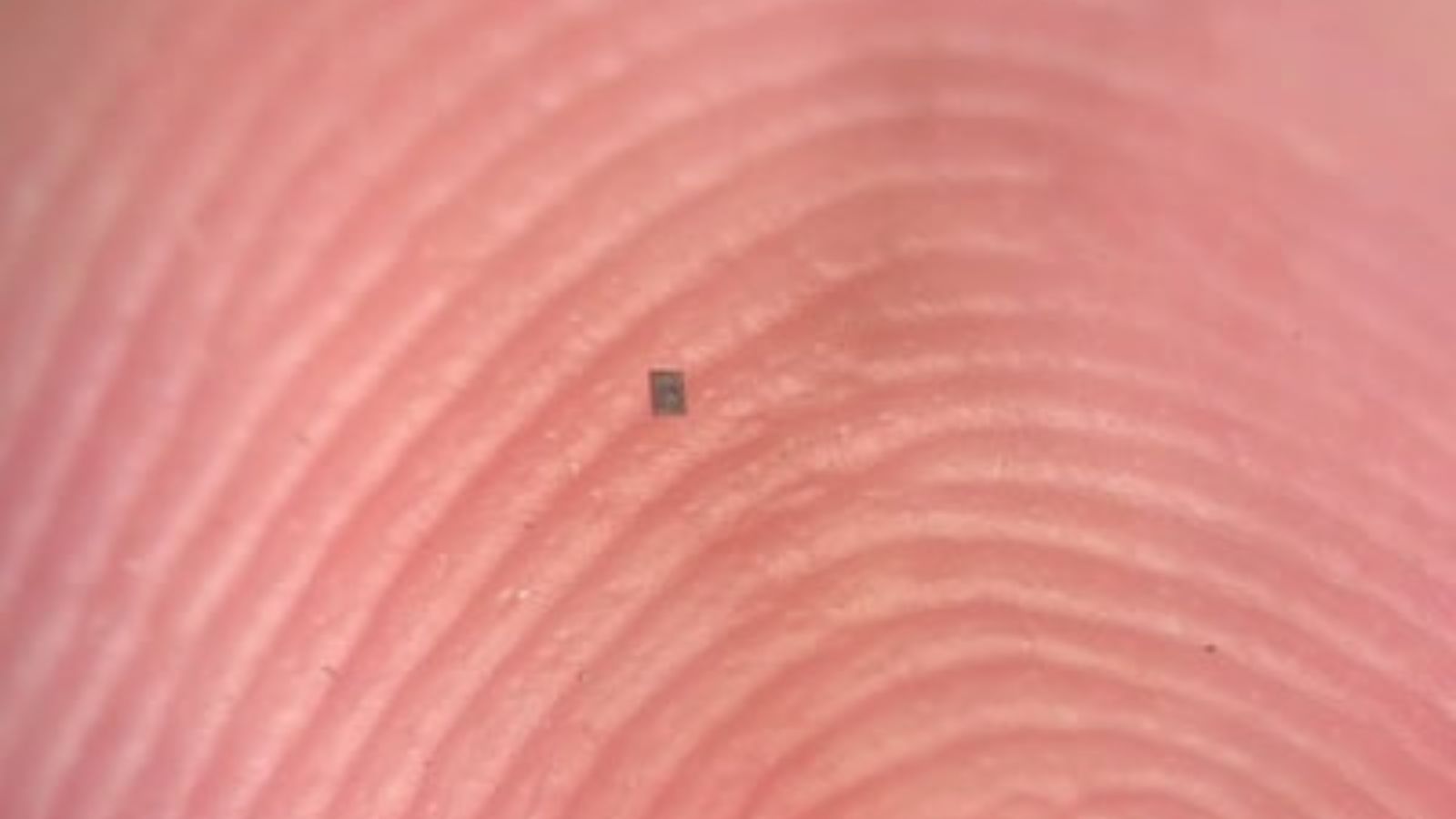
Scientists develop world’s smallest autonomous robots, almost invisible to naked eye

Researchers have engineered the world's tiniest autonomous robots, so small they're nearly invisible. These micro-robots could revolutionize medicine and manufacturing.

Source: The Indian Express | 16 Dec 2025
AI Helps Decode Covert Attention and Reveals New Neuron Types

UC Santa Barbara researchers used AI to understand covert attention, the ability to focus without moving your eyes, discovering new neuron types.

Source: UC Santa Barbara | 16 Dec 2025
NASA's James Webb Telescope Detects Substantial Atmosphere on Scorching Lava Planet

The James Webb Space Telescope has detected a surprisingly thick atmosphere surrounding the ultra-hot exoplanet TOI-561 b, a lava-covered world.

Source: Moneycontrol | 16 Dec 2025
In conversation with Ryan Richards

RSC Applied Interfaces editor Ryan Richards discusses how researchers can highlight their work's significance and the skills scientists need to succeed.

Source: The Royal Society of Chemistry | 16 Dec 2025
James Webb Space Telescope could illuminate dark matter in a way scientists didn't realize

New research suggests the James Webb Space Telescope (JWST) could help reveal the nature of dark matter by studying elongated galaxies.

Source: Space | 16 Dec 2025
← Back to Home

QR Code Generator