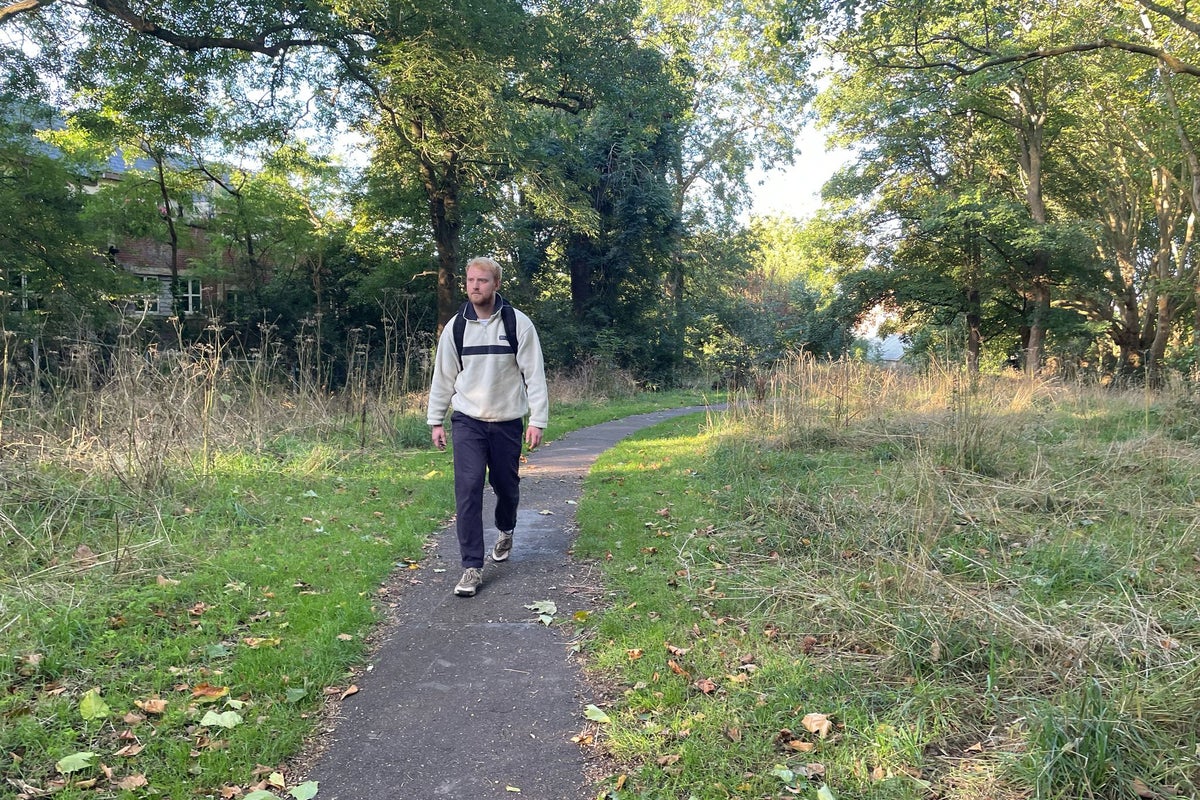
I tried the ‘Japanese walking’ workout that offers ‘10 times the benefits’ of walking 10,000 steps per day
हिंदी में सुनें
Listen to this article in Hindi
Can 'Japanese walking' give 10x the benefits of 10,000 steps? A fitness writer tests the claims and compares it to regular walking. Here's what happened.
Walking is generally accepted as a beneficial form of exercise. That said, the reality is a bit more complicated. the idea that 10,000 steps should be the daily goal is more controversial. That number originated from a Japanese marketing campaign in the 1960s for a pedometer. Although it’s a convenient target, scientific research hasn’t confirmed it as the definitive standard for health. A 2023 study from the University of Granada indicated that 8,000 steps are enough to lower the risk of early death.
Reaching 10,000 steps also requires a significant time commitment. It can take over 90 minutes daily, which can be difficult for people with busy schedules.
A new walking method called "Japanese walking" has recently gained attention online. Fitness coach Eugene Teo claims in a viral video that this method, which takes only 30 minutes a day, provides ten times the benefits of walking 10,000 steps.
As a fitness writer, I decided to test the claims of "Japanese walking" to see if they were valid.
How to do ‘Japanese walking’
The "Japanese walking" method involves interval walking. Here's the sequence:
- Walk at a fast pace for three minutes.
- Walk at a slow pace for three minutes.
- Repeat the sequence five times without breaks.
What are the benefits of Japanese walking?
The "Japanese walking" protocol comes from a 2007 study in the Mayo Clinic Proceedings journal. The study investigated whether high-intensity interval walking training (IWT) offered more advantages than moderate-intensity continuous walking training. The researchers measured improvements in thigh muscle strength, peak aerobic capacity, and blood pressure.
Over five months, researchers divided 60 men and 186 women, averaging 63 years old, into three groups: a no-walking group, an IWT group, and a continuous walking training (CWT) group. The CWT group walked at a slow pace, about 50 percent of their peak aerobic capacity, taking at least 8,000 steps daily, four or more times per week. The IWT group followed the protocol above at least four times per week.
The IWT group experienced a 13 percent increase in isometric knee extension, a 17 percent increase in isometric knee flexion, and an eight percent increase in peak aerobic capacity for walking. These gains were significantly greater than those in the CWT group.
The study also found that the IWT group had a greater reduction in resting systolic blood pressure, even though they spent less time walking each week.
The study concluded that high-intensity interval walking could protect against age-related increases in blood pressure and decreases in thigh muscle strength and peak aerobic capacity.
My experience with Japanese walking
To test this method, I used my own two legs, a Garmin watch, and my experience with walking. I compared a regular 30-minute dog walk with a 30-minute session of "Japanese walking" on the same route. I recorded both sessions with my Garmin Vivoactive and noted any subjective changes.
During my usual 30-minute walk, I took almost 3,000 steps, covering 2.12km at an average pace of 14min 10sec per kilometer. My average heart rate was 85bpm, and I burned around 157 calories. This walk included frequent stops for my dog to investigate interesting spots, and I maintained a relaxed pace.
During the Japanese walking session, my pace was just under 120 steps per minute for the fast intervals and slightly below 100 steps per minute for the slow intervals. I covered a greater distance, traveling 2.94km and taking 3,500 steps at an average speed of 10min 12sec per kilometer. My average heart rate was similar at 86bpm, but I noticed peaks (104bpm) and troughs corresponding to the high- and low-speed intervals. My estimated calorie burn was also higher at 211.
What are the benefits of the Japanese walking method?
The idea that faster walking or increased intensity provides greater benefits is not new.
Dr. Elroy Aguiar, a specialist in walking for health and an assistant professor at the University of Alabama, led a 2024 study published in the Scandinavian Journal of Medicine and Science in Sports. The study linked even one minute of high-intensity activity to improved health outcomes.
Dr. Aguiar noted that their research found that the highest minute of activity each day was a strong indicator of whether someone had metabolic syndrome risk factors, such as elevated waist circumference, high triglycerides, low HDL cholesterol, high blood pressure, and high blood sugar.
Other studies Dr. Aguiar worked on, featured in the British Journal of Sports Medicine, indicated that walking at approximately 100 steps per minute qualifies as moderate-intensity exercise, and most benefits accumulate at moderate or higher intensities.
Furthermore, completing the Japanese walking method four times per week leaves you just 30 minutes short of the World Health Organisation’s recommendation of 150 minutes of moderate-intensity physical activity per week. Adding a couple of short strength training sessions can create a solid minimalist workout plan for beginners.
Potential drawbacks of the Japanese Walking method
While the Japanese walking method appears beneficial, there are some factors to consider when comparing it to walking 10,000 steps daily.
Dr. Aguiar’s 2024 study suggested that the most effective walking method for reducing metabolic risk factors combines high volume (number of steps) and high intensity (walking speed).
He suggests aiming for a high daily step count (8,000-plus steps) and incorporating at least 30 minutes of faster walking or jogging to improve metabolic health.
During my Japanese walking session, I only accumulated a little over 3,500 steps, which is less than half of the 8,000 steps often associated with positive health outcomes and below the 5,000-step threshold for a sedentary lifestyle.
Integrating this method as part of your daily steps might be more effective for achieving health goals. That said, the reality is a bit more complicated. if you only have 30 minutes, it still offers significantly more benefits than no movement or a regular 30-minute walk.
Another disadvantage is that the Japanese walking method involves a concentrated 30-minute activity, while walking 10,000 steps can be spread throughout the day, encouraging more frequent breaks from sitting.
A 10-year study of 8,000 people, published in the American Journal of Epidemiology, revealed that replacing 30 minutes of daily sitting with light activity reduced the risk of death by 17 percent. This benefit applied even when the activity was spread across short intervals. This is why smartwatches remind you to stand up and move regularly.
Regular movement also helps maintain mobility and reduce joint and muscle stiffness.
Movement mechanics expert Ash Grossmann emphasizes that any movement is better than remaining still.
Finally, the structured nature of Japanese walking, while ensuring intensity, may reduce enjoyment. I found it harder to stop and chat or appreciate my surroundings, potentially diminishing the stress-reducing benefits of walking.
The Japanese walking method: the verdict
Throughout my health and fitness writing, the positive impact of regular movement has been a consistent theme.
For those seeking a minimal effort approach, any movement is beneficial, especially if you're starting from a sedentary lifestyle. Ideally, incorporate quick strength training sessions, regular aerobic activity like walking, and occasional high-intensity exercise each week.
Walking is an accessible exercise, making it easier for many people to incorporate movement into their routines. That said, the reality is a bit more complicated. even finding time for a short walk can be challenging. The Japanese walking method offers a time-efficient way to experience many of the benefits of a higher volume of daily walking.
While you could engage in other forms of high-intensity exercise, walking remains efficient and doesn't require special clothing.
Should you try it? Yes, especially if you're short on time and want to add health-boosting movement to your day. Should you continue it? That depends.
If you enjoy the structure or find it sustainable, it can lead to a consistent movement habit and its associated health benefits. If not, find an alternative form of moderate- to high-intensity exercise that you enjoy and commit to it, as consistency is crucial for long-term results.