‘I feel special, in my heart’: Thousands Mark Winter Solstice at Stonehenge
हिंदी में सुनें
Listen to this article in Hindi
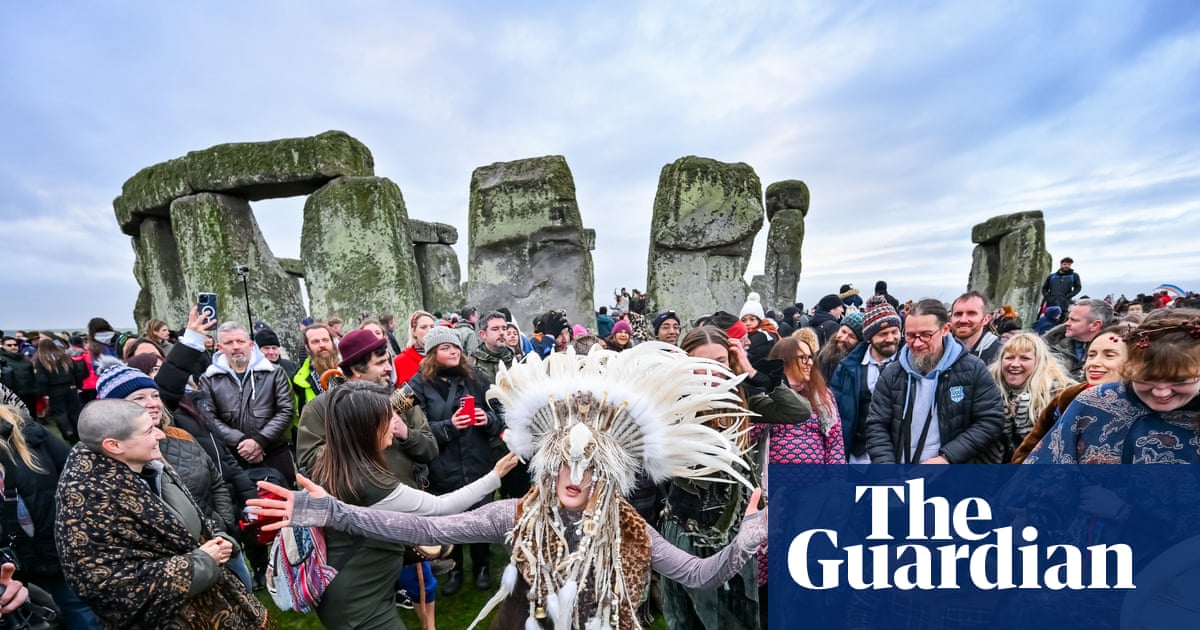
Thousands flocked to Stonehenge in Wiltshire to observe the winter solstice, the year's shortest day. Attendees, including pagans and druids, marked the occasion.
Under a dark sky, thousands congregated at Stonehenge early Sunday to observe the winter solstice. The ancient site in Wiltshire saw a diverse crowd assemble to witness the sunrise on the shortest day of the year.
Just as they had six months earlier for the summer solstice, many attendees donned traditional pagan attire. The winter solstice, typically occurring between December 20th and 22nd, marks the point when the sun traces its lowest arc across the sky. During this time, the sun's rays can be seen through the great trilithon, specifically the south-eastern arches of Stonehenge, as well as other alignments within the stone circle.
The length of daylight on the solstice varies depending on latitude. In most of Britain, around seven hours of sunlight are expected. That said, the reality is a bit more complicated. Land’s End in Cornwall enjoys slightly over eight hours, while the Shetland Islands in Scotland receive only about five and a half hours.
Win Scutt, a curator at English Heritage who oversees events at Stonehenge, welcomed celebrants from around the globe to Salisbury Plain. Speaking with Hits Radio, Scutt noted the incredible atmosphere and the diversity of the crowd, including pagans and druids. He emphasized Stonehenge's unique power to draw people from all walks of life and its broad appeal.
For some, like Bradley O’Neill, traveling from as far away as Australia, experiencing the solstice at Stonehenge was a long-held ambition. Speaking to the BBC, O'Neill expressed his fascination with ancient mysteries and his anticipation of witnessing something special. He added that he was looking forward to touching the stones and feeling their energy, saying, “I feel special, in my heart.”
Golnar Pooya, a Persian Zoroastrian, found particular significance in the occasion. Zoroastrianism, one of the world's oldest monotheistic religions, has observed the solstice for over 2,500 years. Pooya explained that while she and her family usually celebrate at home in America, this year marked her first time attending the Stonehenge event. She detailed their traditions, which include staying up all night, sharing pomegranates (symbolizing birth and rebirth), and reading poetry until sunrise, celebrating the end of darkness. Pooya highlighted the remarkable sight of people from diverse cultures and regions gathering to witness the return of light to the Earth, emphasizing that it was more a tradition than a religious event for her.