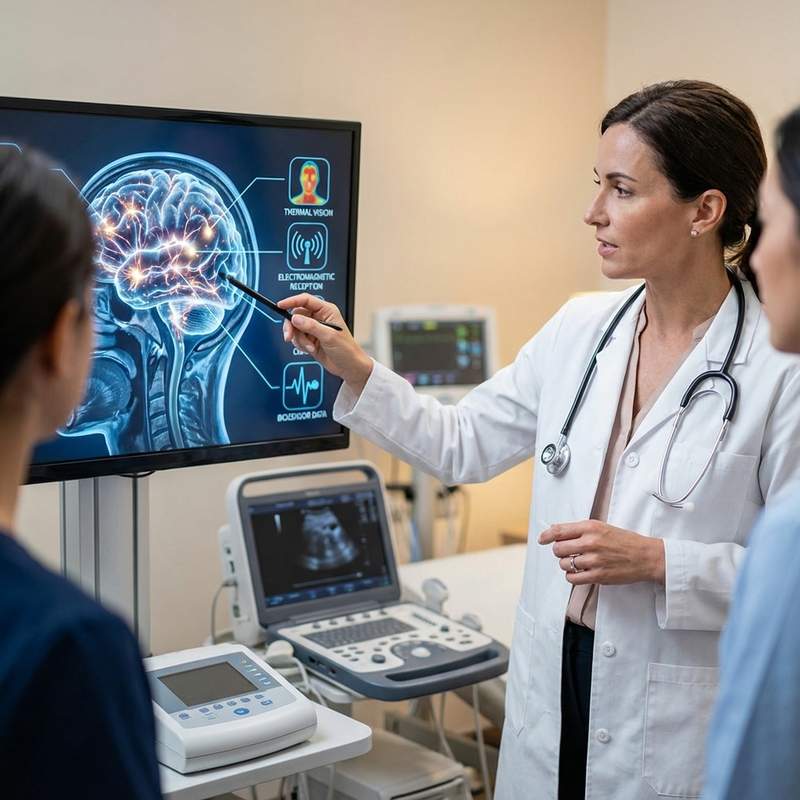
The Expanding Landscape of Human Senses: Implications for Health and Perception
हिंदी में सुनें
Listen to this article in Hindi
Modern neuroscience suggests humans possess far more than five senses. Understanding this sensory complexity has implications for health, technology, and public awareness.
For centuries, the conventional understanding of human perception has been anchored in the Aristotelian model of five senses: sight, sound, smell, taste, and touch. That said, the reality is a bit more complicated. contemporary neuroscience is challenging this long-held belief, suggesting that humans may possess a significantly larger array of senses, potentially numbering between 22 and 33. This expansion of our understanding of sensory perception has profound implications for various fields, including public health, technology, and our fundamental awareness of the body and its environment.
The traditional five senses provide a foundational framework for interacting with the world, but they represent only a fraction of the sensory information constantly processed by the nervous system. Modern research highlights the significance of senses beyond the classical model, such as proprioception (the sense of body position and movement), interoception (the sense of the body's internal state), and the vestibular sense (balance and spatial orientation). These 'lesser-known' senses play crucial roles in maintaining bodily functions, coordinating movement, and shaping our subjective experiences.
Interoception, for instance, involves the continuous monitoring of internal physiological signals, such as heart rate, respiration, hunger, and temperature. This internal awareness is essential for regulating bodily functions and maintaining homeostasis. Dysregulation of interoception has been linked to various mental health conditions, including anxiety, depression, and eating disorders. Understanding the role of interoception in these conditions could lead to more targeted and effective interventions. You can read more about the impact of trauma on the brain and mental health [here](internal_link_to_mental_health_article).
Proprioception, on the other hand, allows us to navigate our environment without constantly visually monitoring our limbs. This sense is crucial for coordinated movement, balance, and motor learning. Impairments in proprioception can result from neurological conditions such as stroke or peripheral neuropathy, leading to difficulties with movement and an increased risk of falls. Rehabilitation strategies often focus on retraining proprioceptive abilities to improve motor function and independence. Understanding public health strategies for managing stroke rehabilitation can be found [here](internal_link_to_stroke_article).
The vestibular system, located in the inner ear, provides information about head position and movement, contributing to our sense of balance and spatial orientation. Dysfunction of the vestibular system can lead to dizziness, vertigo, and imbalance, significantly impacting quality of life. Vestibular rehabilitation therapy aims to improve balance and reduce symptoms by retraining the brain to compensate for vestibular deficits.
The recognition of a broader spectrum of senses challenges the traditional, siloed view of sensory processing. The senses do not operate in isolation; rather, they interact and integrate to create a unified and coherent perception of the world. This multisensory integration is crucial for accurate perception, decision-making, and adaptive behavior. For example, our perception of flavor is a multisensory experience involving taste, smell, and touch. The aroma of food significantly influences our perception of its taste, and the texture of food can affect our overall enjoyment.
While the concept of a greater number of senses is gaining traction, it's important to acknowledge the limitations and ongoing debates within the scientific community. Defining what constitutes a distinct 'sense' can be challenging, as many sensory experiences involve complex interactions between multiple sensory modalities. Further research is needed to fully elucidate the neural mechanisms underlying these interactions and to develop standardized methods for assessing and quantifying different sensory abilities. The WHO provides helpful resources on understanding various conditions [here](internal_link_to_WHO_overview).
The emerging understanding of the expanded sensory landscape has significant implications for public health. By recognizing the importance of senses beyond the traditional five, we can develop more comprehensive approaches to health promotion, disease prevention, and rehabilitation. This includes designing environments that are more sensory-rich and stimulating, developing interventions that target specific sensory deficits, and promoting awareness of the role of sensory perception in overall well-being. Greater public awareness and acceptance of these expanded senses can lead to a more holistic approach to healthcare and improve quality of life.
Editor’s note: This article was independently written by the Scoopliner Editorial Team using publicly available information.