Hubble looked at interstellar comet 3I/ATLAS as it came close. Here's what it found
NASA's Hubble Space Telescope has revisited interstellar comet 3I/ATLAS, obtaining new images as global observatories join the effort to study this rare object from outside our solar system.
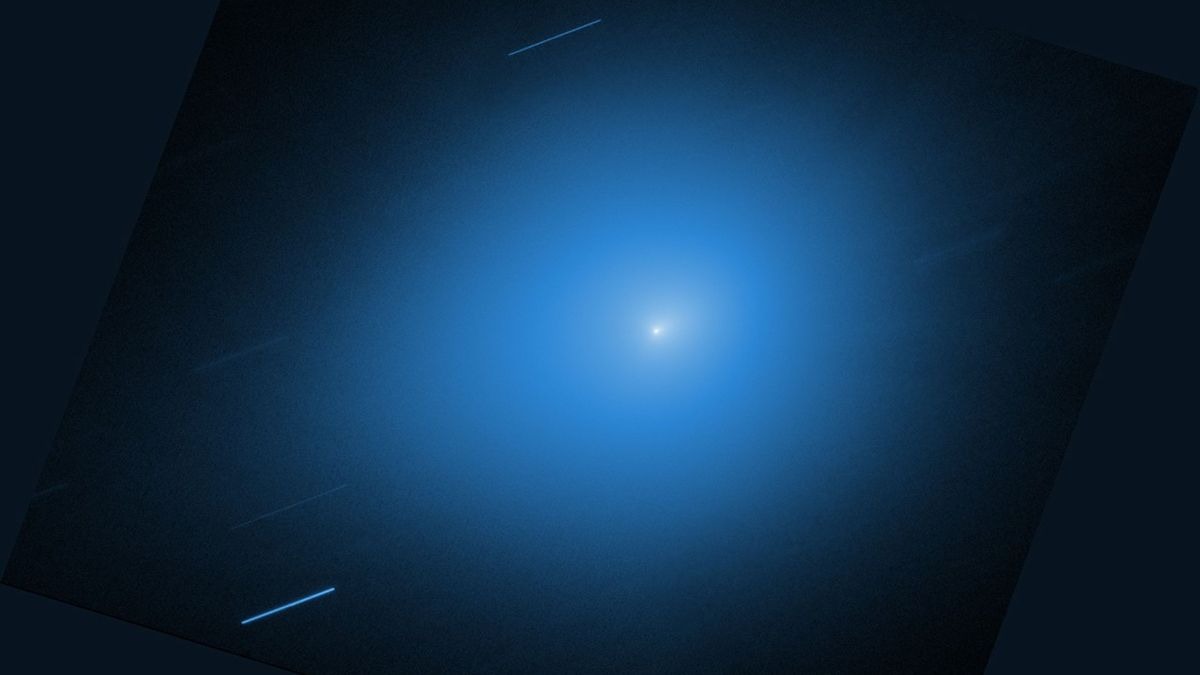
Nasa's Hubble Space Telescope re-observed interstellar comet 3I/ATLAS last month.
Located about 178 million miles from Earth at the time, Hubble's Wide Field Camera 3 captured the comet as it streamed across the sky. As a result, background stars appear as streaks, highlighting the comet's rapid movement. This event marks the latest in a campaign by Nasa and international observatories to better understand this rare visitor from beyond our solar system.
advertisement
The comet 3I/ATLAS was first detected in July by an ATLAS telescope in Chile. Its hyperbolic trajectory confirmed it had originated outside the solar system. Nasa soon coordinated a system-wide observation campaign, enlisting a dozen spacecraft and telescopes, including Hubble, the James Webb Space Telescope, and Mars orbiters, to study its composition and behaviour.
IS THE COMET AN ALIEN SPACESHIP?
Comet 3I/ATLAS is estimated to be between five and eight billion years old, making it older than our planet.
Speculations about the comet being an alien spaceship were circling around when the celestial object was discovered.
US Congressman George Whitesides of the House Science Committee addressed rumours about the comet's nature, stating there is no evidence supporting online rumours that the comet is an alien spaceship passing through our solar system. This clarification underscores scientists' focus on understanding the object's true origin.
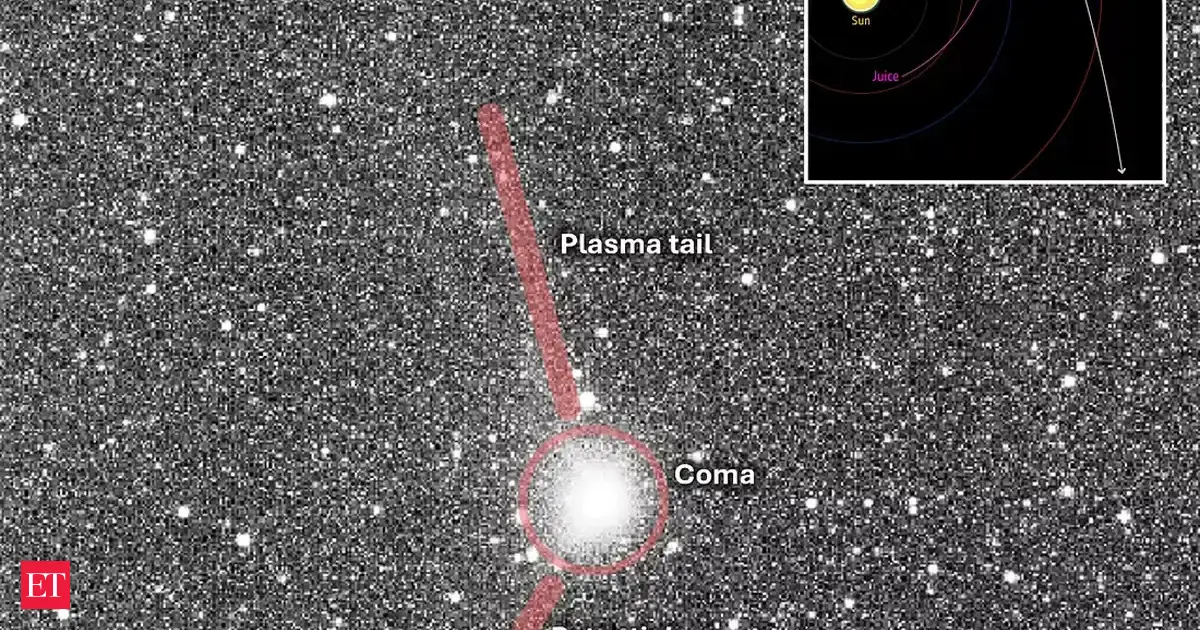
The observation campaign has led to the release of some of the closest and most detailed images of an interstellar comet ever obtained. Nasa assets operating from various points in the solar system, including the STEREO mission, Psyche spacecraft, and Lucy mission, have contributed to this effort.
Each vantage point reveals unique details about the comet's coma, tail, and nucleus, allowing comparison with native solar system comets.
OBSERVATIONS OF THE COMET BY INDIA
Indian scientists at the Physical Research Laboratory (PRL) used the 1.2-metre telescope at Mount Abu to capture images and spectroscopy of the comet between November 12 and 15.
The images show a near-circular coma, the envelope of gas and dust that forms as solar heat causes the comet's ices to sublimate, providing clues to its composition. Such international collaboration has been vital in piecing together the comet's story.
advertisement
The Mount Abu observatory has played a significant role in these observations. Positioned at high altitude and equipped for both imaging and spectroscopy, its contributions help characterise the behaviour and origins of such enigmatic objects.
PRL's work adds important context, strengthening the global scientific effort surrounding this rare celestial event.
WHERE IS COMET ATLAS NOW?
With its closest approach to Earth expected on December 19 at about 170 million miles, 3I/ATLAS continues to move through the inner solar system. Scientists anticipate more images and data as it drifts past Jupiter's orbit in spring 2026, enriching understanding of material from distant planetary systems. High-resolution and spectral images from missions like Hubble and SPHEREx are expected to yield more surprises.
advertisement
The fleet of NASA assets now tracking 3I/ATLAS marks one of the most comprehensive investigations into an interstellar object. As images and data accumulate, researchers gain an unprecedented glimpse into the diversity of planetary systems and the materials they produce. Each observation deepens knowledge of 3I/ATLAS and enhances understanding of the broader cosmos.
- Ends
Published By:
Radifah Kabir
Published On:
Dec 5, 2025
Nasa's Hubble Space Telescope re-observed interstellar comet 3I/ATLAS last month.
Located about 178 million miles from Earth at the time, Hubble's Wide Field Camera 3 captured the comet as it streamed across the sky. As a result, background stars appear as streaks, highlighting the comet's rapid movement. This event marks the latest in a campaign by Nasa and international observatories to better understand this rare visitor from beyond our solar system.
The comet 3I/ATLAS was first detected in July by an ATLAS telescope in Chile. Its hyperbolic trajectory confirmed it had originated outside the solar system. Nasa soon coordinated a system-wide observation campaign, enlisting a dozen spacecraft and telescopes, including Hubble, the James Webb Space Telescope, and Mars orbiters, to study its composition and behaviour.
IS THE COMET AN ALIEN SPACESHIP?
Comet 3I/ATLAS is estimated to be between five and eight billion years old, making it older than our planet.
Speculations about the comet being an alien spaceship were circling around when the celestial object was discovered.
US Congressman George Whitesides of the House Science Committee addressed rumours about the comet's nature, stating there is no evidence supporting online rumours that the comet is an alien spaceship passing through our solar system. This clarification underscores scientists' focus on understanding the object's true origin.
The observation campaign has led to the release of some of the closest and most detailed images of an interstellar comet ever obtained. Nasa assets operating from various points in the solar system, including the STEREO mission, Psyche spacecraft, and Lucy mission, have contributed to this effort.
Each vantage point reveals unique details about the comet's coma, tail, and nucleus, allowing comparison with native solar system comets.
OBSERVATIONS OF THE COMET BY INDIA
Indian scientists at the Physical Research Laboratory (PRL) used the 1.2-metre telescope at Mount Abu to capture images and spectroscopy of the comet between November 12 and 15.
The images show a near-circular coma, the envelope of gas and dust that forms as solar heat causes the comet's ices to sublimate, providing clues to its composition. Such international collaboration has been vital in piecing together the comet's story.
The Mount Abu observatory has played a significant role in these observations. Positioned at high altitude and equipped for both imaging and spectroscopy, its contributions help characterise the behaviour and origins of such enigmatic objects.
PRL's work adds important context, strengthening the global scientific effort surrounding this rare celestial event.
WHERE IS COMET ATLAS NOW?
With its closest approach to Earth expected on December 19 at about 170 million miles, 3I/ATLAS continues to move through the inner solar system. Scientists anticipate more images and data as it drifts past Jupiter's orbit in spring 2026, enriching understanding of material from distant planetary systems. High-resolution and spectral images from missions like Hubble and SPHEREx are expected to yield more surprises.
The fleet of NASA assets now tracking 3I/ATLAS marks one of the most comprehensive investigations into an interstellar object. As images and data accumulate, researchers gain an unprecedented glimpse into the diversity of planetary systems and the materials they produce. Each observation deepens knowledge of 3I/ATLAS and enhances understanding of the broader cosmos.
- Ends
Published By:
Radifah Kabir
Published On:
Dec 5, 2025