How Motilal Oswal Used a Warren Buffett-Inspired Strategy to Achieve 55x Growth and Two Big Stock Wins
हिंदी में सुनें
Listen to this article in Hindi
Motilal Oswal Financial Services achieved 55x growth using a Warren Buffett-like strategy, building a ₹9,000-crore treasury with key investments.
Motilal Oswal Financial Services, guided by billionaires Raamdeo Agrawal and Motilal Oswal, has successfully created a ₹9,000-crore treasury operation, drawing inspiration from Warren Buffett's Berkshire Hathaway. This treasury has expanded 55-fold since its inception and doubles in value approximately every two years. While the majority of investments are channeled into their own mutual fund schemes, the firm has also realized substantial returns from investments in AU Small Finance Bank and the unlisted National Stock Exchange (NSE).
What started in FY15 as a unique approach to capital allocation has become a significant secondary growth driver for the company, supplementing its established wealth management, asset management, capital markets, and home finance businesses.
This strategy has fueled a rare achievement within the Indian financial services sector: a 31% compound annual growth rate (CAGR) in operating profit over a decade, achieved without raising external equity since its IPO in 2007. Furthermore, the company has executed three share buybacks and consistently returned around 20% of its operating profits annually as dividends.
The Pivotal Decision
Navin Agarwal, Managing Director of Motilal Oswal Group, told ET Markets that the company shifted its operating business capital allocation from fixed income to equities in 2014-15. This change has resulted in an impressive 19% XIRR (extended internal rate of return), compared to the previous growth rate of 4-5%. Agarwal stated that these returns enable the firm to avoid equity dilution, distribute free cash flow, maintain a higher credit rating, and possess a robust net worth.
This single decision transformed the company's treasury from a passive asset into an active engine for growth. As of September 2025, total equity investments, including alternative investments, reached ₹8,957 crore, marking a 14% year-on-year increase. Since its establishment, the treasury has generated an 18.7% XIRR and, when including reinvested cash flows, has grown at a CAGR exceeding 42%.
Two Key Investments
Approximately 90% of the treasury's funds are invested in Motilal Oswal's own funds, with the remaining 10% allocated to direct equity investments. Two stocks, in particular, have yielded significant returns.
One such investment is AU Small Finance Bank. Over a decade ago, Motilal Oswal's first private equity fund was fully invested when AU initiated a rights issue. The treasury stepped in to support the bank before it was publicly listed. This investment has since grown 30–40 times its original value, delivering an XIRR exceeding 25%, and remains a long-term holding.
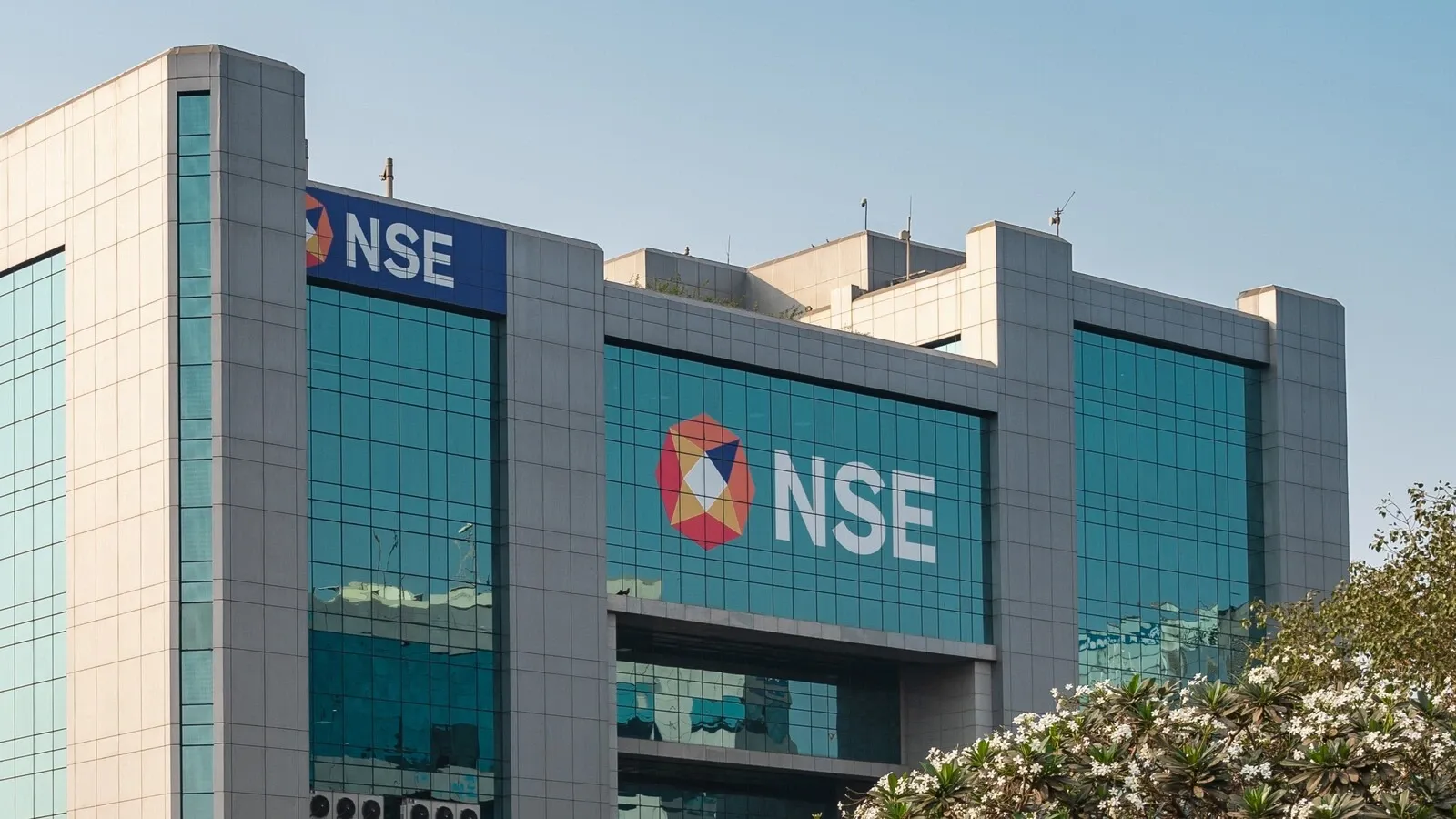
The second successful investment was in the National Stock Exchange of India (NSE). As one of NSE's largest brokers, handling approximately 8% of traded volumes, Motilal Oswal possessed significant insight into the exchange's operating leverage and market dominance. This unique perspective allowed the treasury to invest directly in NSE, an opportunity typically unavailable to traditional private equity funds. This stake has also compounded at an XIRR of over 25%, benefiting from the expansion of India's capital markets.
These investments reflect a long-term strategy, aligning with Buffett's principle of “buy right, sit tight,” rather than short-term tactical trading, and are based on either unique opportunities or informational advantages.
An Indian Adaptation of the Berkshire Model
Agarwal noted that a substantial portion of their investments are in their own funds. He stated that they own nearly a billion dollars in their own mutual funds, which represents about 5% of their $20 billion AUM (assets under management) in the mutual fund business. He emphasized that this billion-dollar investment exceeds the combined investments of potentially all other AMCs (asset management companies).
The firm allocates capital across its mutual funds, PMS (Portfolio Management Services), private equity, and alternative investments, demonstrating confidence in its strategies and aligning its interests with those of its clients. Agarwal added that they invest in every new fund they launch.
Raamdeo Agrawal has been inspired by Warren Buffett and has been attending Berkshire's annual general meeting for around 3 decades. Berkshire Hathaway functions as a decentralized conglomerate holding company, acquiring and holding high-quality businesses for the long term and generating capital through its insurance operations.
While inspired by Berkshire Hathaway, Motilal Oswal has adapted the model to suit its specific needs. Unlike Berkshire, whose investment float often exceeds operating requirements, Motilal Oswal's treasury is essential for supporting its business operations.
Agarwal clarified that while there are similarities with Berkshire, there are also significant differences. He emphasized that their entire treasury serves as a support system for their operating businesses and acts as its backbone.
The company's treasury has allowed it to avoid diluting shareholders or selling businesses, as many competitors have done. Instead, it has allowed its treasury to grow and fund expansion organically. This was important as broking margins, client fund requirements, bank limits, and regulatory capital thresholds have increased substantially over the last decade.
Agarwal explained that the treasury book functions as operating capital that supports the operating businesses. The treasury business generates free cash flow, which then becomes more regulatory capital and bank margins to support the operating business.
This model has created a positive cycle. Increased market share necessitates more capital, which strengthens the balance sheet, which in turn enables further market share gains. Credit ratings have improved to AA+, ownership of subsidiaries remains at 100%, and annuity businesses now account for over 60% of revenues, enhancing earnings stability.
Agarwal concluded that this single decision addressed multiple challenges. It allowed them to invest in equities, maintain skin in the game, achieve undiluted growth, avoid excessive leverage, and create a buffer against potential downturns.
He emphasized that Berkshire Hathaway served as a valuable role model, teaching them to adapt relevant strategies to their specific context in India and at Motilal Oswal, rather than blindly imitating everything.
Future Outlook
The management anticipates continued compounding in the future. With 5.5 crore mutual fund investors and 10 crore demat accounts in India, both representing a small fraction of developed-market penetration, the firm expects its operating businesses to grow 10–20 times over the next two decades. They anticipate that the treasury will experience a similar multiplier effect.
Agarwal reported that annuity businesses contributed over 60% of their revenues in FY25 and expects this contribution to continue growing, potentially reaching over 90% in the future. When Motilal Oswal got listed, they told investors that one day more than 50% of their revenues would come from annuity businesses.
He believes that the first 10 years of this dual-engine model have only produced 0.1% of the total outcome expected over a 30-year period. He anticipates that the remaining 99% of the benefit will materialize in the next 20 years, coinciding with India's expected transition to a developed nation (Viksit Bharat).
Motilal Oswal's experience stands out in an industry where growth is often funded by dilution. By combining Buffett's capital allocation principles with the realities of the Indian regulatory environment, the company has created a powerful system that generates steady growth while also delivering significant returns through strategic investments like NSE and AU Small Finance Bank.