Gaza Reconstruction: A New Chapter in Hamas's Strategic Playbook
हिंदी में सुनें
Listen to this article in Hindi
Hamas leverages Gaza reconstruction to solidify control, presenting challenges for regional stability and international diplomacy. Analysis of strategic implications.
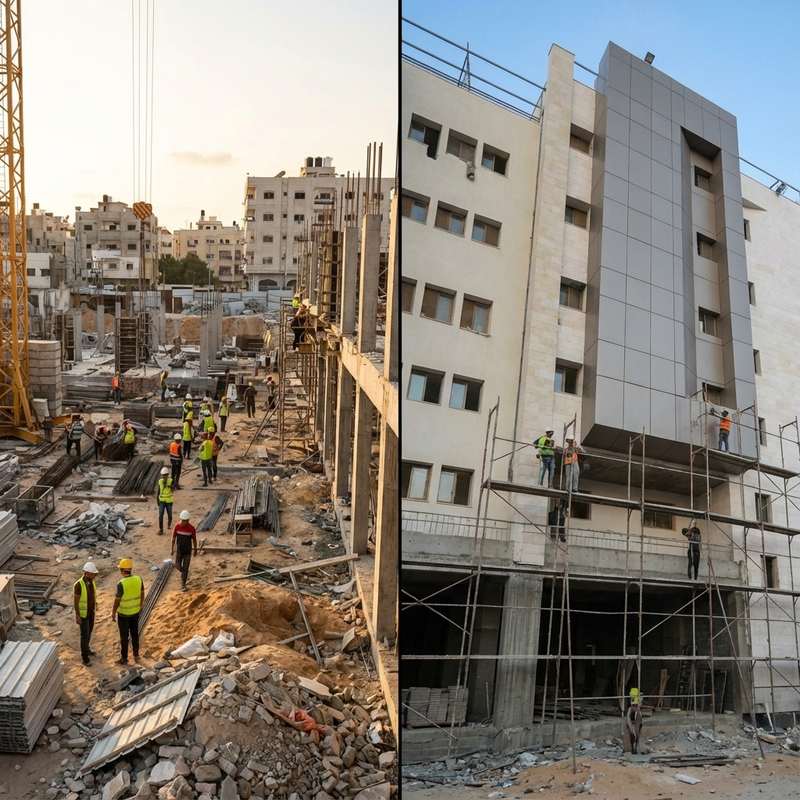
The dynamics of power in the Middle East are perpetually in flux, often pivoting on seemingly localized conflicts with far-reaching consequences. The post-ceasefire landscape in Gaza offers a critical case study. While many external actors hoped for a weakened Hamas, the organization is strategically leveraging the reconstruction phase to consolidate its authority, presenting a complex challenge to regional security and diplomatic efforts. This isn’t simply about rebuilding infrastructure; it's about Hamas rewriting the rules of engagement in the Palestinian territories and beyond.
The geopolitical implications extend far beyond the immediate Gaza Strip. The involvement of external actors like Qatar, Turkey, and Egypt in reconstruction efforts introduces layers of complexity. These nations have varying degrees of engagement and sometimes conflicting agendas regarding Hamas, which invariably impacts the region's delicate power balance. The United States, under President Trump's initiative, seeks a swift resolution, but its approach risks overlooking fundamental disagreements between the involved parties, potentially strengthening Hamas's position in the long run. The success of any multinational effort hinges on navigating these intricate relationships, a task complicated by historical tensions and competing interests.
Hamas's strategy centers on several key elements. First, it rejects outright any notion of complete disarmament, framing it as an existential threat. Instead, it is positioning itself as open to compromise by offering to surrender only heavy weaponry, a proposal that could be attractive to external mediators seeking a quick win. Second, Hamas has embraced the idea of a technocratic government, understanding that such a structure can provide a veneer of legitimacy while allowing it to maintain control through less direct means, mirroring Hezbollah's model in Lebanon. This approach enables Hamas to project an image of flexibility while preserving its core power structures.
The organization's public relations efforts are equally crucial. By portraying itself as cooperative and eager for reconstruction, Hamas aims to shift the blame for any delays onto Israel. This narrative is further reinforced by the visible restoration of governance within Gaza, from reopening roads to re-establishing police and judicial functions. These efforts, supported by charitable organizations and financial aid from Islamic countries, demonstrate Hamas's capacity to govern and provide essential services, further solidifying its legitimacy in the eyes of the Gazan population.
Rebuilding its military capabilities is also a priority for Hamas. Despite the loss of key figures, the organization is actively reorganizing its units, appointing new commanders, and restoring infrastructure, including tunnels and weapons production facilities. This ongoing effort highlights Hamas's commitment to maintaining its military strength, ensuring its ability to project power and deter potential adversaries. This is further complicated by the recruitment of new operatives, often inexperienced and minors, who are integrated into policing and enforcement roles.
The situation presents Israel with a difficult strategic dilemma. Reoccupying Gaza is a high-risk option that could trigger a major confrontation and potentially jeopardize its relationship with the United States. A weaker, non-Hamas administration is seen as a lesser evil, but it would require strict conditions, including the return of hostages, operational freedom, control over border crossings, and veto power over foreign forces and government members. Navigating these competing priorities requires a calculated approach that balances security concerns with the need to maintain international legitimacy, especially as Israel confronts challenges on other fronts, such as Lebanon and Iran. Considering India's growing involvement in the Middle East, its role in regional stability becomes more critical. [World affairs background]
The international community faces a complex challenge in addressing the situation in Gaza. A piecemeal approach focused solely on reconstruction without addressing the underlying power dynamics risks perpetuating a cycle of conflict and instability. A more comprehensive strategy is needed that recognizes the evolving nature of Hamas's influence and takes into account the competing interests of regional and international actors. This requires a nuanced understanding of the local context and a commitment to long-term engagement, rather than short-term fixes. [Topic basics for readers] The future of Gaza, and indeed the broader region, hinges on the ability to navigate these complexities with foresight and strategic vision. [India’s global position]
Editor’s note: This article was independently written by the Scoopliner Editorial Team using publicly available information.