The Expanding Reach of Earth's Radio Signals: Understanding the Human Voice in Space
हिंदी में सुनें
Listen to this article in Hindi
Discover how Earth's radio signals have traveled 119 light years into space, forming a radio bubble that envelops our planet.
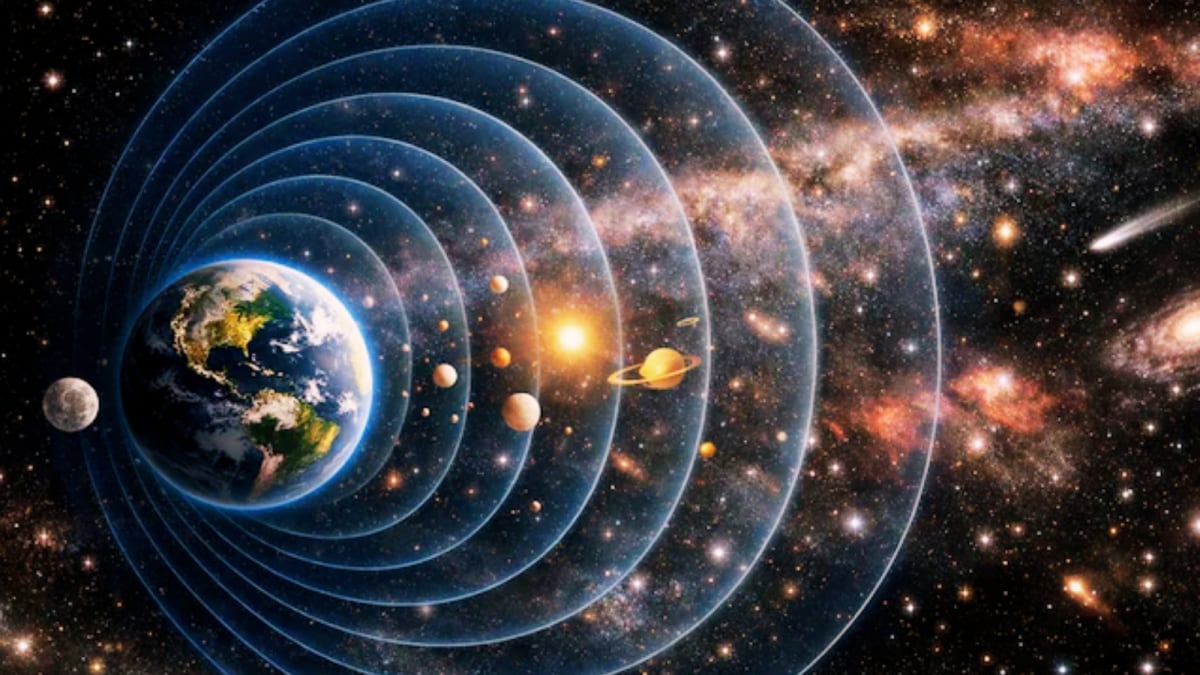
For over a century, radio signals have been traveling beyond the confines of the Earth, marking an era of unprecedented human communication. This phenomenon, termed the 'Earth radio bubble', began with Reginald Aubrey Fessenden's groundbreaking broadcast in 1906. On Christmas Eve, Fessenden sent out the first public radio transmission, featuring music and spoken words, a stark departure from the Morse code that dominated earlier communications. This pivotal moment in communication history initiated the journey of radio waves into the cosmos.
Radio waves, a form of electromagnetic radiation, travel at the speed of light and can move through the vacuum of space without requiring a medium. As a result, the signals generated by humanity have continued to venture outward, forming a bubble that now extends approximately 119 light years from Earth. This bubble encompasses about 75 star systems, but the further the signals travel, the fainter they become. This attenuation raises critical questions about the potential for extraterrestrial reception of our broadcasts.
The concept of the Earth radio bubble serves as a fascinating intersection of communication technology and astrophysics. While the signals are gradually losing strength and becoming indistinguishable from cosmic noise, they nonetheless represent the far-reaching implications of human innovation. The signals, although no longer discernible to us at great distances, signify our initial attempts at connecting and sharing information beyond our planet.
As time progresses, the Earth radio bubble will continue to expand, yet the messages within it become weaker. This phenomenon leads to the contemplation of whether any intelligent life forms beyond our solar system might be able to detect our signals. That said, the reality is a bit more complicated. the reality is that the vastness of space and the limitations of signal degradation mean that the likelihood of other civilizations intercepting these broadcasts is minimal.
The exploration of our radio bubble also raises questions about the nature of communication. It highlights not only our technological advancements but also the limitations inherent in our attempts to reach out to the cosmos. While we celebrate our achievements in radio technology, we must remain grounded in the understanding that these signals are now a faint echo of our past rather than a powerful beacon of communication.
The implications of this research extend into broader scientific discussions surrounding the search for extraterrestrial intelligence (SETI). As scientists continue to develop new methods of detecting signals from distant stars, the insights gained from the study of our own radio bubble could inform future efforts in understanding the universe's potential for supporting life.
In summary, the Earth radio bubble represents a unique aspect of human history and technology. It encapsulates our desire to communicate and connect with the universe. That said, the reality is a bit more complicated. as the signals continue to fade, it also serves as a reminder of the limitations we face in our quest to understand the cosmos and our place within it. The journey of our radio waves into the vastness of space is not just a tale of technological triumph; it is a narrative steeped in the challenges of communication across unimaginable distances.
Editor's note: This article was independently written by the Scoopliner Editorial Team using publicly available information.