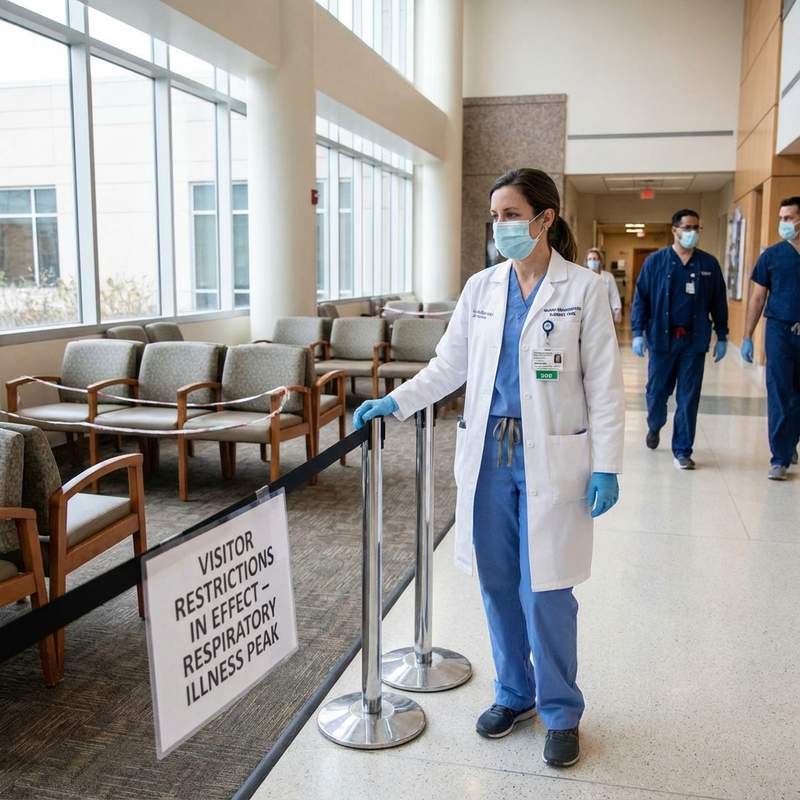
Visitor Restrictions in Hospitals: A Systemic Response to Respiratory Illness Peaks
हिंदी में सुनें
Listen to this article in Hindi
Analysis of hospital visitor restrictions implemented during respiratory illness surges, examining the public health implications and systemic pressures.
The recent implementation of visitor restrictions in Dayton-area hospitals, as reported by the Greater Dayton Area Hospital Association (GDAHA), highlights a recurring challenge within public health systems: managing surges in respiratory illness. While these restrictions may seem like isolated incidents, they represent a complex interplay of factors affecting hospital capacity, infection control, and public access to healthcare facilities. Understanding the reasoning behind these measures and their broader implications is crucial for public awareness and informed discussions about healthcare resource allocation.
The primary driver for visitor restrictions is the increased prevalence of respiratory illnesses such as influenza, COVID-19, and other seasonal viruses. Hospitals, acting as critical infrastructure, must maintain operational capacity while mitigating the spread of infection within their facilities. High patient volumes coupled with infectious disease outbreaks can strain resources, impacting the quality of care for all patients, not just those with respiratory ailments. Visitor restrictions, therefore, are implemented as a reactive measure to reduce the potential for further transmission within the hospital environment.
These restrictions typically include limitations on visitors exhibiting respiratory symptoms and age-based limitations, often barring individuals under 14 years of age. The rationale behind these measures is rooted in infection control principles. Symptomatic individuals are more likely to transmit infectious agents, and young children, while potentially less severely affected by some respiratory viruses, can be significant vectors for transmission. By limiting exposure within the hospital, administrators aim to protect vulnerable patients, healthcare workers, and other visitors.
That said, the reality is a bit more complicated. visitor restrictions also raise important considerations regarding patient well-being and access to support systems. Hospitalization can be a stressful and isolating experience, and the presence of family and friends can provide crucial emotional support. Limiting visitation can exacerbate these feelings of isolation, potentially impacting patient recovery and mental health. It is a difficult balance between mitigating infection risk and upholding patient-centered care. This highlights the need for alternative support systems, such as virtual visitation options, to be readily available during restriction periods. [Internal link: Public health context]
Furthermore, the implementation of visitor restrictions underscores the broader challenges facing healthcare systems in managing seasonal surges. These surges often expose underlying vulnerabilities in hospital capacity, staffing levels, and resource allocation. A reactive strategy of visitor restrictions, while necessary in certain circumstances, is not a long-term solution. Proactive measures, such as increased vaccination rates, robust public health campaigns promoting preventative measures, and investments in healthcare infrastructure, are essential for mitigating the impact of respiratory illness outbreaks. [Internal link: Disease or system explainer]
The effectiveness of visitor restrictions in controlling respiratory illness transmission is a subject of ongoing evaluation. While anecdotal evidence suggests a positive impact, rigorous studies are needed to quantify the benefits and potential drawbacks. Factors such as the specific viruses circulating, the stringency of the restrictions, and compliance rates can all influence the outcome. Understanding these variables is crucial for developing evidence-based policies that optimize infection control while minimizing the negative impacts on patients and their families.
It is also important to recognize that visitor restrictions can disproportionately affect certain populations. Individuals from marginalized communities may face additional barriers to accessing healthcare and supporting their loved ones in the hospital setting. Language barriers, transportation limitations, and cultural norms can all contribute to disparities in access. Healthcare systems must be mindful of these potential inequities and implement strategies to ensure equitable access to care and support for all patients, even during periods of restriction. [Internal link: Government or WHO-style overview (internal)]
So where does that leave things? the temporary implementation of visitor restrictions in response to respiratory illness surges reflects a complex interplay of factors within the healthcare system. While these measures are intended to protect patients and staff, they also highlight the need for proactive public health strategies, investments in healthcare infrastructure, and a continued focus on patient-centered care. Understanding the rationale behind these restrictions and their broader implications is essential for fostering informed discussions and promoting effective public health policies.
Editor’s note: This article was independently written by the Scoopliner Editorial Team using publicly available information.