Security Measures in Australia: A Response to Rising Threats
हिंदी में सुनें
Listen to this article in Hindi
Australia’s heightened security during New Year's celebrations reflects ongoing global concerns over domestic terrorism and community safety.
The recent increase in police presence and security measures during New Year’s celebrations in Sydney is indicative of a broader trend seen across various nations in response to rising security threats. Following the tragic mass shooting in Bondi Beach, which specifically targeted a religious community, Australia has found itself navigating a delicate balance between ensuring public safety and maintaining civil liberties. This situation is emblematic of a global landscape where fears of domestic terrorism are reshaping law enforcement strategies and public life.
Geopolitically, the implications of such heightened security measures extend beyond mere national concerns. They reflect a growing trend where nations, particularly in the West, are increasingly investing in security infrastructure to combat perceived threats from radicalization and extremist violence. This trend is not isolated to Australia; similar patterns have been observed in Europe and North America, where public events are now often accompanied by significant police presence and stringent security protocols.
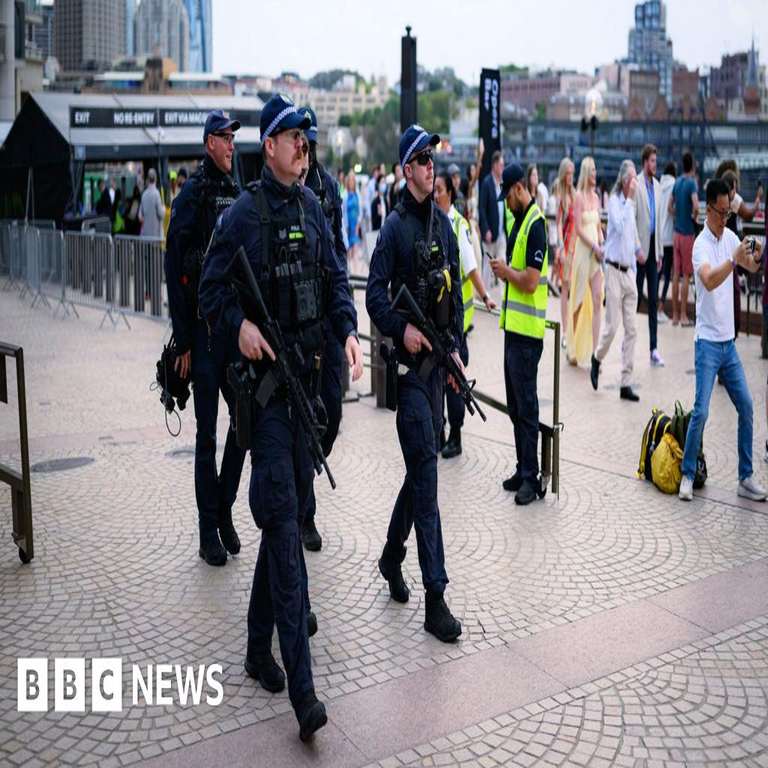
The decision to deploy more than 2,500 officers in Sydney, some armed with high-grade weapons, highlights a shift towards a militarized approach to policing in urban settings, particularly during high-profile events. This militarization can create a dual effect: while it may enhance the immediate sense of safety for some, it can also foster anxiety and discomfort among citizens, thereby challenging the very fabric of public trust in law enforcement agencies. Such dynamics are crucial to monitor, as they can influence public behavior and perceptions of safety in the long term.
Furthermore, the symbolic gestures accompanying enhanced security, such as moments of silence for victims of violence, serve to both commemorate loss and reinforce community resilience. That said, the reality is a bit more complicated. they also raise questions about the effectiveness of such measures in preventing future attacks. The potential for backlash against communities perceived as threats can exacerbate tensions further, particularly if the narrative surrounding these events is not managed with sensitivity and understanding.
In the context of Australia, the bond between national security and community identity is being tested. The challenge lies in addressing security concerns without alienating segments of the population. This delicate balance is also visible in how officials approach public messaging, advocating for resilience while simultaneously acknowledging the fear and disruption caused by violent acts.
On a broader scale, the situation in Sydney mirrors global anxieties surrounding domestic terrorism, where communities are increasingly aware of their vulnerability. Countries are grappling with how to protect citizens while ensuring that civil liberties are not unduly compromised. This complex interplay has implications for international relations, particularly concerning how nations collaborate to address shared security challenges.
As the world watches how Australia handles these challenges, it serves as a case study in the ongoing struggle between security and freedom. The effectiveness of current measures will likely influence future policy decisions, both domestically and internationally, as other nations assess their own vulnerabilities and responses to domestic threats.
So where does that leave things? the recent events in Sydney highlight the intersection of local security measures and global strategic considerations. As nations navigate this challenging terrain, the outcomes will shape not only national policies but also international relationships and the global approach to security in an increasingly interconnected world.
Editor's note: This article was independently written by the Scoopliner Editorial Team using publicly available information.