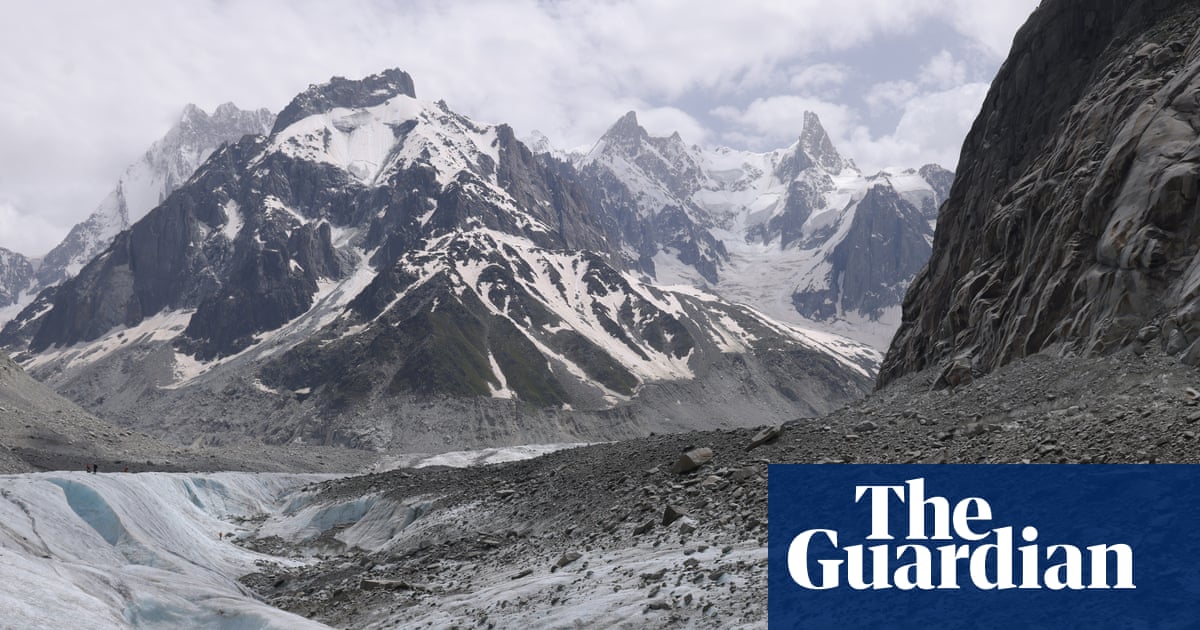
Glaciers to reach peak rate of extinction in the Alps in eight years
हिंदी में सुनें
Listen to this article in Hindi
A new study forecasts glaciers in the Alps will reach their highest extinction rate by 2033, with hundreds disappearing permanently.
A recent study indicates that glaciers in the European Alps are on track to reach their peak extinction rate in just eight years. The research suggests that over 100 glaciers in the Alps will have completely melted away by 2033.
Glaciers in the western United States and Canada are projected to reach their maximum rate of loss shortly after, with over 800 disappearing annually. The melting of glaciers, fueled by human-caused global warming, serves as a stark indicator of the escalating climate crisis.
Across the globe, communities have already begun holding symbolic funeral ceremonies for glaciers that have vanished. The Global Glacier Casualty List meticulously records the names and histories of these lost glaciers.
Currently, there are approximately 200,000 glaciers worldwide, with about 750 disappearing each year. That said, the reality is a bit more complicated. research suggests that this rate will accelerate significantly as fossil fuel emissions continue to rise. Under current government climate action plans, global temperatures are expected to increase by 2.7 degrees Celsius above pre-industrial levels, leading to more extreme weather events. In this scenario, glacier losses would peak at about 3,000 per year around 2040 and remain at that level until 2060. By the end of the century, it is estimated that 80% of today's glaciers will be gone.
In contrast, aggressive reductions in carbon emissions, aimed at limiting global temperature rise to 1.5 degrees Celsius, could cap annual losses at about 2,000 per year in 2040, with a subsequent decline in the rate of loss.
While previous studies have primarily focused on the volume of ice lost and its impact on rising sea levels, this new research highlights the importance of individual glaciers. These glaciers serve as crucial water sources, tourist attractions, and often hold spiritual significance for local communities. This realization prompted the researchers to analyze the sheer number of glaciers disappearing.
Matthias Huss, a senior scientist at ETH Zurich and a member of the research team, emphasized the direct impact of glacier loss on their work. As the director of the Swiss glacier monitoring network, Huss recently declared four glaciers extinct, adding to the estimated 1,000 glaciers lost in Switzerland over the past three decades.
Huss also spoke at a 2019 funeral ceremony for the Pizol glacier, where over 250 people gathered to say goodbye. Similar ceremonies have taken place in Iceland, Nepal, and other locations, demonstrating the public's concern over vanishing glaciers.
Nā Lisa Tumahai, a Māori political leader, visited the melting Kā Roimata o Hine Hukatere in 2022 and shared her reflections with the Global Glacier Casualty List. She described the glacier's decline as a humbling reminder of the real consequences of industrialization and climate change.
The study, published in Nature Climate Change, analyzed data from over 200,000 glaciers using satellite images and three global glacier models to project their fate under different warming scenarios.
The research identified regions with smaller and faster-melting glaciers as the most vulnerable. Even if global temperature rise is limited to 1.5 degrees Celsius, the 3,200 glaciers in central Europe are projected to shrink by 87% by 2100. Under a 2.7-degree Celsius warming scenario, that figure rises to 97%.
In the western US and Canada, including Alaska, approximately 70% of the current 45,000 glaciers are projected to disappear under 1.5 degrees Celsius of warming, and over 90% under 2.7 degrees Celsius. The Caucasus and southern Andes are also expected to experience significant losses.
Larger glaciers, such as those in Greenland, will take longer to melt, with their peak extinction rate occurring around 2063. By 2100, Greenland's glaciers are projected to lose 40% of their mass under 1.5 degrees Celsius of warming and 59% under 2.7 degrees Celsius. The researchers note that this melting trend is expected to continue beyond 2100.
The researchers highlight that these peak loss dates represent critical turning points with significant implications for ecosystems, water resources, and cultural heritage. They underscore the urgent need to help communities adapt to these changing conditions, as billions of people rely on mountain water for their daily needs and food security. Adaptation measures could include new farming techniques, alternative business opportunities to replace tourism, and even the implementation of artificial glaciers.
Dr. Arun Bhakta Shrestha, a senior advisor at the International Centre for Integrated Mountain Development, emphasized the profound influence of today's climate decisions on the future of glaciers. He added that the study provides valuable insight into the rapid changes occurring in glacier landscapes and the communities that depend on them.