Bangladesh's Political Crossroads: Return of Rahman Reshapes Regional Dynamics
हिंदी में सुनें
Listen to this article in Hindi
Tarique Rahman's return to Bangladesh signals a potential shift in regional power, impacting stability and international relations in South Asia.
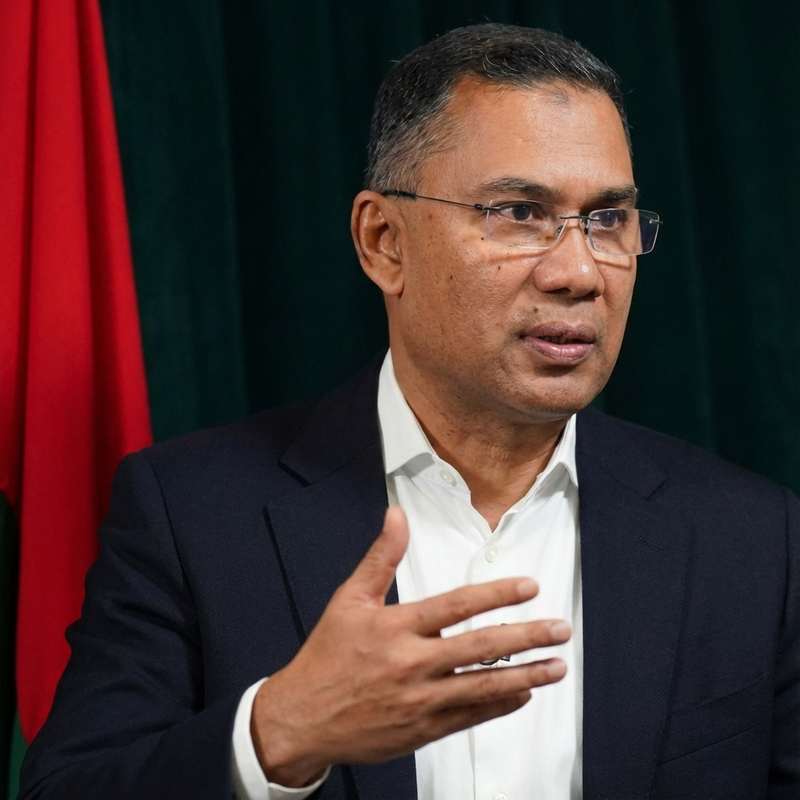
Bangladesh, strategically positioned at the crossroads of South Asia, is poised for a period of significant political upheaval. The return of Tarique Rahman, after 17 years in exile, as the presumptive leader of the Bangladesh Nationalist Party (BNP), has fundamentally altered the landscape ahead of upcoming general elections. This development transcends a simple change in political personalities; it represents a potential realignment of regional power dynamics with implications extending far beyond Bangladesh's borders.
The shift in leadership within Bangladesh carries substantial weight given the country's increasingly important role in regional connectivity and economic development. Bangladesh's strategic location between India and Southeast Asia makes it a crucial player in initiatives like the Belt and Road Initiative (BRI) and other regional trade networks. Political instability or a dramatic shift in policy could disrupt these networks, impacting regional economic growth and international trade flows. A stable, predictable Bangladesh is in the interest of numerous global actors, including China, India, and the United States, each of whom have varying degrees of strategic and economic engagement with the nation.
Rahman's return and the potential resurgence of the BNP also introduce a new set of policy considerations. The BNP has historically pursued a different approach to foreign policy than the Awami League, often prioritizing closer ties with countries beyond India's immediate sphere of influence. This could lead to a recalibration of Bangladesh's relationships with key regional actors, potentially influencing the balance of power in South Asia. The implications for India are particularly significant, given the long and complex relationship between the two nations, which encompasses trade, border management, and water resource sharing. Any perceived shift away from close cooperation could introduce friction and require careful diplomatic management. The broader world affairs background shows how complex geopolitical situations can be.
Moreover, the circumstances surrounding the political transition, including the ousting of former Prime Minister Sheikh Hasina and her subsequent sentencing, raise concerns about the rule of law and democratic processes within Bangladesh. These concerns could impact Bangladesh's international standing and its relationships with Western nations that prioritize human rights and democratic governance. International observers will be closely monitoring the upcoming elections to ensure they are conducted fairly and transparently. Any perception of electoral manipulation or political repression could trigger international sanctions or diplomatic pressure, further destabilizing the country and the region.
The future trajectory of Bangladesh under a potential BNP government remains uncertain. While Rahman's supporters view him as a modernizing force capable of addressing the country's economic and social challenges, his critics point to past allegations of corruption and authoritarian tendencies. The ability of a new government to maintain political stability, promote economic growth, and uphold democratic principles will be crucial in determining Bangladesh's long-term success and its role in the evolving geopolitical landscape of South Asia. The global position of India is also a key factor in this situation.
The situation is further complicated by the potential for internal unrest and political violence. The deep-seated rivalry between the Awami League and the BNP has historically led to periods of instability, and the upcoming elections could exacerbate these tensions. A peaceful transition of power and a commitment to inclusive governance will be essential to preventing further conflict and ensuring a stable future for Bangladesh. The topic basics are essential for understanding the situation fully.
So where does that leave things? the return of Tarique Rahman to Bangladesh represents a pivotal moment in the country's history. It signals a potential shift in regional power dynamics, with significant implications for regional stability, economic development, and international relations. While the long-term consequences remain to be seen, the international community will be closely watching Bangladesh as it navigates this critical juncture.
Editor’s note: This article was independently written by the Scoopliner Editorial Team using publicly available information.